

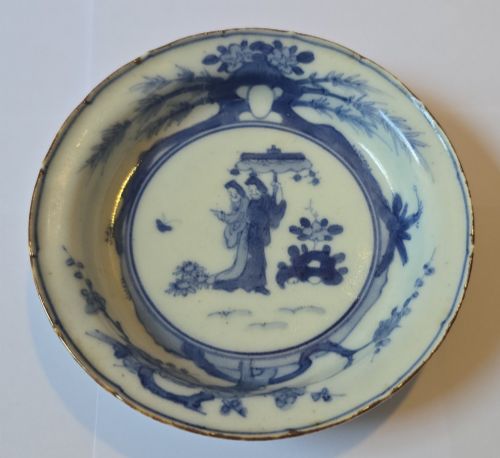
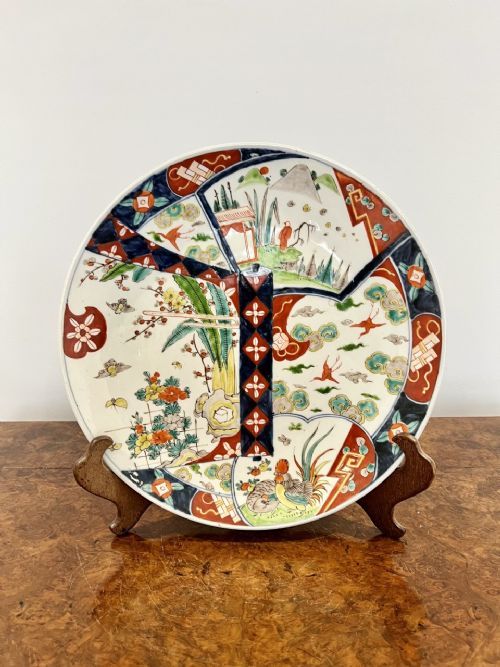


Edo Period Export Dish
These edo period export dish examples bring historic Japanese craft into your home, offering painted porcelain forms that defined centuries of global trade.
Edo Period Export Dish
An edo period export dish represents the historic ceramics shipped from Japan to European markets during the centuries of the Tokugawa shogunate. You will encounter shallow dishes, deep chargers, and bowls shaped in circular or unusual hexagonal formats.
The pieces on this page span the seventeenth, eighteenth, and nineteenth centuries, alongside items dated around nineteen hundred. They include Arita productions and items decorated in the distinctive Imari palette.
Forms range from shaving bowls to decorative plates intended for display. Each vessel connects the kilns of Hizen province with international collectors of past centuries.
Materials and Making
Potters shaped these objects from fine porcelain clay sourced in Japan. Cobalt underglaze was applied before firing to create deep blue designs beneath the glossy surface.
Enamels and gold leaf or gilt were frequently added in secondary decorative stages to build the rich Imari palette. Glaze sealed the surface during high-temperature kiln firings.
Techniques relied on precise control of mineral pigments and heat. Artisans combined cobalt underglaze with iron-red enamel and gold gilt to achieve layered visual depth.
Edo Period Export Dish Retail Price Guide 2026
Typical asking prices for edo period export dish among the pieces listed under this phrase on Sellingantiques today, from the lower quarter to the upper quarter. They describe what is for sale here now, not the wider market.
Listings feature items spanning the seventeenth century through to nineteen twenty, utilising porcelain, enamel, gold leaf, and cobalt underglaze.
Assessing Quality
Quality rests in the crispness of the cobalt underglaze painting and the precision of the form. Superior examples display confident brushwork and balanced compositions across the surface.
The application of enamel and gold leaf distinguishes finer pieces from simpler utilitarian wares. Rich pigmentation and careful placement of gilt elevate the visual impact of a charger or bowl.
Age and provenance contribute to the desirability of specific dishes. Seventeenth-century and eighteenth-century examples demonstrate early kiln traditions that shaped global ceramic history.
The Edo Period Export Dish Glossary
- Arita
- The Japanese town and production centre in Hizen province where much of this porcelain originated. Kilns here supplied domestic and export markets for centuries.
- Cobalt underglaze
- A blue pigment applied to the raw clay body before glazing and firing. This technique protects the colour beneath a glossy protective layer.
- Charger
- A large decorative plate intended for ceremonial display rather than dining use. These substantial vessels often showcase the most elaborate painted schemes.
- Aka-e
- Red-painted ware decorated with iron-red enamel overglaze designs. This colouring often appears alongside cobalt blue in traditional export ceramics.
Edo Period Export Dish: Frequently Asked Questions
How should I display an antique charger?
Mount chargers securely on walls using specialist plate hangers or display them upright on sturdy plate stands. Ensure the chosen spot avoids direct sunlight to protect surface enamels and gilt.
Keep ceramics away from high-traffic areas where accidental knocks might occur. Proper clearance lets the painted patterns be viewed safely without handling the antique porcelain.
Were these dishes used for dining?
Most export wares were created for decorative display in European interiors rather than daily dining. Chargers and large plates served as focal points on sideboards and walls.
Some specialised forms, such as shaving bowls, fulfilled specific grooming functions. Examining the depth and shape of a vessel helps clarify its original household purpose.
How do I identify seventeenth-century pieces?
Seventeenth-century examples often exhibit heavier potting, subtle cobalt underglaze variations, and early Arita characteristics. The brushwork tends to be spontaneous and directly tied to foundational export styles.
Comparing potting weight and pigment tones against dated specimens helps distinguish early productions. Archival research into kiln practices further clarifies the timeline.
What is the Imari palette?
The Imari palette combines underglaze cobalt blue with overglaze iron red and gold gilt. This vibrant combination became immensely popular among European collectors during the export era.
Additional colours like green or yellow occasionally supplement the core scheme. The interplay of blue and red creates the striking visual contrast characteristic of these wares.