




Ecclesiastical Wooden Figure
An ecclesiastical wooden figure brings centuries of devotion into a room, offering tactile presence through hand-carved grain and historic paint.
Ecclesiastical Wooden Figure
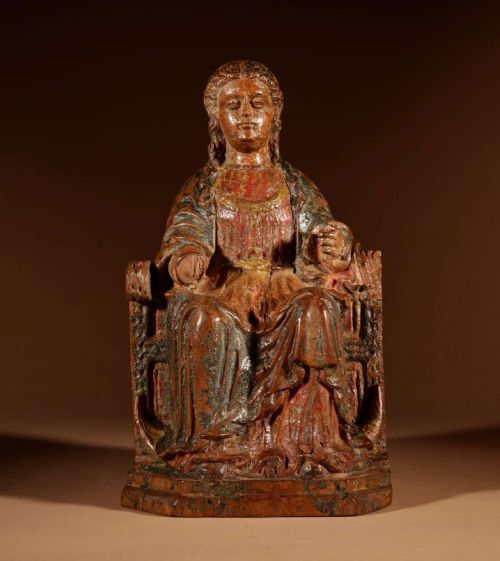
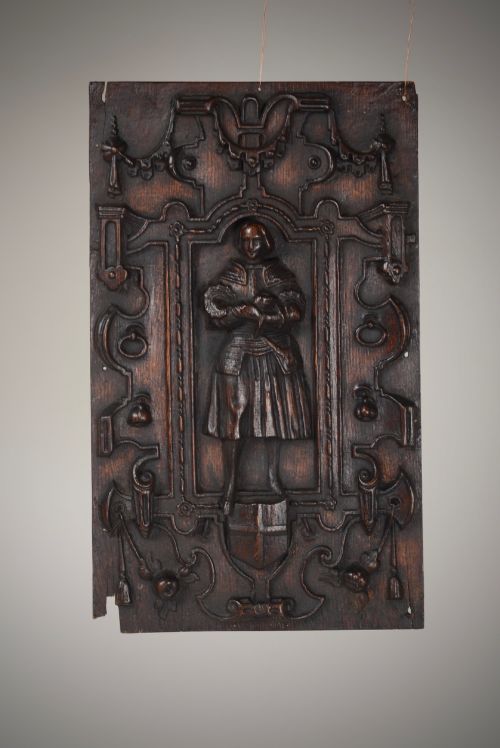
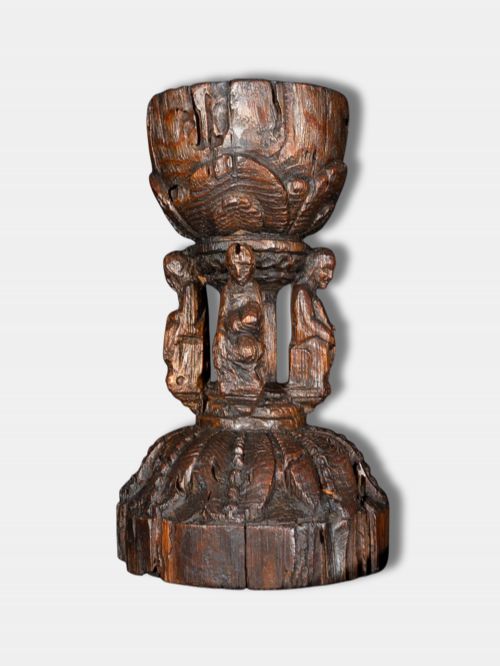
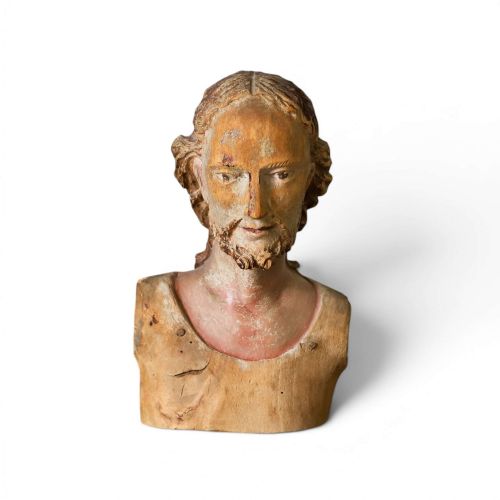
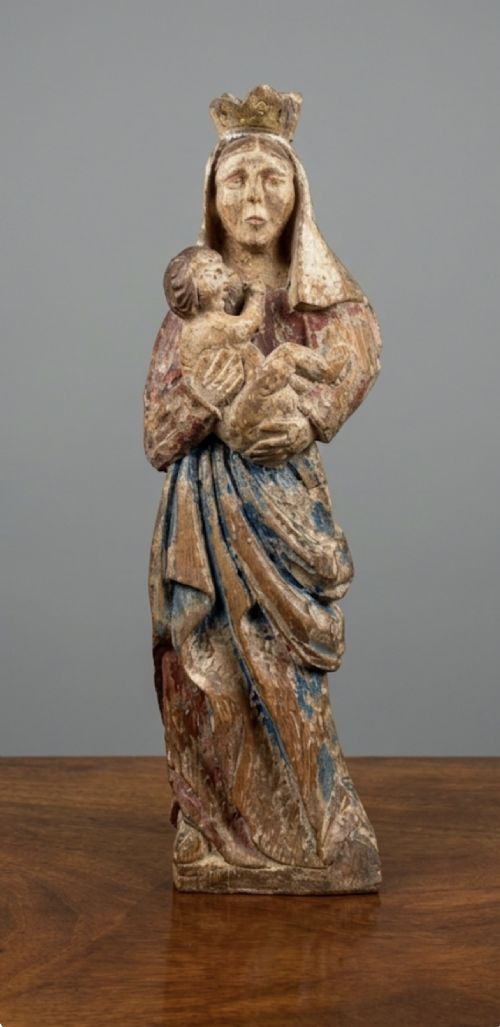
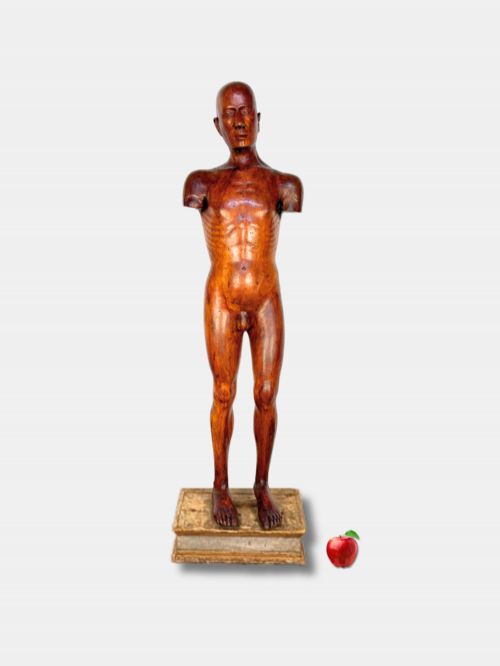
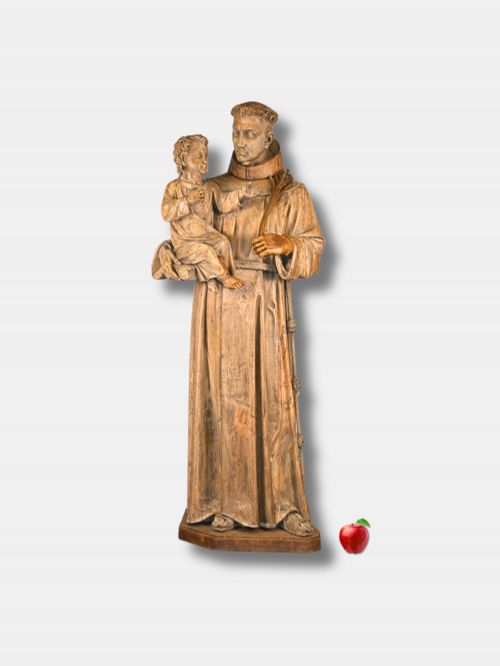
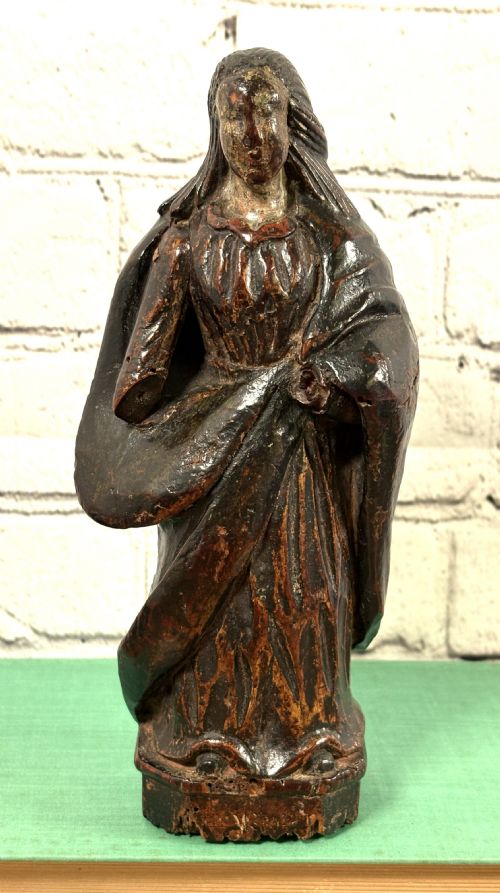
When you search for an ecclesiastical wooden figure, you encounter carved representations of saints, angels, and holy figures originating from churches and chapels across Europe. These works include standing statues, seated groups like the Madonna and Child, and detailed portrait busts or architectural panels.
The versions most commonly met on this page span several centuries, with robust sixteenth-century oak carvings appearing alongside eighteenth-century polychrome figures and nineteenth-century devotional statues. Continental European workshops produced the majority of these pieces, utilising native hardwoods and traditional sculptural forms.
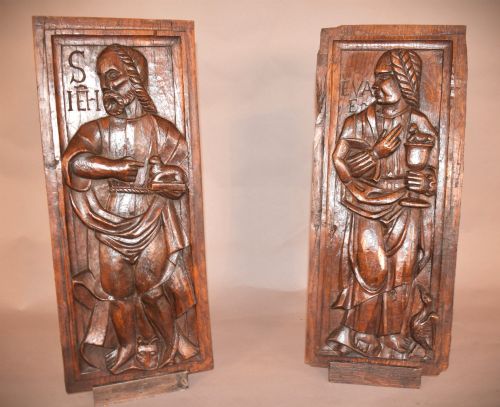
Subjects range from individual apostles and saints such as Saint Jerome and Saint Francis to larger narrative groups depicting angels and biblical scenes. Buyers select these pieces for their sculptural depth, historic surface patination, and the meditative quality they impart to an interior space.
Materials and construction methods
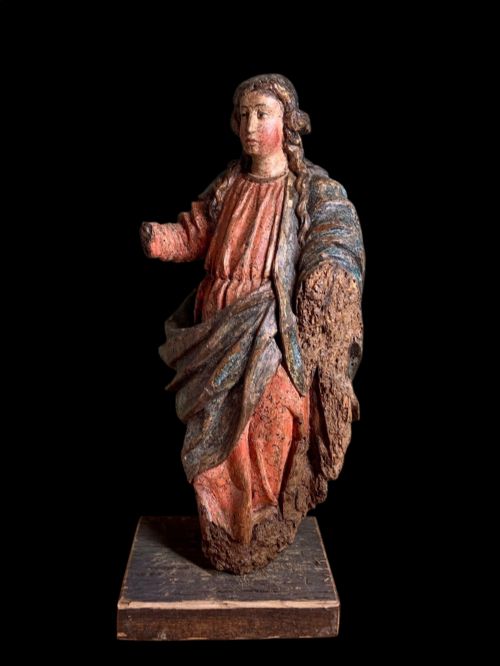
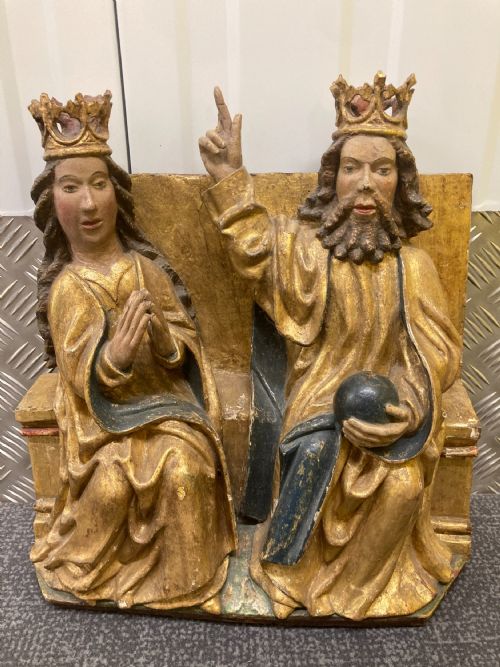
Many surfaces received a preparation layer of gesso before painters applied polychrome pigments or laid down sheets of gold leaf to build rich, luminous vestments. Over generations, this paint layer has naturally aged, developing craquelure and revealing the warm wood beneath through wear.
The inventory spans the pre-sixteenth century through the nineteenth century, encompassing Gothic, Renaissance, Baroque, and Revival styles.
Distinctions in quality
The survival of original surface finishes, including polychrome paint and gilding, elevates a piece significantly compared to examples stripped back to bare timber or heavily repainted in later centuries. Integration between the figure and its original base or architectural context further distinguishes workshop masterpieces from standard devotional output.
The Ecclesiastical Wooden Figure Glossary
- Polychrome
- Painted in several colours. This finish was commonly applied over a gesso ground on wooden sculptures to create lifelike garments and skin tones.
- Gesso
- A plaster mix applied to wood surfaces as a smooth base for gilding and painting. It provides a crisp foundation for intricate surface detail.
- Corpus Christi
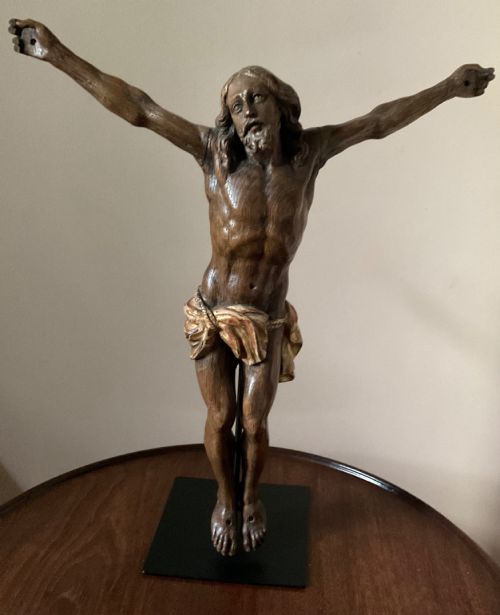
- The body of Christ depicted on a crucifix. These wooden carvings focus on the anatomical details of the passion.
- Giltwood
- Wood that has been decorated with gold leaf. This technique added celestial radiance to church figures and altarpieces.
- Santos
- A traditional wooden figure of a saint or holy person. These sculptures were often created for processional use or private devotion in Catholic regions.
Ecclesiastical Wooden Figure: Frequently Asked Questions
How should I display an antique wooden figure?
Position the piece away from direct sunlight and sudden temperature shifts, such as active radiators, which can cause historical timber to dry and split.
Place statues on stable surfaces or mount sturdy wall panels securely to bear the weight of dense hardwoods like oak and walnut.
Are these figures from churches?
Many of these carvings originated in European churches, abbeys, and private chapels, where they served as focal points for prayer and architectural adornment.
Others were created for domestic devotional shrines or processional use during religious festivals.
How do I identify the wood type?
Examine the grain pattern and weight of the sculpture, noting the characteristic tight pores of boxwood or limewood versus the bold open grain of oak.
Historic surfaces often obscure the timber beneath, requiring inspection of unpainted base areas or open backs.