




Carved Angel Sculpture
A carved angel sculpture brings centuries of ecclesiastical devotion and monumental craftsmanship directly into domestic interiors.
Carved Angel Sculpture
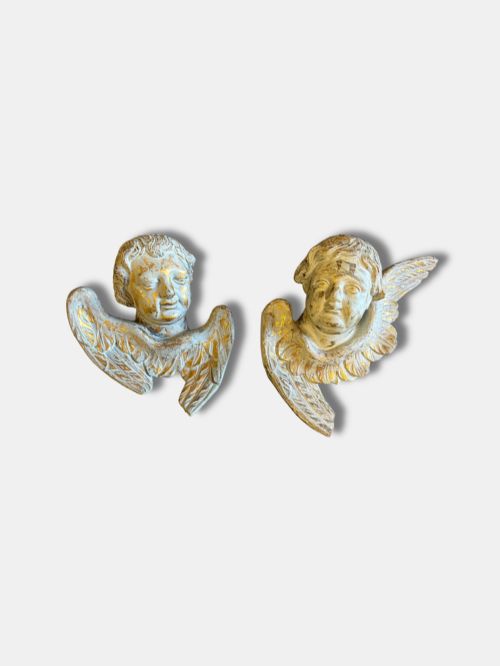
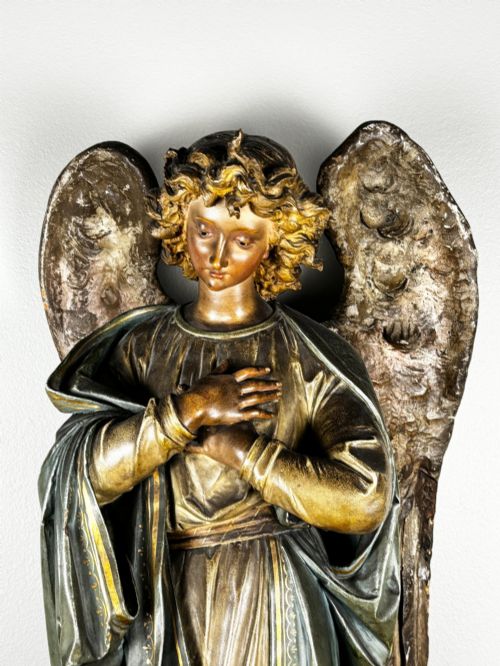
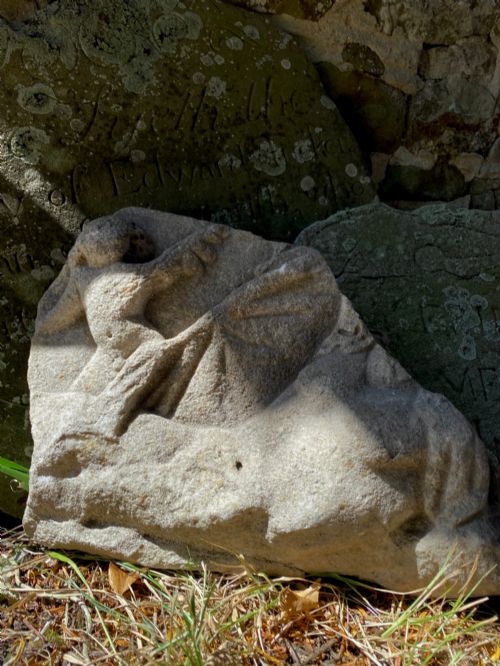
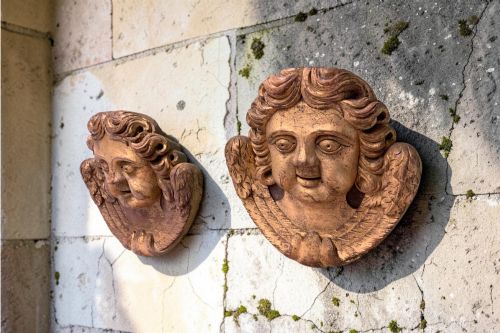
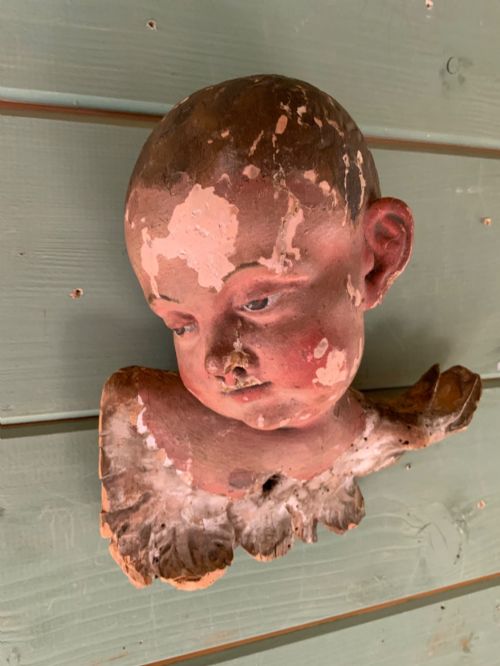
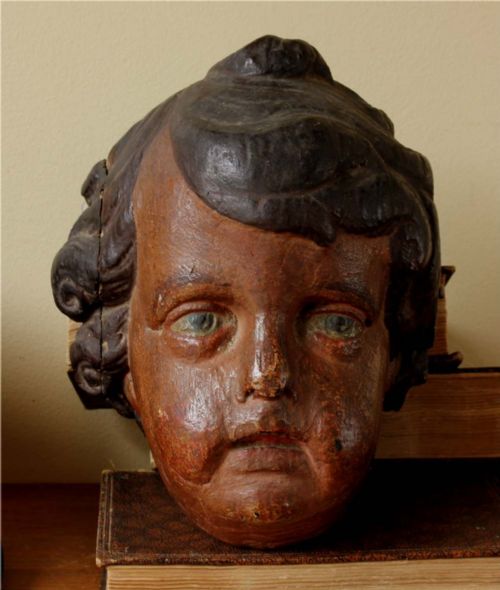
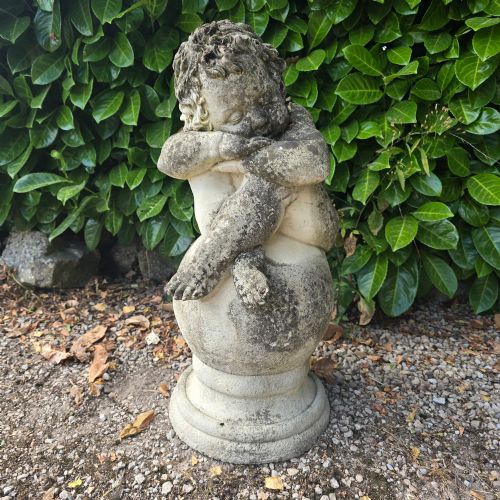
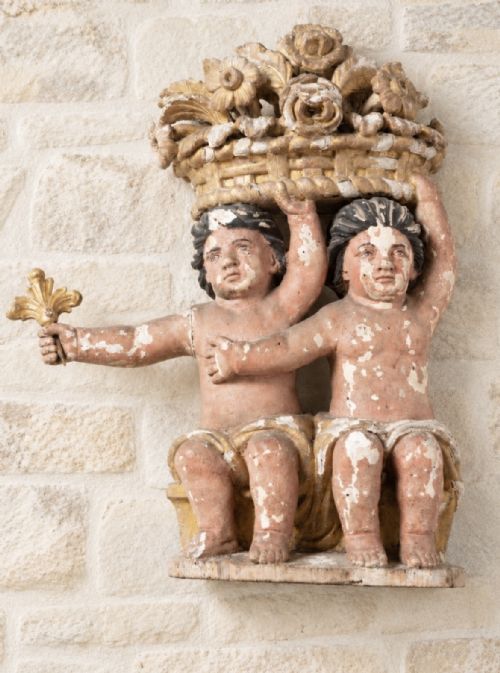
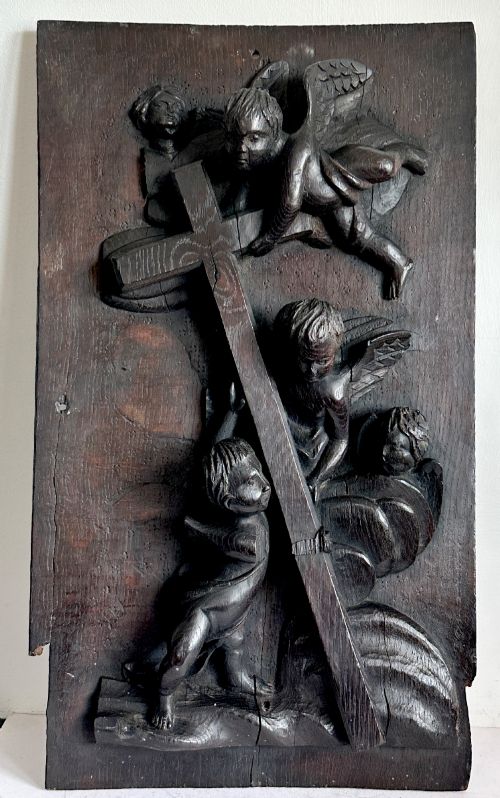
A carved angel sculpture spans diverse devotional forms, including monumental guardian figures, wall-mounted corbels, detached cherub heads, and architectural fragments. Buyers encountering this selection will frequently discover 18th-century French and Italian polychrome wooden putti alongside substantial 17th-century oak panels and Gothic architectural salvage.
The objects derive primarily from ecclesiastical contexts, ranging from French church carvings to Italian altar ornaments and Thai guardian figures. These pieces reflect specific regional periods such as the Baroque and Victorian Gothic eras, translating sacred architecture into portable sculptural relief and freestanding statuary.
Materials and construction methods
Carvers shaped these figures predominantly from solid woods like oak and various softwoods, utilising hand chisels and gouges to generate deep relief and organic drapery. Artisans frequently applied gesso preparations over the timber base to create a smooth, unified ground suitable for subsequent gilding with gold leaf.
Surface ornamentation relied heavily on polychrome paint applications, sometimes combined with silvering or exposed wood grains to enhance the theatricality of Baroque and Renaissance commissions. Fragments often retain original layers of pigment and gilding that reveal centuries of devotional use and atmospheric ageing.
Carved Angel Sculpture Retail Price Guide 2026
Typical asking prices for carved angel sculpture among the pieces listed under this phrase on Sellingantiques today, from the lower quarter to the upper quarter. They describe what is for sale here now, not the wider market.
Represented periods extend from the 16th century through the 17th, 18th, and 19th centuries, up to the 1930s.
Evaluating sculptural quality
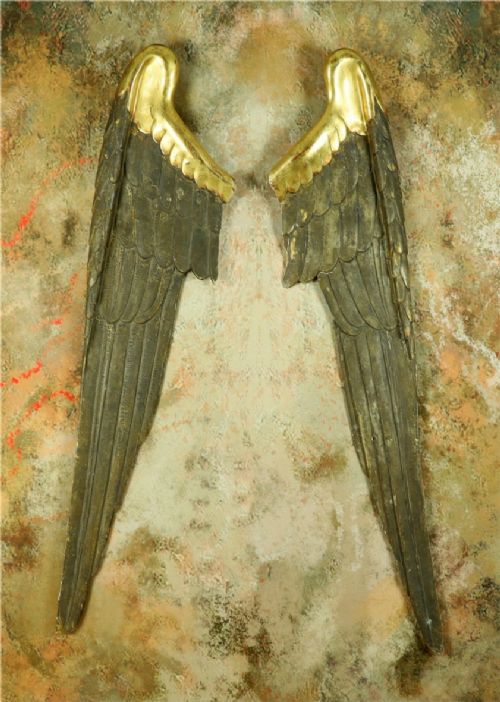
Quality rests upon the anatomical confidence of the carving, distinguishing fluidly rendered facial expressions and expressive drapery from stiff, mechanical workshop output. Superior examples display subtle depth in the feather work of wings and naturalistic softness in cherubic limbs, whereas lesser pieces exhibit flattened planes and hasty tool marks.
The integrity of the original surface finish dictates distinction at the upper end of the range. Retained early polychrome schemes and genuine gold leaf retain historic legibility, while unsympathetic overpainting or heavy modern intervention diminishes authenticity.
The Carved Angel Sculpture Glossary
- Putto
- A plump, naked male child figure frequently depicted in Renaissance and Baroque art, often resembling a cherub or cupid. These motifs appear regularly as independent wall carvings or paired altar ornaments.
- Polychrome
- Painted in several colours, typically applied to wood or plaster sculptures to imitate lifelike flesh tones and rich garments. This surface treatment is characteristic of European ecclesiastical figures.
- Gesso
- A plaster-like mixture applied to wood surfaces as a base for gilding and paint. It provides a smooth foundation for gold leaf application.
- Corbel
- A structural piece of stone, wood, or metal jutting from a wall to carry a superincumbent weight. In these listings, wooden examples often take the form of sculpted angelic figures.
- Ecclesiastical
- Relating to the Christian Church or its clergy, describing items originally commissioned for liturgical use in chapels, churches, and abbeys.
Carved Angel Sculpture: Frequently Asked Questions
What distinguishes a putto from a cherub?
A putto represents a classical winged infant motif derived from secular Renaissance art, while a cherub carries specific celestial and biblical connotations within religious iconography.
In practical terms on the market, the terms are frequently interchanged to describe small, winged child figures carved from wood or stone.
How do you date wooden religious carvings?
Dating relies on analysing tool marks, timber shrinkage, stylistic conventions of the period, and the composition of underlying gesso and pigment layers.
Earlier pieces from the sixteenth and seventeenth centuries exhibit distinct hand-chisel signatures and denser oak substrates compared to later nineteenth-century revivals.
Where were these sculptures originally displayed?
These carvings originated primarily within churches, abbeys, and domestic chapels, functioning as altar ornaments, architectural brackets, wall reliefs, or structural fragments.
Many spent centuries integrated into larger ecclesiastical furnishings before removal into private collections during architectural salvage.
How should antique wooden carvings be maintained?
Preservation requires stable indoor humidity levels and protection from direct sunlight and sudden temperature shifts that cause timber to split or gesso to flake.
Dusting should be performed gently with a dry, soft brush without applying liquid polishes or modern chemical cleaners to historic surfaces.