


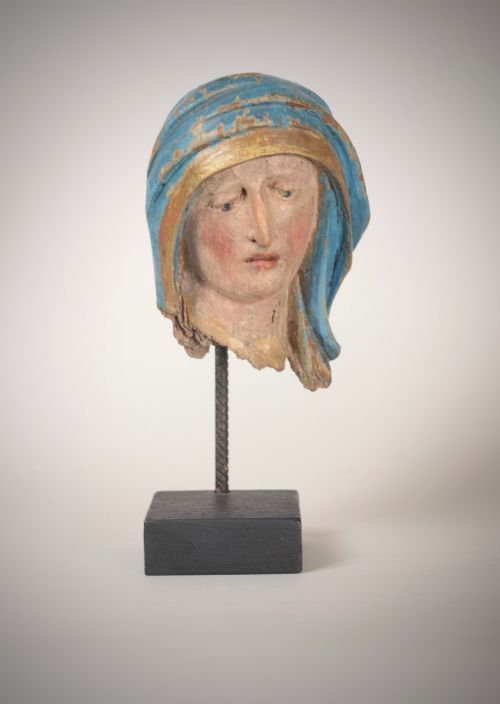
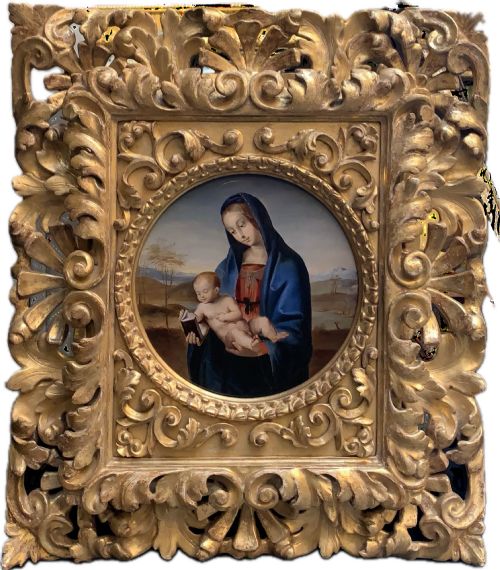

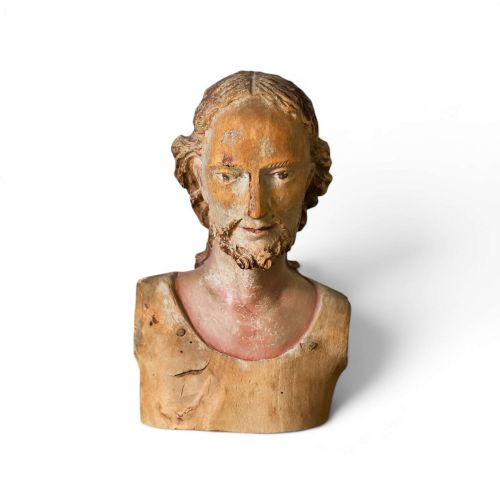
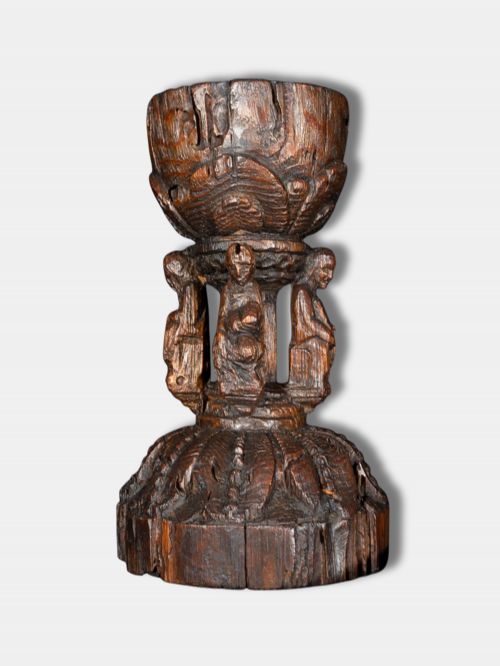
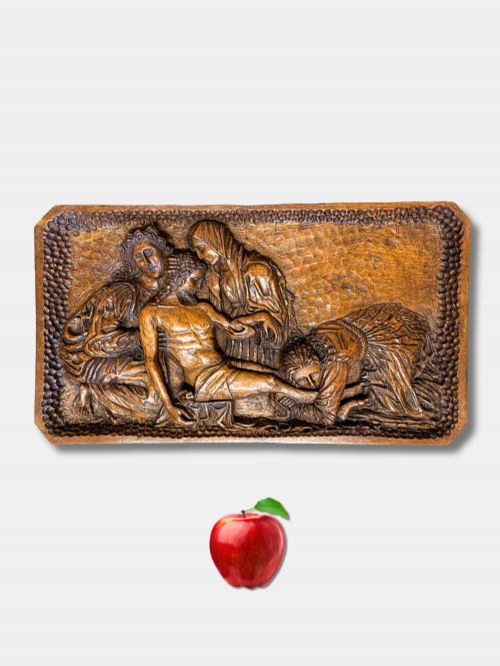

Italian Religious Carving
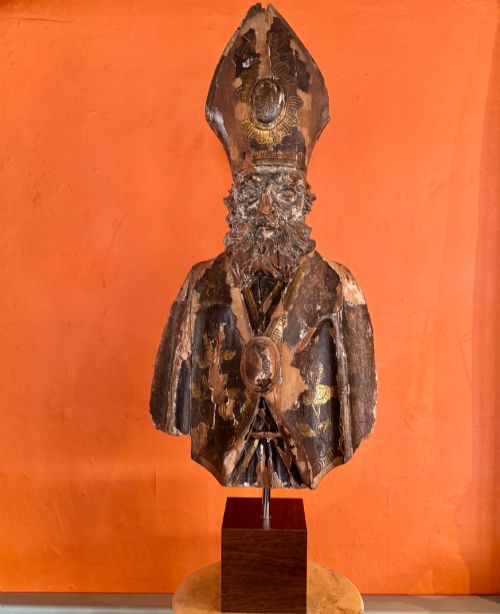
These pieces of italian religious carving span centuries of devotion, bringing devotional figures and sacred wooden sculptures into contemporary spaces.
Italian Religious Carving
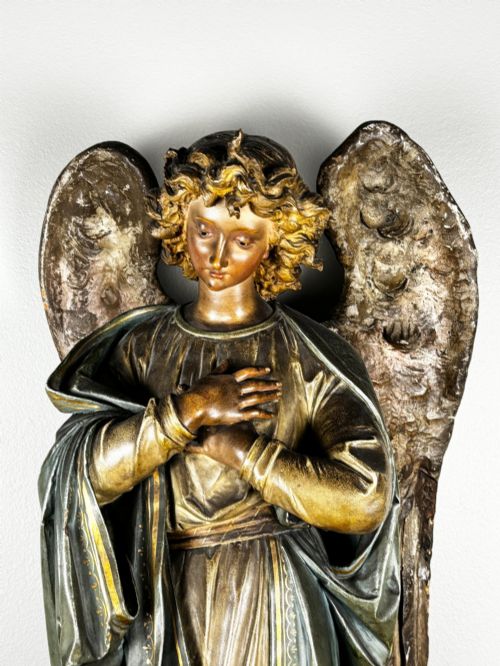
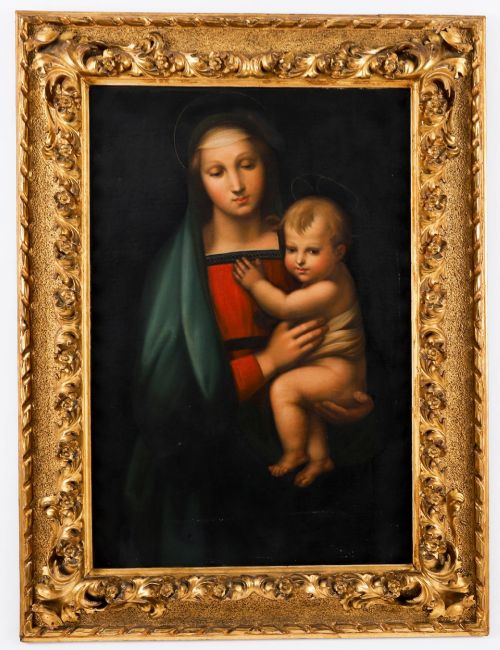
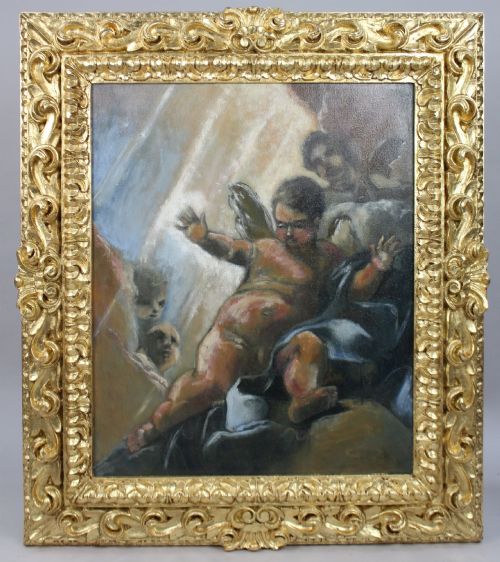
The objects most frequently met on this page date from the seventeenth and eighteenth centuries, often displaying the dramatic movement associated with Baroque artistry. Alongside these stand nineteenth-century revival pieces and devotional panels executed in oil on canvas.
Forms range from life-size processional figures and architectural busts to miniature portrayals of saints and candle-bearing angels. Olive wood, chestnut, and gessoed surfaces predominate, bearing the physical evidence of ecclesiastical use and private veneration.
How they were made
Carpenters and sculptors utilised regional timbers such as olive wood, chestnut, and oak, shaping the material with chisels and gouges before applying surface decoration. Many figures received a layer of gesso, providing a smooth ground for subsequent layers of polychrome pigment and gold leaf.
Giltwood elements relied on the delicate application of metal leaf over prepared grounds, sometimes burnished to create contrasting matte and reflective surfaces. Oil paint and gold leaf combined to render vestments, flesh tones, and haloes with rich optical depth.
Italian Religious Carving Retail Price Guide 2026
Typical asking prices for italian religious carving among the pieces listed under this phrase on Sellingantiques today, from the lower quarter to the upper quarter. They describe what is for sale here now, not the wider market.
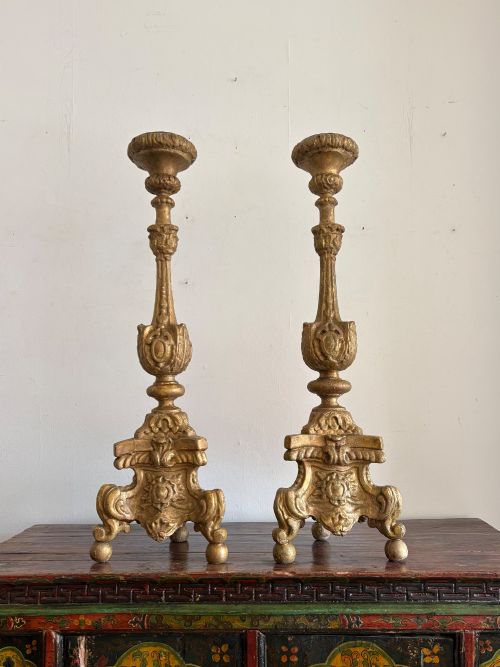
Listings include seventeenth-century wood panels, eighteenth-century giltwood altar candlesticks, and nineteenth-century polychrome angel figures.
What varies in quality
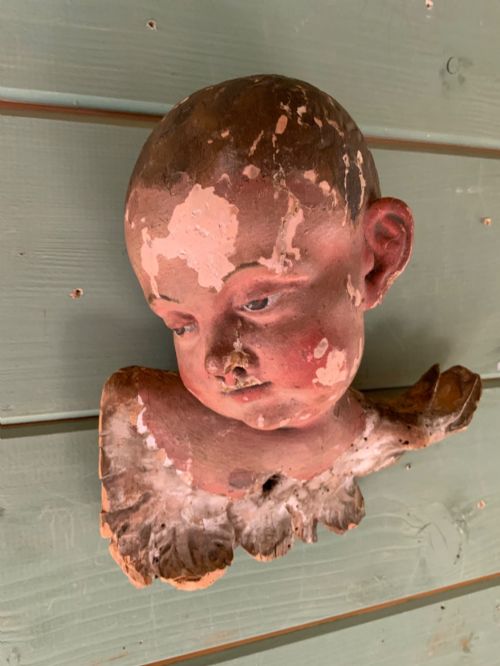
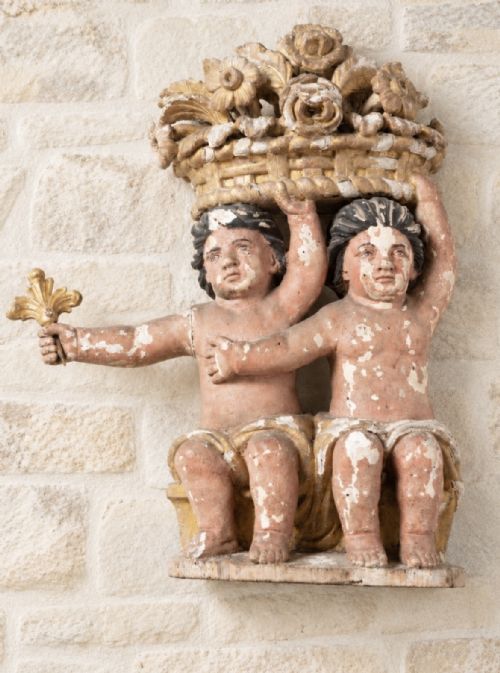
Preservation of the original gesso and pigment layers heavily influences the standing of a piece, as later overpainting or heavy restoration obscures the hand of the maker. The crispness of detail in gilded altar ornaments and carved putti heads indicates the level of care invested during production.
The Italian Religious Carving Glossary
- Polychrome
- Decorated in multiple colours. This technique involved applying paint directly to wood or over a gesso ground to render lifelike flesh and garments.
- Gesso
- A plaster mixture applied to wood surfaces as a base for gilding or painting. It creates a smooth, absorbent foundation for fine detail.
- Putto
- A representation of a naked cherubic child, frequently winged. These figures appear often in Baroque church decorations and altar furnishings.
- Reliquary
- A container for holy relics. These objects were often framed in glass and decorated with giltwood or mirror panels.
- Giltwood
- Wood carved and subsequently coated with gold leaf or gold paint. It brought reflective splendour to ecclesiastical interiors.
Italian Religious Carving: Frequently Asked Questions
How do I date an old carving?
Dating relies on stylistic markers, tool marks left on the reverse, and the composition of the underlying gesso. Baroque pieces exhibit dynamic movement, whereas earlier Renaissance works favour balanced symmetry.
Examining the wood species and shrinkage patterns also aids in confirming the age of the timber.
Were these pieces made for churches?
Many items originated in churches, convents, or private chapels as focal points for prayer and procession. Altar candlesticks, shrines, and large saint figures served liturgical functions.
Smaller panels and miniatures were intended for domestic devotion in private homes.
How should I clean polychrome wood?
Dusting gently with a dry, soft brush is generally sufficient for maintenance. Moisture and chemical cleaners risk damaging fragile historic paint layers.
Professional conservators should handle any deeper cleaning or structural repairs.
What is a Santos figure?
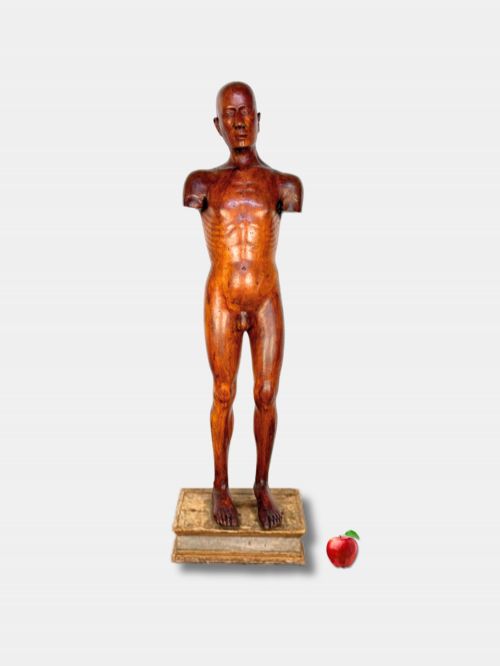
A Santos figure is a carved devotional statue representing a saint or holy person, historically used in religious processions. These figures often feature articulated limbs for dressing in real textiles.
Many retain traces of their original polychrome finish beneath later wear.