





Ecclesiastical Candle Holders
These ecclesiastical candle holders bring the solemn architectural presence of historic churches directly into domestic interiors through robust brass, iron, and carved wood.
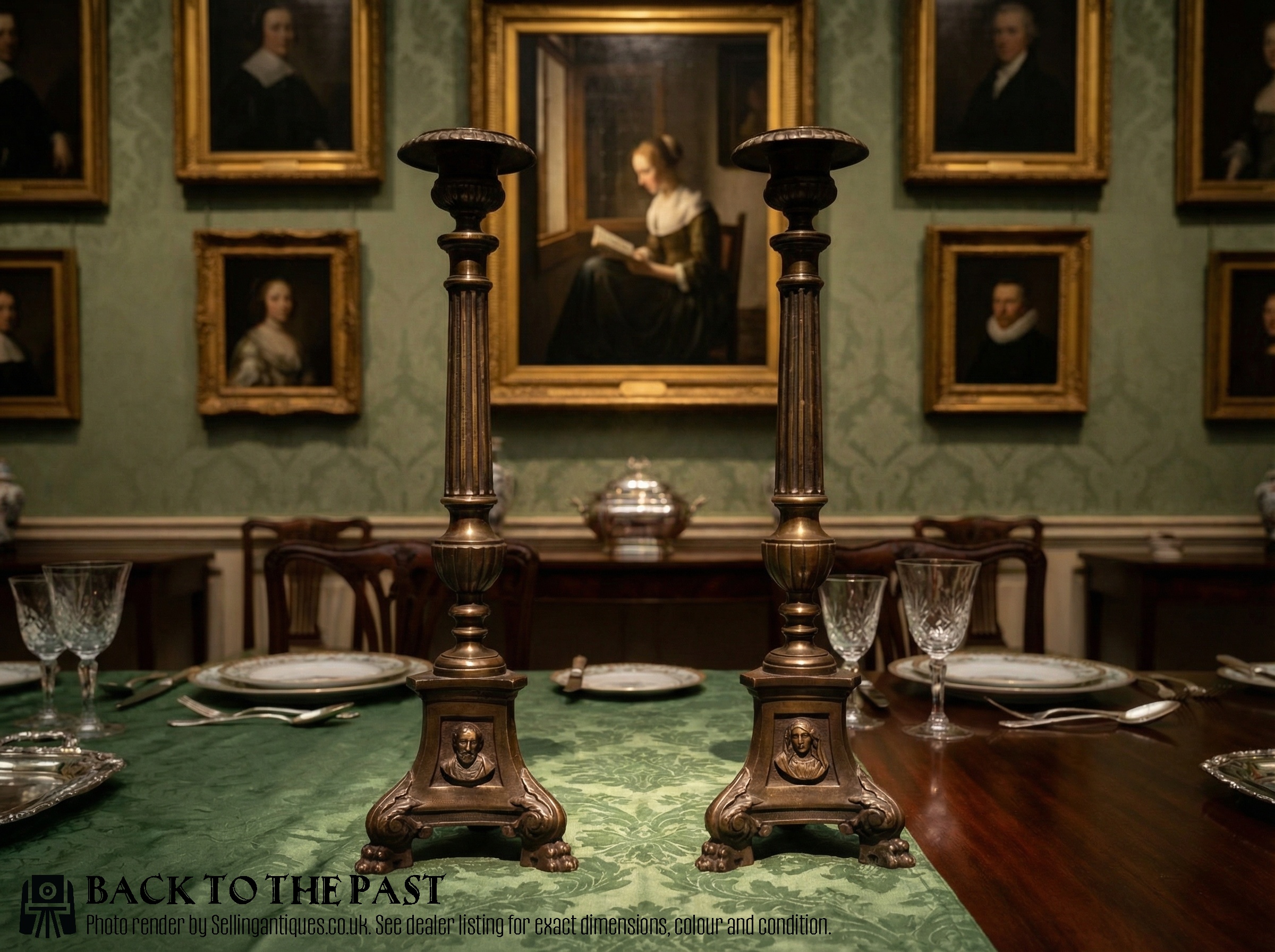
Ecclesiastical Candle Holders
When searching for ecclesiastical candle holders, buyers encounter heavy altar pieces, floor-standing prickets, and multi-branch candelabra designed for religious ceremonies. These items originate predominantly from the nineteenth and eighteenth centuries, reflecting historical periods of revivalism and ornate liturgical design.
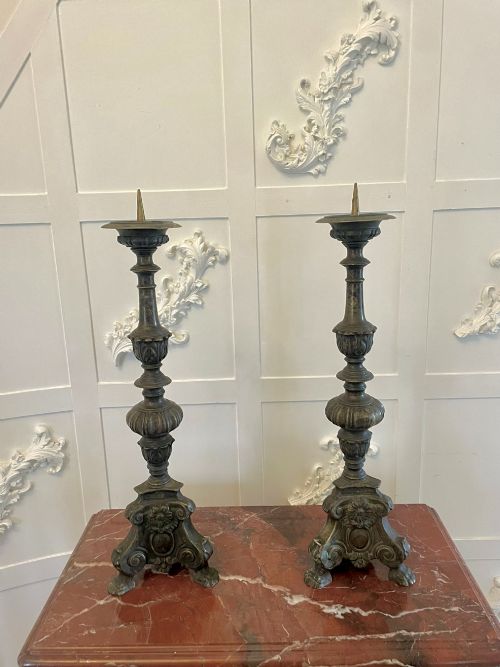
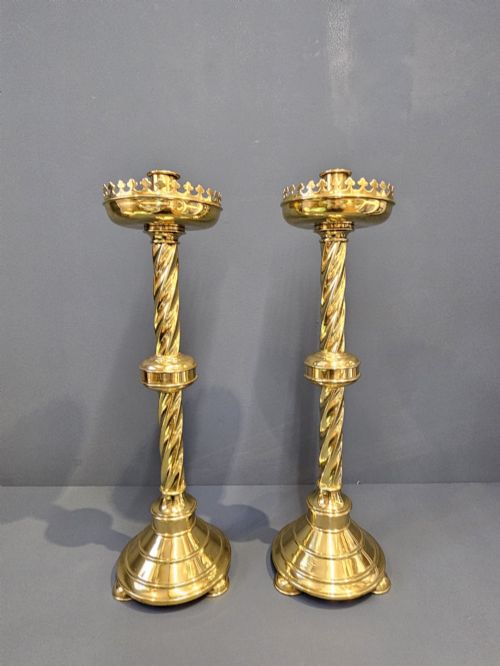
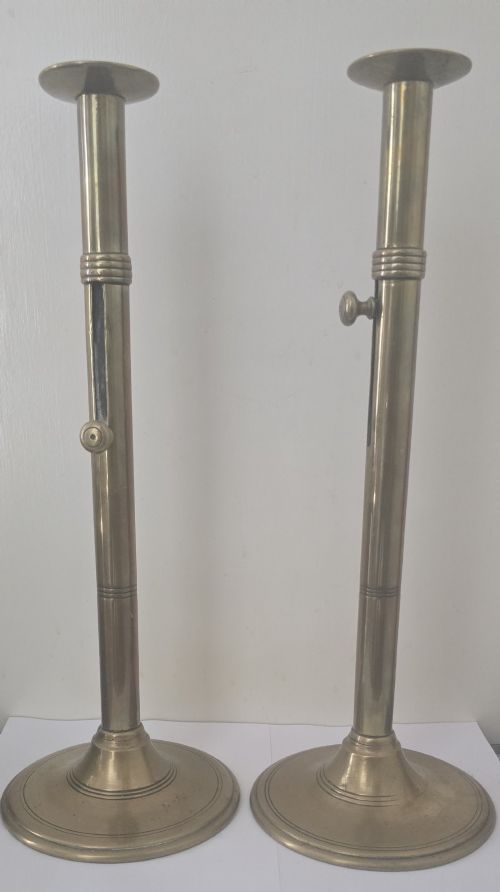
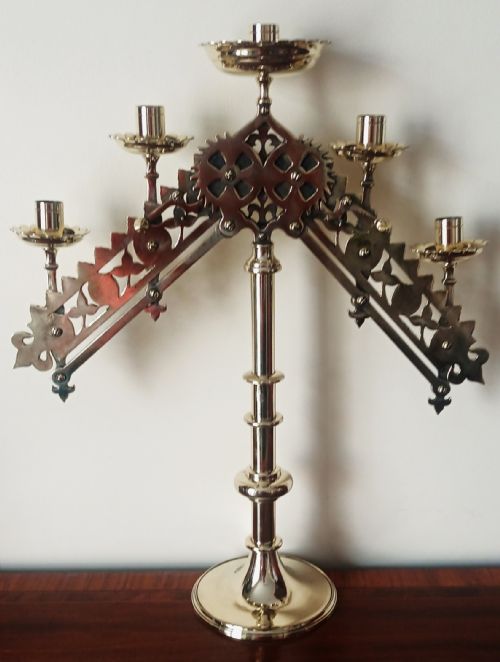
The version most commonly met on this page is the brass pair from the Victorian era, often bearing Gothic revival details such as trefoils and architectural mouldings. Alongside these metal examples, Italian and French carved wooden pieces emerge, sometimes retaining traces of silver leaf or gilt finish.
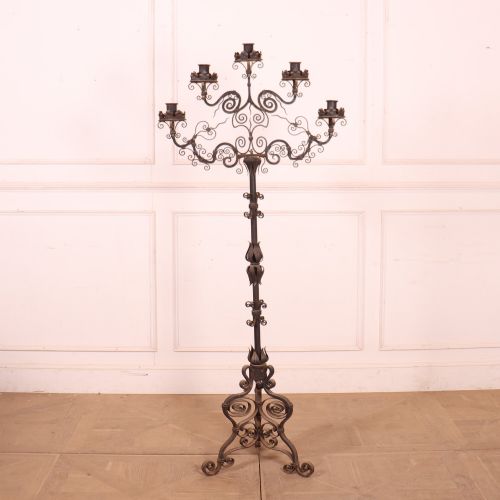
Formations range from table-top candlesticks with side ejectors to massive floor-standing candelabra requiring substantial clearance. Certain pairs function as converted table lamps, merging historical metalwork with modern domestic lighting needs.
Materials and Construction
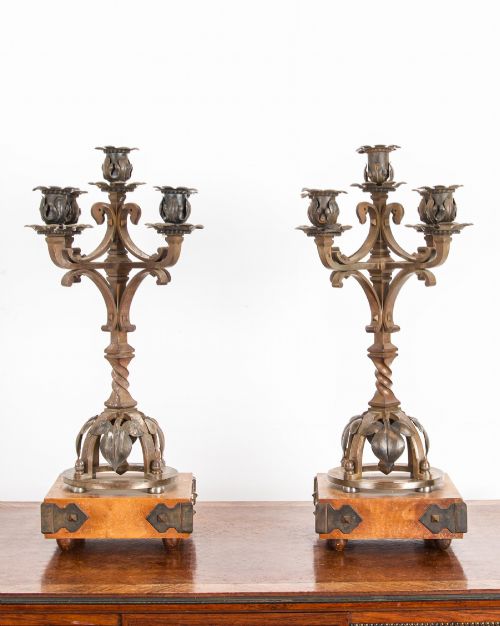
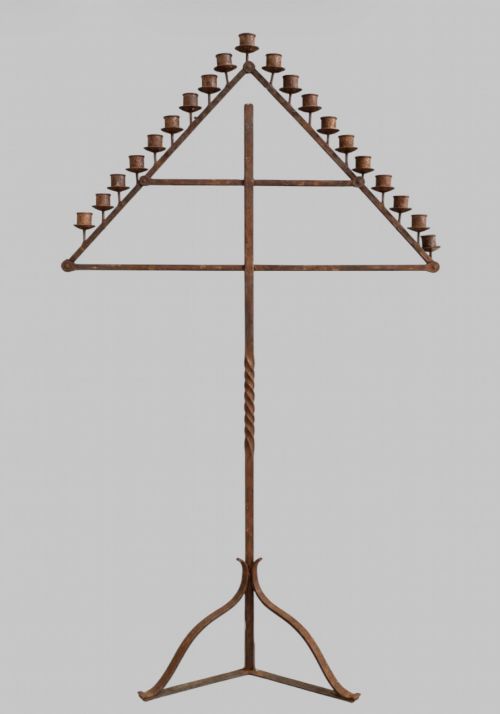
Brass dominates the selection, shaped through casting and turning to create heavy shafts and wide drip pans designed to catch melted wax during prolonged services. Bronze and wrought iron appear in architectural pieces, providing structural rigidity for multi-candle arrangements.
Carved wooden examples utilise timber such as treen or fruitwood, frequently finished with gesso, silver leaf, or gold leaf to mimic more costly metalwork under candlelight. Artisans employed hand-carving techniques for figurative elements like acolyte figures and decorative angels.
Construction methods rely on threaded joints for brass components and pegged mortise joinery for wooden altar stands, ensuring stability for tall candles. Metal components frequently exhibit patination developed through decades of handling and wax residue accumulation in ecclesiastical settings.
Ecclesiastical Candle Holders Retail Price Guide 2026
Typical asking prices for ecclesiastical candle holders among the pieces listed under this phrase on Sellingantiques today, from the lower quarter to the upper quarter. They describe what is for sale here now, not the wider market.
Acolyte candle holders often feature hand-carved wooden figures whose slightly mismatched eyes bear witness to centuries of solitary workshop carving.
Assessing Quality
The highest quality examples demonstrate crisp casting definition in brass or deeply undercut hand-carving in wood, whereas inferior pieces rely on shallow surface stamping or soft moulding. Proportions dictate visual balance, with superior items maintaining harmonious ratios between the base diameter, stem height, and drip pan width.
Completeness of original surface treatments distinguishes exceptional survivals, particularly on gilt or silvered wooden items where original leaf layers remain largely intact. Weight serves as a reliable indicator of metal substance, separating heavy structural church pieces from lighter domestic imitations.
T Thomason And Co
The Ecclesiastical Candle Holders Glossary
- Pricket
- A sharp metal spike on top of a candlestick designed to impale the base of a large candle. This form is standard for traditional church altar items.
- Gothic Revival
- An architectural and decorative style popular in the nineteenth century that mimics medieval forms. Pieces display pointed arches, lancets, and heavy geometric tracery.
- Candelabra
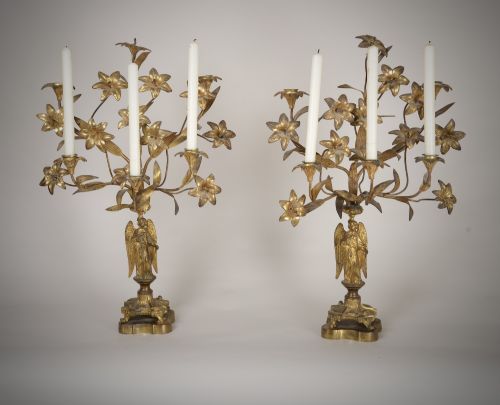
- A branched candlestick holding multiple lights on separate arms. These items provide symmetrical illumination for altars and large interior spaces.
- Gesso
- A plaster-like mixture applied to wood surfaces as a base for gilding or painting. It allows intricate relief ornamentation to be moulded onto carved wooden pieces.
- Treen
- Small handmade wooden household objects and decorative items. These pieces showcase traditional turning and carving skills from past centuries.
Ecclesiastical Candle Holders: Frequently Asked Questions
What is a pricket candlestick?
A pricket candlestick uses a sharp upward-facing spike rather than a socket to hold candles securely in place during church services.
This design accommodated the large wax tapers used in ecclesiastical settings where standard sockets proved insufficient.
How were these used originally?
These items stood upon altars, ledges, or directly on stone floors to illuminate liturgies and prayers within churches and chapels.
Large floor-standing versions provided ambient light near the chancel before the advent of modern electricity.
How do I style them at home?
Pair large brass candlesticks on a dining sideboard or position a heavy wrought iron floor candelabra in an empty corner as an architectural statement.
Keep candles proportional to the height of the stick to maintain the intended silhouette.
How do I date an antique brass candlestick?
Examine the base construction, casting seams, and wear patterns to distinguish nineteenth-century revival pieces from earlier Georgian examples.
Side ejectors and specific patination traits often provide reliable clues to the exact manufacturing decade.