
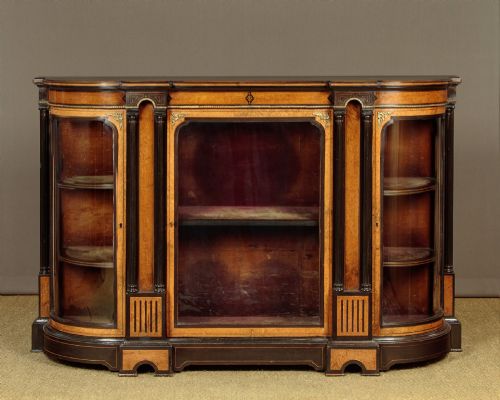


Ebonised Walnut Credenza
An ebonised walnut credenza brings dark timber contrast and figured grain into a formal room, combining display space with architectural presence.
Ebonised Walnut Credenza
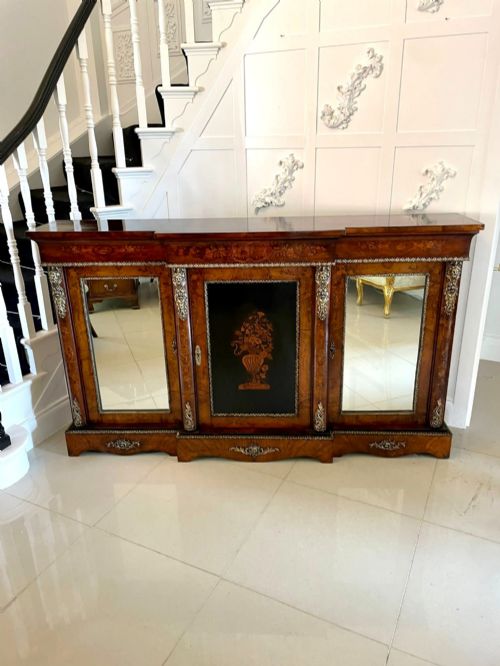
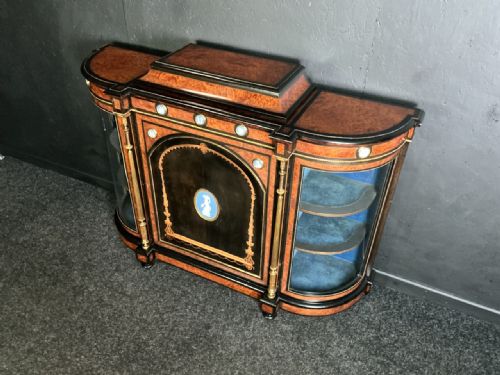
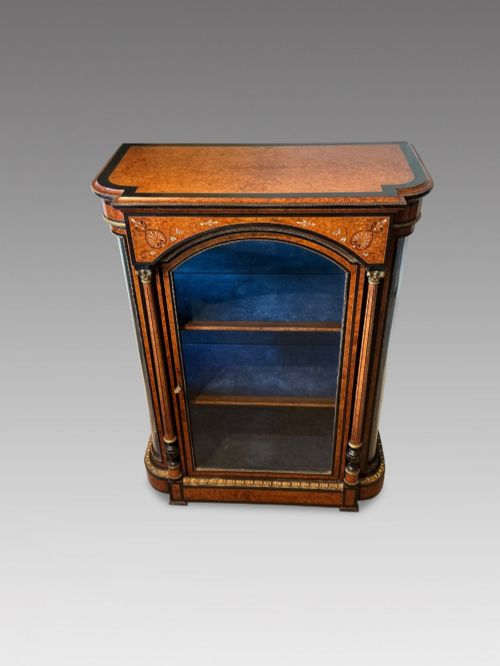
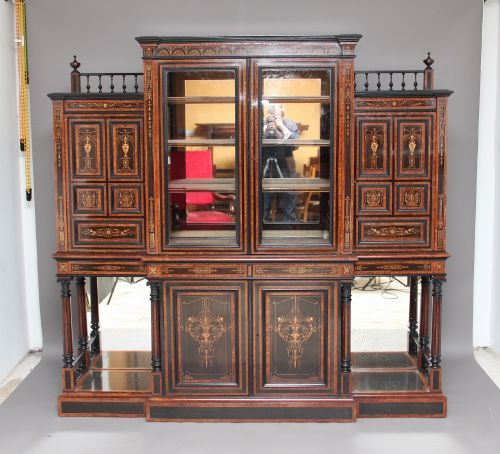
An ebonised walnut credenza is a low storage cabinet or display piece combining dark finished timber with the rich figure of walnut, appearing most frequently in Victorian iterations from the nineteenth century.
These items emerge across the nineteenth century, including pieces built around eighteen eighty and eighteen seventy, taking forms such as breakfronts, mirror-backed sideboards, and pier cabinets.
Makers and workshops across Britain and France produced these cabinets using contrasting timbers, often pairing dark ebonised mouldings with lighter burr walnut panels.
How they were made
Cabinet makers utilised solid walnut and applied veneers of burr walnut to create figured surfaces, contrasted with sections of ebonised wood to achieve a dramatic two-tone effect.
Construction frequently incorporated decorative inlays of marquetry alongside metal mounts in ormolu and brass, while certain examples integrated porcelain plaques like Sevres or Wedgwood into the timber frame.
Many iterations featured inset glass panels for display purposes, sometimes backed by mirrors or topped with marble surfaces depending on the specific regional style and workshop origin.
Ebonised Walnut Credenza Retail Price Guide 2026
Typical asking prices for ebonised walnut credenza among the pieces listed under this phrase on Sellingantiques today, from the lower quarter to the upper quarter. They describe what is for sale here now, not the wider market.
Listings feature walnut, burr walnut, ebonised wood, marble, and porcelain across Victorian and Aesthetic Movement pieces.
What varies in quality
The sophistication of the marquetry inlay and the depth of figure in the burr walnut veneer dictate the visual richness of the surface.
The precision of the ebonisation and the weight of cast brass or ormolu mounts separate standard production from more ambitious workshop pieces.
The integration of secondary decorative elements, such as fitted porcelain plaques or shaped marble tops, alters the character and ambition of the design.
Lamb of Manchester·Gordovil Spain·Gillow·H. Ogden Manchester
The Ebonised Walnut Credenza Glossary
- Ebonised
- Timber treated to imitate ebony, usually through staining or painting to achieve a dense black finish. This technique provides sharp contrast against lighter walnut veneers.
- Burr walnut
- Wood taken from a walnut tree growth that produces swirling, highly figured grain patterns. Cabinet makers prized these veneers for prominent door panels and friezes.
- Marquetry
- The art of applying pieces of veneer to a structure to form decorative patterns and pictorial designs. Workshops utilised various tinted woods to create floral motifs.
- Ormolu
- Gilded bronze mounts applied to furniture for decorative accent. These metal details appear around doors, feet, and cornices on high-status cabinets.
- Pier cabinet
- A narrow display cabinet designed to fit wall spaces between windows. These tall, slender forms typically feature glass doors and velvet-lined shelving.
Ebonised Walnut Credenza: Frequently Asked Questions
What is an ebonised walnut credenza?
An ebonised walnut credenza is a nineteenth-century low cabinet that pairs dark ebonised woodwork with figured burr walnut panels. These pieces served as decorative storage and display furniture in formal rooms.
They frequently incorporate glass doors, marquetry inlay, and marble tops. The form bridges storage utility with architectural presence.
How do I style a credenza at home?
Place the cabinet against a prominent wall in a dining room, hallway, or drawing room where its timber contrast can be appreciated. The top surface offers space for lamps or decorative objects.
Internal shelving allows for the display of ceramics or glassware behind glass panels. Ensure the room has balanced lighting to highlight the dark ebonised mouldings and figured grain.
How do I date a Victorian credenza?
Examine the construction methods, secondary timbers, and stylistic markers recorded across the nineteenth century. Pieces often date from specific decades like eighteen sixty or eighteen eighty based on design shifts.
Stylistic influences, such as Aesthetic Movement lines or French revival details, help narrow the period of manufacture. Maker stamps or labels, when present, provide a direct link to specific workshops.
What materials are used on these cabinets?
Makers constructed these cabinets using walnut carcasses adorned with burr walnut veneer and ebonised wood details. Decorative elements include brass, ormolu, and inlaid marquetry.
Some examples feature inset porcelain plaques and marble tops. Glass panels and mirrored backs appear frequently on display-focused variants.