
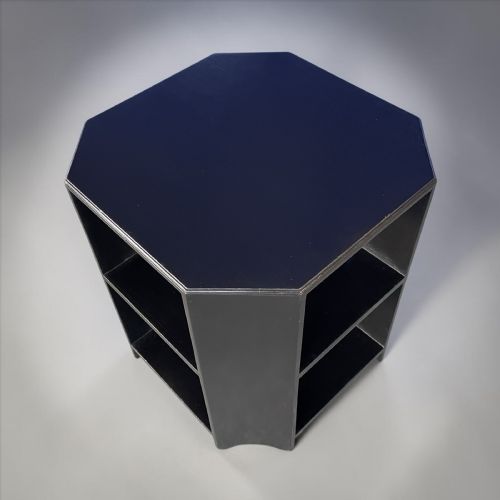
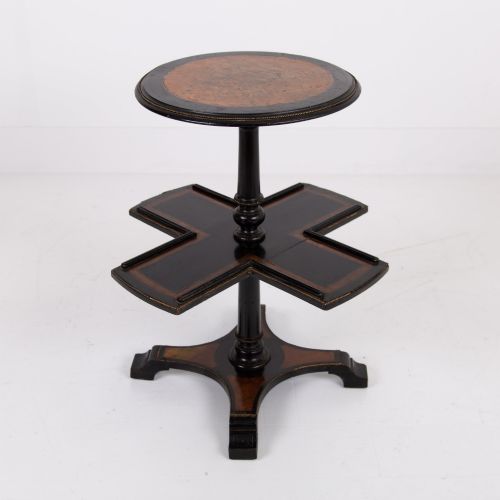
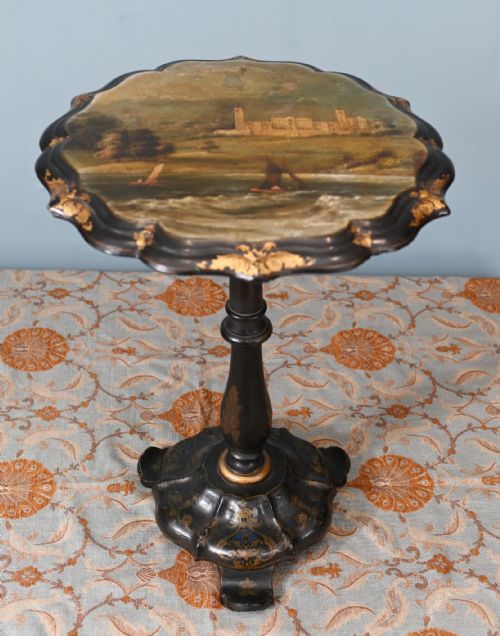
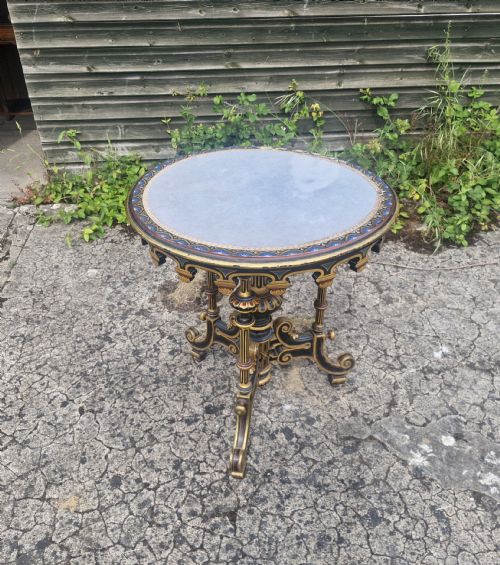




Ebonised Pedestal Side Table
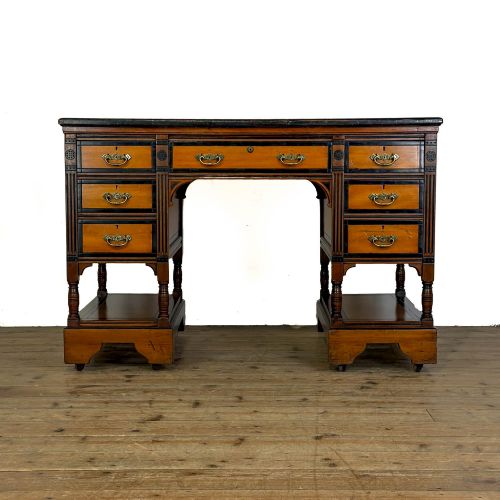
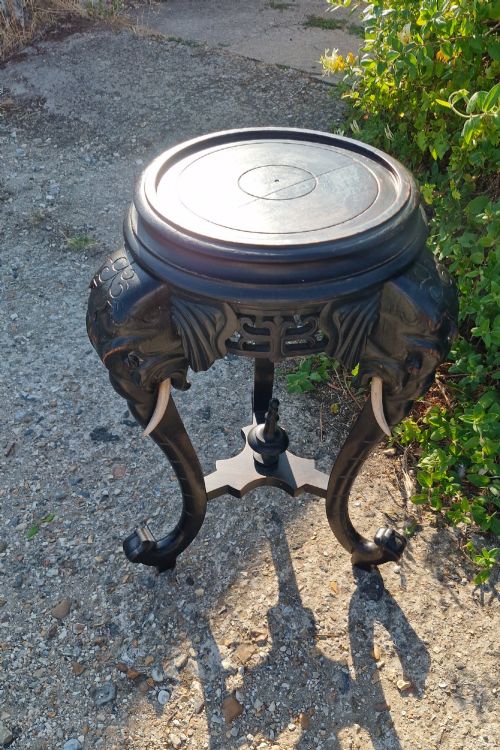
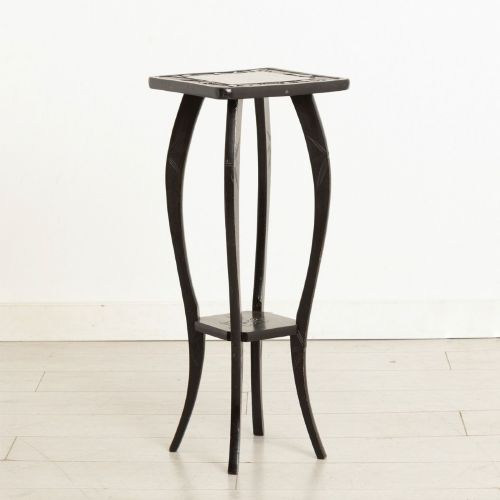
An ebonised pedestal side table brings deep, dark elegance to a room, offering a compact surface raised on a central support.
Ebonised Pedestal Side Table
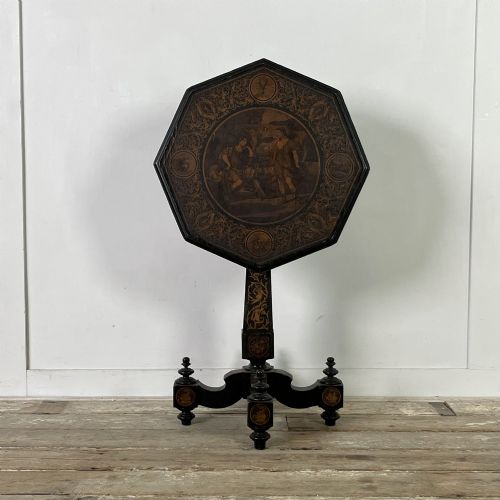
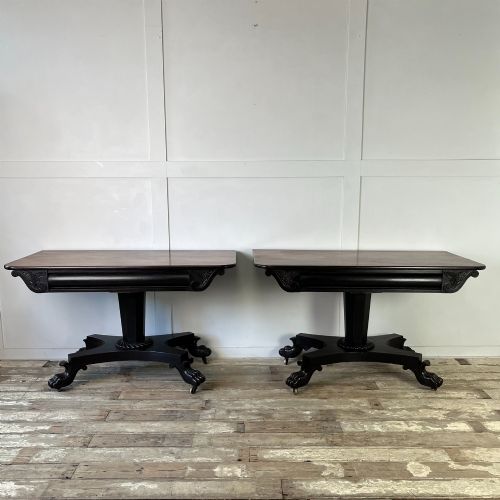
An ebonised pedestal side table typically presents a dark, polished surface supported by a single central pillar, originating predominantly across the nineteenth century. These pieces span compact lamp tables, plant stands, and occasional tables designed to fit beside seating or into corners.
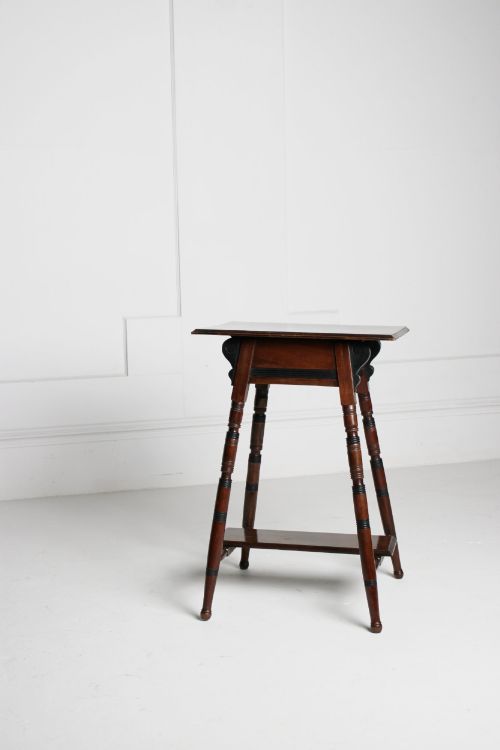
The selection ranges from Victorian Aesthetic Movement examples with contrasting wood grains to Regency designs and later twentieth-century interpretations. Makers often utilised this dark finish to emulate expensive exotic timbers like ebony on more accessible hardwoods.
How they were made
Craftsmen achieved the distinctive black finish through ebonising, a chemical or pigment staining process applied to timber such as walnut, mahogany, or fruitwood to mimic solid ebony. Surfaces were often further embellished with marquetry, bone inlay, or gilt highlights to catch the light against the dark background.
Structural stability on a single column required robust internal framing and weighted tripod or platform bases to prevent tipping. Tops frequently featured tilt mechanisms or fixed circular and octagonal configurations joined firmly to the central pedestal.
Listings feature ebonised pedestal side tables paired with materials like rouge marble, brass, and amboyna across the Victorian and Regency eras.
What varies in quality
Excellence in an ebonised pedestal side table lies in the crispness of the turning on the central pillar and the integrity of the ebonised finish. Superior examples show careful timber selection beneath the stain, whereas lesser pieces rely heavily on thick paint to conceal inferior joints.
The sophistication of secondary decoration, such as delicate bone inlay, marquetry patterns, or original marble inserts, distinguishes standard production items from workshop pieces created during the Aesthetic Movement or Regency periods.
Druce And Co London·Liberty Of London
The Ebonised Pedestal Side Table Glossary
- Ebonised
- Wood treated with a stain, dye, or polish to imitate the dark, dense appearance of genuine ebony. This finish became particularly popular during the nineteenth century for furniture mimicking exotic imports.
- Pedestal
- A single central support column carrying a tabletop, usually mounted on a tripod base or a platform foot. This construction maximises legroom around the furniture.
- Marquetry
- Decorative veneer patterns applied to a furniture surface using various woods, metals, or bone to form pictorial or geometric designs. It requires high precision from the maker.
- Aesthetic Movement
- A late nineteenth-century design style emphasising visual beauty over narrative content, often incorporating Japanese motifs and ebonised finishes. Pieces from this era frequently feature contrasting highlights.
- Guéridon
- A small French table supported by one or more columns, often featuring a marble top. Originally introduced in the seventeenth century, the form persisted through the Regency and Victorian eras.
Ebonised Pedestal Side Table: Frequently Asked Questions
What rooms suit an ebonised pedestal side table?
These compact tables function effectively beside armchairs, in narrow hallways, or as plant stands in reception rooms. Their dark finish contrasts well against lighter walls and upholstery.
Because they occupy minimal floor space due to the central pedestal, they fit into corners where four-legged tables prove impractical.
How do I care for an ebonised finish?
Maintenance requires gentle dusting with a soft, dry cloth to protect the polished surface from abrasive particles. Avoid placing damp items directly onto the timber to prevent water marking.
Applying a traditional beeswax sparingly helps maintain the lustre without building up excessive residue on the dark stain.
Are these tables sturdy enough for daily use?
Pedestal designs rely on a balanced base, typically with three or four feet spreading outward to support the weight above. Properly constructed nineteenth-century examples handle everyday items like lamps and books securely.
Placing heavier objects near the centre rather than the extreme edge keeps the table stable during normal use.
How can I tell a Victorian ebonised table from a later reproduction?
Examining the timber beneath any wear on the dark finish reveals the underlying wood type and age. Hand-cut fixings, traditional joinery methods, and the natural patina of the materials indicate nineteenth-century manufacture.
Twentieth-century revivals often display more uniform machine tooling and modern adhesives beneath the structural joints.