


Regency Penwork Table
A regency penwork table is a masterclass in monochrome surface artistry, offering intricate ink-drawn scenes on ebonised wood for the discerning collector.
Regency Penwork Table
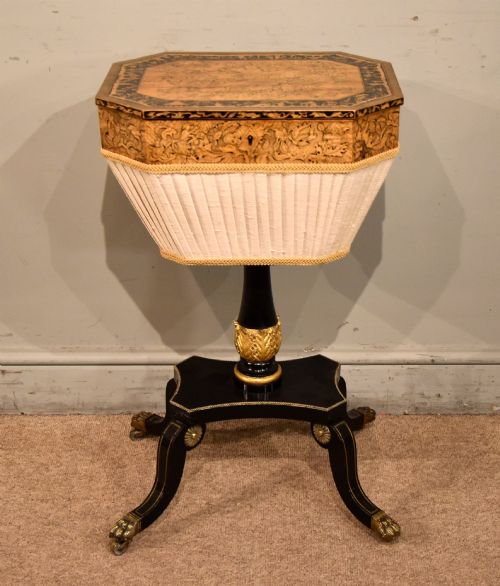
A regency penwork table combines practical domestic furniture with meticulous surface ornamentation executed entirely in ink. These pieces date predominantly from the Regency and Georgian eras, spanning the late eighteenth and early nineteenth centuries.
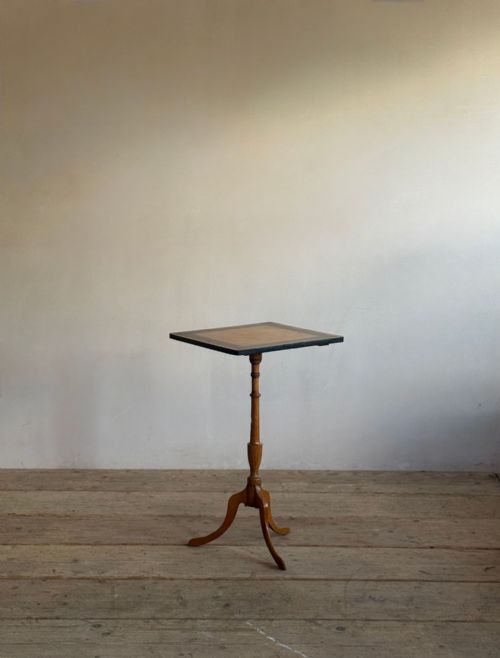
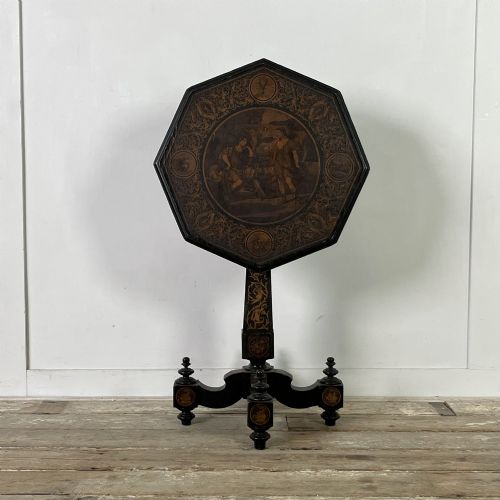
The form varies significantly across the surviving examples, taking shape as tripod games tables, occasional tables, sewing tables, and chess boards. Collectors frequently encounter pieces incorporating chessboard tops or tilt mechanisms alongside decorative boxes and table cabinets.
Originating primarily within English workshops of the period, these tables display distinct stylistic traits such as chinoiserie motifs and architectural renderings. The typical survival reflects the refined taste of the Regency interior through its ebonised wood ground and precise linework.
Materials and construction
The foundation relies upon seasoned timber, frequently ebonised wood, boxwood, and occasionally rosewood, prepared with a smooth surface to receive the ink. Craftsmen built sturdy tripod bases and occasional tables designed to support delicate decorative programmes.
Decoration was achieved through meticulous penwork and ink application, building up complex pictorial scenes, geometric borders, and figural vignettes by hand. Finished surfaces were then protected with varnish or lacquer to preserve the monochrome drawings against daily wear.
One remarkably specific box records the Brighton Chain Pier, immortalising a seaside promenade in tiny ink strokes.
Judging quality and execution
Quality rests primarily upon the precision and complexity of the penwork itself, distinguishing hurried commercial production from masterwork execution. The density of the detail across the ebonised surface and the clarity of the ink lines determine the artistic merit of the piece.
The integrity of the underlying furniture construction and the preservation of the original varnish or lacquer finish also govern value. Pieces that retain crisp pictorial detail without excessive rubbing demonstrate superior craftsmanship and careful historical stewardship.
George Merrifield
The Regency Penwork Table Glossary
- Penwork
- A decorative technique using pen and ink on a prepared wooden surface to simulate inlaid ivory or elaborate engraving. This meticulous method defines the primary aesthetic of the pieces.
- Ebonised
- Wood treated to resemble expensive ebony, typically by staining or painting the surface black. It provides the high-contrast dark ground necessary for penwork designs.
- Tripod Table
- A small table supported by a central pillar resting on three legs. This form is common among games and occasional tables of the Regency period.
- Chinoiserie
- European artistic style reflecting Chinese motifs and landscapes. This style frequently appears in the penwork decoration of cabinets and tables.
- Tilt Top
- A tabletop hinged to the pillar below, allowing the surface to fold vertically when not in use. It saves domestic space and displays the penwork surface as wall decoration.
Regency Penwork Table: Frequently Asked Questions
What is a regency penwork table?
A regency penwork table is a piece of furniture decorated with intricate ink drawings on an ebonised wood surface.
These tables were produced during the late Georgian and Regency periods, serving as both functional furniture and decorative art.
How were these tables used originally?
They functioned as versatile pieces for domestic interiors, frequently serving as games tables for chess or card playing.
Some variations included sewing tables fitted with compartments for needlework or occasional tables used for display.
How do I care for penwork surfaces?
Keep the wood away from direct sunlight and high humidity to prevent the varnish and ink from degrading.
Dust gently with a dry, soft cloth and avoid chemical polishes that might damage the delicate ink decoration.
How can I identify the period?
Examine the timber construction, leg forms, and the style of the ink ornamentation for traits characteristic of the early nineteenth century.
Stylistic markers such as Grand Regency proportions and specific chinoiserie motifs help date the execution accurately.