


Timber Tripod Candle Stand
These timber tripod candle stand pieces offer compact elegance, bringing period charm and functional surfaces to traditional interiors.
Timber Tripod Candle Stand
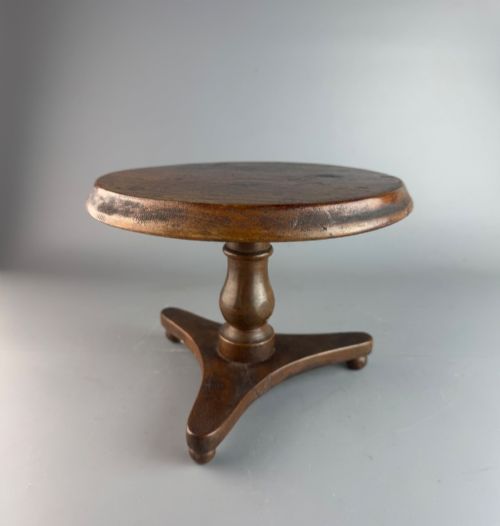
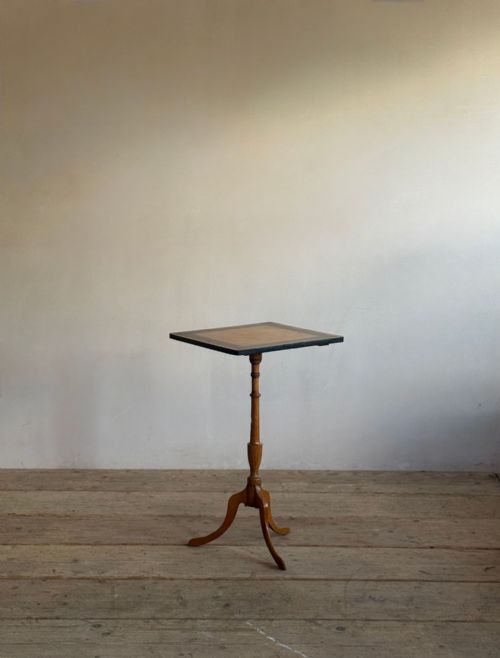
A timber tripod candle stand provides a compact elevated surface, historically utilised for illumination or holding small items. The examples seen here encompass diverse forms such as wine tables, occasional tables, and specific candlestands.
The periods represented span from the Georgian era through the Victorian period and into the Edwardian and early twentieth century. Buyers encounter stylistic influences ranging from formal Georgian design to country interpretations and Regency aesthetics.
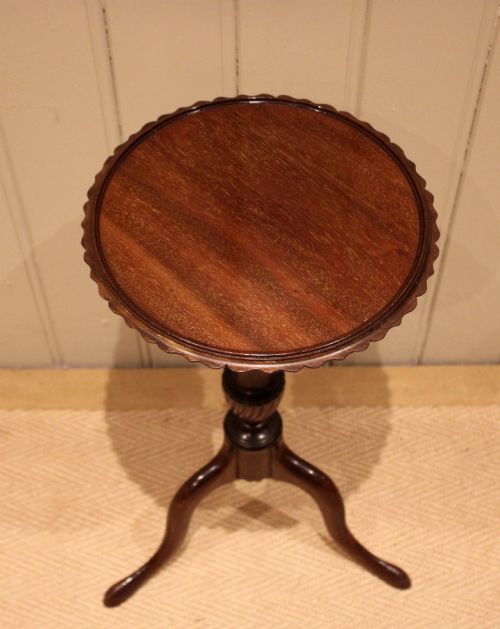
Object variations include tilt-top mechanisms, fixed tops, and specialised decorative surfaces like penwork. Formations range from simple occasional pieces to barley twist supports and pie crust edges.
How they were made
Construction relies upon a variety of timbers including mahogany, rosewood, figured walnut, solid walnut, yew wood, sycamore, and ash, alongside general hardwood and wood categories. These materials provide the structural integrity required for slender three-legged supports.
Surface decoration and finishing techniques include penwork decoration and lacquer work applied to timber substrates. Woodturning produces decorative elements such as barley twist stems while stability is achieved through balanced tripod leg configurations.
The diverse forms span wine tables, occasional tables, candlestands, and side tables utilising tripod bases.
What varies in quality
Quality rests upon the choice of timber and the sophistication of its figuring, distinguishing richly patterned rosewood and figured walnut from simpler hardwood constructions. The selection of finely grained timbers dictates the visual depth of the piece.
Execution of decorative details, from intricate penwork to turned barley twist supports, separates standard workshop production from finer examples. The refinement in edge profiles, such as pie crust shaping, further demonstrates the maker's skill.
The Timber Tripod Candle Stand Glossary
- Tripod table
- A small freestanding table supported by a pillar above three legs. This construction prevents wobbling on uneven historical floors.
- Tilt-top
- A tabletop hinged to the central pillar so it can pivot vertically when not in use. This allowed the stand to be stored flat against a wall.
- Pie crust edge
- A raised, carved decorative border along the perimeter of a circular tabletop. The undulating rim resembles the crust of a pie.
- Barley twist
- A spiralling column turned on a lathe to resemble a twisted rope. It appears frequently on the central stems of nineteenth-century tables.
- Penwork
- Surface decoration created using ink applied with a pen to form intricate motifs and patterns on wood. It creates detailed imagery without carving.
Timber Tripod Candle Stand: Frequently Asked Questions
What is a timber tripod candle stand?
A timber tripod candle stand is a small table with three legs supporting a central pillar, designed historically to hold a candle or small items.
Today these pieces function as versatile occasional tables or wine tables in modern living spaces.
How were these stands originally used?
These stands provided movable candle illumination before electric lighting became common in homes.
People also used them beside chairs or beds for holding drinks, books, or writing materials.
How do I identify a Georgian stand?
Georgian stands typically display classic proportions and restrained ornamentation suited to eighteenth-century interiors.
They often utilise dense timbers like mahogany and feature understated tripod bases without heavy Victorian turning.
Where should I place a tilt-top table?
A tilt-top table can stand flat against a wall when folded to display the decorative top.
When lowered horizontally, it serves as a functional surface for drinks or small decorative objects.