
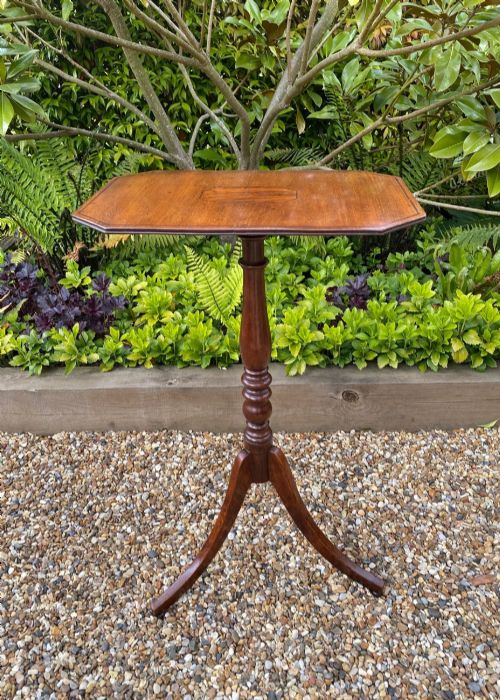
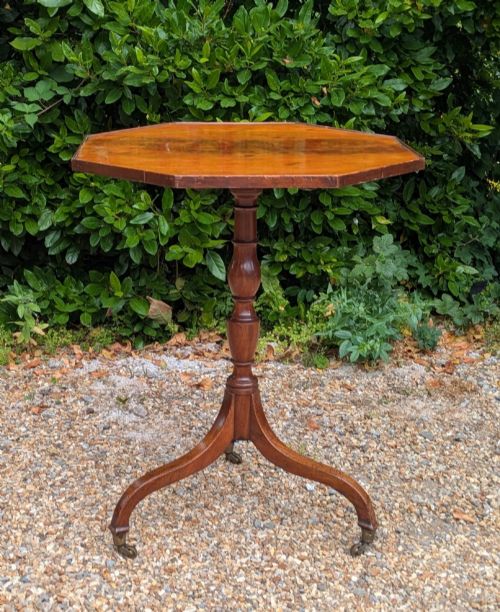
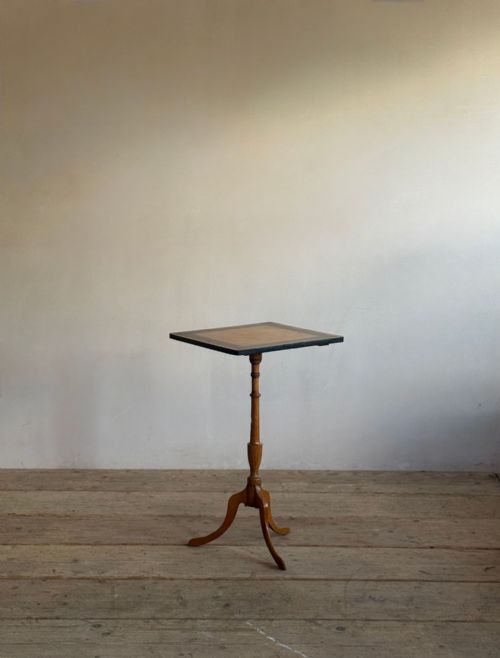


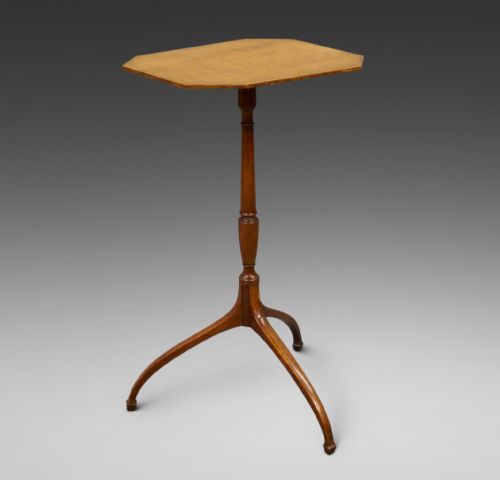

Regency Turned Stem Table
A regency turned stem table offers the clean proportion and sturdy pedestal support that define the period.
Regency Turned Stem Table
A regency turned stem table brings together compact proportions and pedestal support, serving as a versatile piece for wine, reading, or lamps. When you search for a regency turned stem table, you encounter occasional tables, wine tables, and side tables designed with a central pillar.
The pieces on this page span the Regency period, Georgian era, and the nineteenth century, including later Victorian interpretations of the style. Most examples rely on a tripod base beneath the turned stem, supporting round or tilt tops intended for flexible placement in a room.
Makers of these tables utilised timber varieties that offered rich grain and deep colour, creating functional furniture suited to polite company and domestic use. The forms range from plain mahogany surfaces to detailed pieces featuring penwork decoration and satinwood.
How they were made
Cabinet makers built these tables using dense hardwoods such as mahogany, rosewood, cherry wood, and yew wood, often selecting timber with prominent grain patterns for the top. The central pillar or stem was shaped on a lathe to create balanced turned profiles before being fixed to tripod legs.
Many examples incorporate a tilt top action with brass catches, allowing the surface to fold away when not in use. Surface decoration on specific pieces includes intricate penwork with ink and delicate wood inlay, finished to a smooth sheen.
Some dining tables here must have witnessed an extraordinary amount of port consumption.
What varies in quality
Quality in a regency turned stem table rests on the choice of timber and the precision of the turning on the central pillar. Superior examples display dense, well-figured mahogany or exotic woods like rosewood and satinwood, matched with crisp joinery at the tripod joints.
The refinement of the mechanism for tilt top actions distinguishes standard utility pieces from finer drawing-room examples. Details such as penwork decoration and brass fittings elevate the execution, separating basic forms from more ambitious workshop production.
The Regency Turned Stem Table Glossary
- Tilt top action
- A mechanism beneath the table surface that allows the top to pivot vertically for storage. This clever engineering saves space in smaller rooms.
- Tripod base
- A support structure featuring three legs radiating from a central column. It provides steady footing on uneven floors.
- Penwork
- A surface decoration technique using ink to draw fine motifs directly onto the wood. It creates intricate patterns reminiscent of inlay without cutting the timber.
- Satinwood
- A pale, lustrous hardwood prized for its yellow tone and fine grain. It appeared frequently on decorative surfaces during the Regency period.
Regency Turned Stem Table: Frequently Asked Questions
What is a regency turned stem table used for?
These tables served various practical functions in domestic interiors, operating as wine tables, lamp stands, or reading tables.
Their compact size allowed servants to move them easily around a room to suit the evening's activities.
How do I identify a true period piece?
Look closely at the timber selection, hand-turned pillar construction, and traditional joinery methods used in the frame.
Period examples show natural ageing in the wood and lack modern machine marks on the hidden structural parts.
Can I use a tilt top table daily?
Yes, the tilt mechanism was designed for regular use, allowing the table to stand flat or fold away against a wall.
Take care when operating older brass catches to ensure the wood remains unstressed.
What woods were commonly used?
Mahogany forms the majority of surviving examples, often complemented by rosewood, cherry wood, yew wood, and satinwood.
Each timber brings a distinct weight and colour depth to the finished piece.