
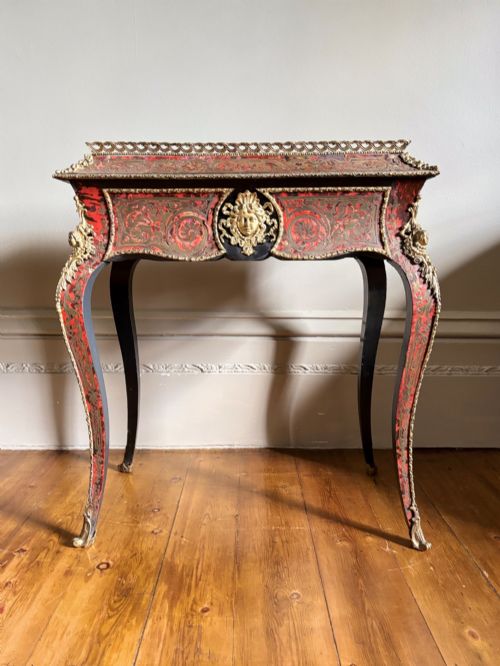
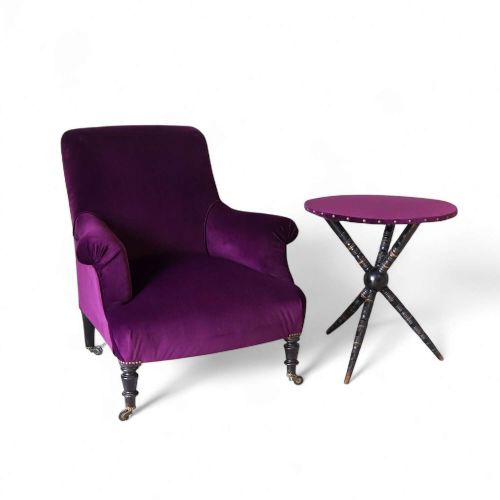
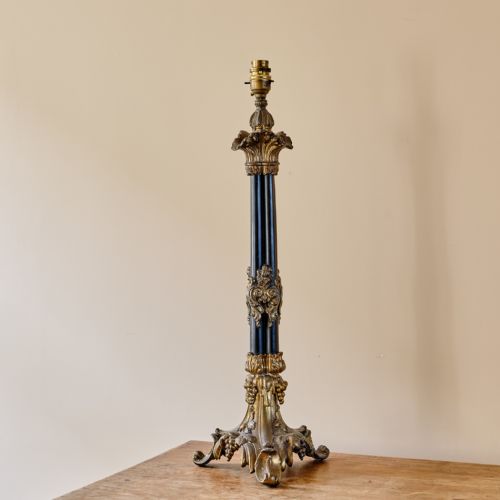
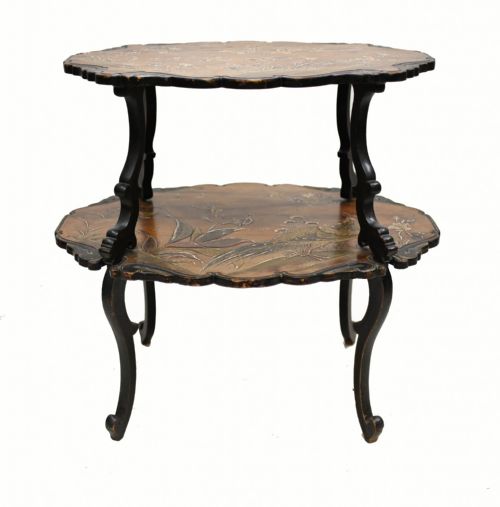


Ebonised French Side Table
An ebonised French side table brings dark elegance and Continental polish to a room, offering a surface that catches the light through brass or mother-of-pearl.
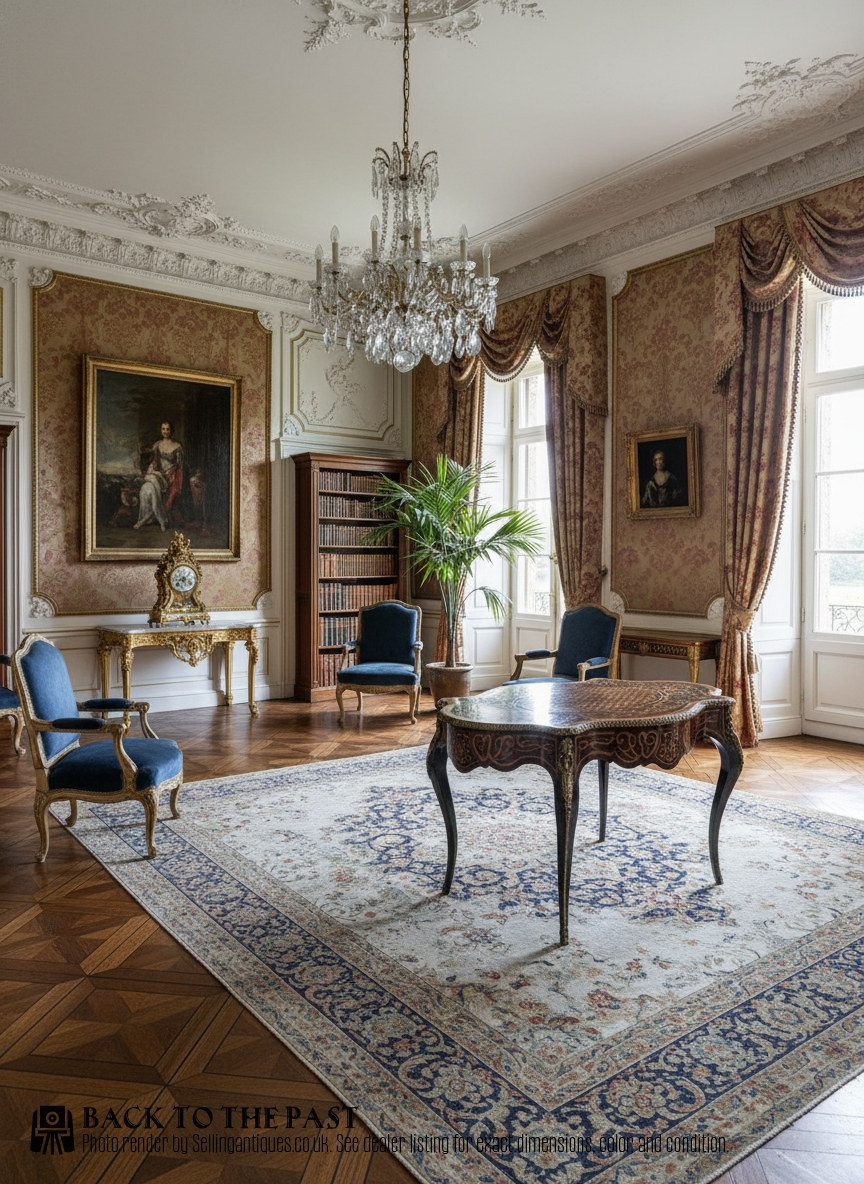
Ebonised French Side Table
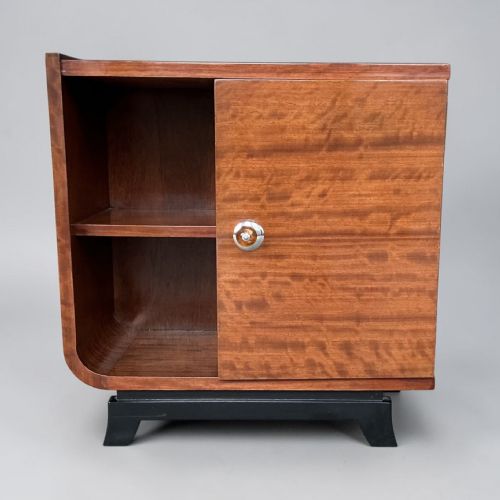
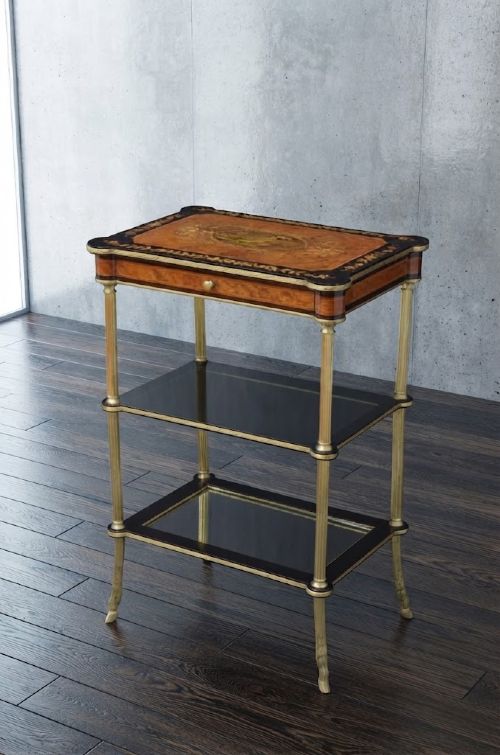
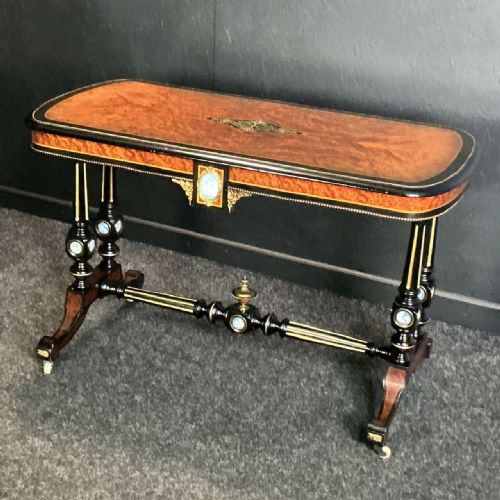
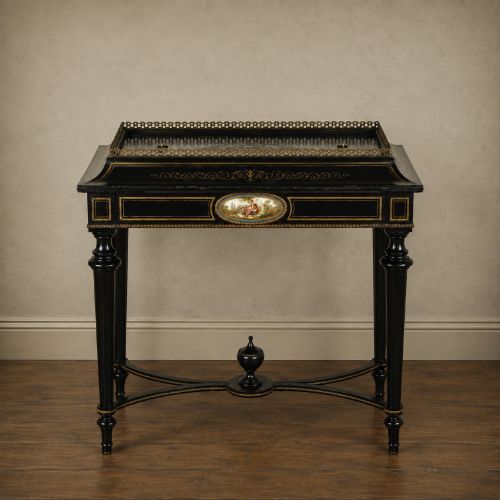
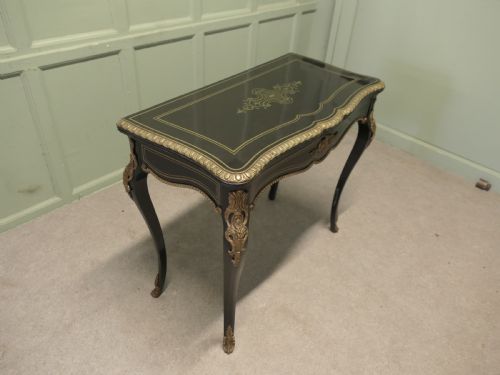
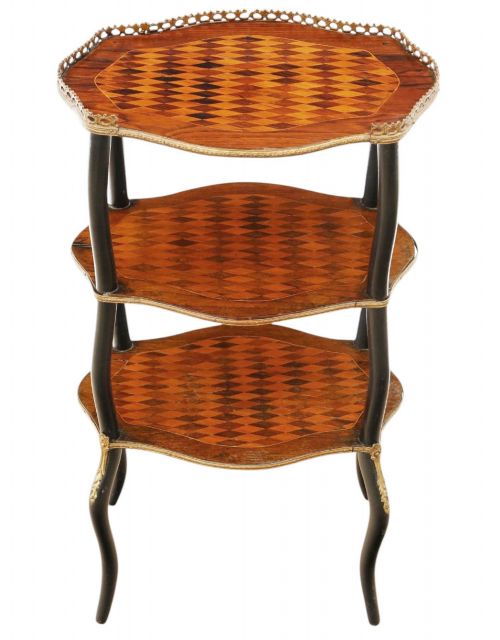
An ebonised French side table spans forms from multi-tiered étagères and card tables to writing desks and jardinière stands. You will most frequently encounter nineteenth-century Napoleon III pieces finished in dark wood, alongside Louis XV revival designs.
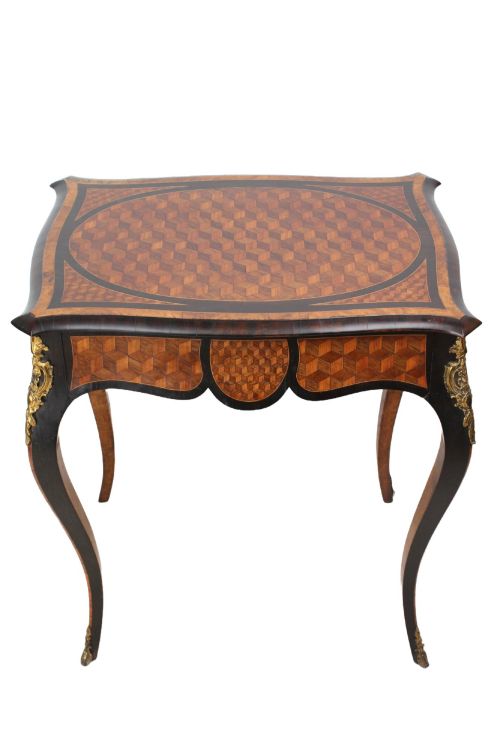
Makers and workshops constructed these tables for Parisian salons and drawing rooms, employing styles that nod to earlier French royal courts through curved legs and mounts. The physical form often incorporates marquetry, parquetry, or inset porcelain plaques alongside the darkened timber surface.
How They Were Made
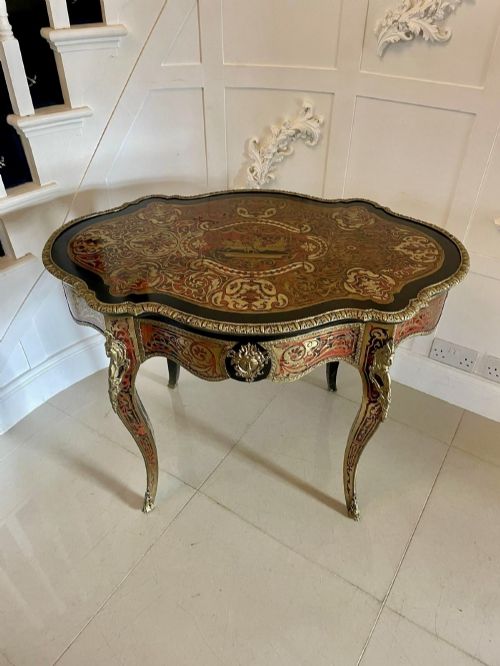
Craftsmen achieved the characteristic dark finish using ebonised wood, fruitwood, or walnut treated to mimic ebony, sometimes pairing the sombre ground with intricate brass inlay or Boullework. Ormolu mounts and gilt bronze cast in decorative motifs frame the edges, drawers, and cabriole legs.
Surfaces frequently feature contrasting marquetry using amboyna, burr birch, or varied timber veneers, occasionally complemented by marble tops or painted porcelain plaques set directly into the wood.
Some tables double as card or work tables with hidden compartments for keeping secrets.
What Varies in Quality
The standard of execution separates simple decorative items from exceptional atelier work, visible in the crispness of the brass inlay and the precision of the parquetry. Hand-chased ormolu mounts with deep relief and refined detail distinguish superior examples from mass-produced commercial output.
The integrity of the underlying timber construction and the retention of delicate details such as mother-of-pearl accents or hand-painted porcelain plaques dictate the standing of an individual piece.
JAS Shoolbred·Edward’s And Robert’s·Maison Millet·Weisweiler
The Ebonised French Side Table Glossary
- Ebonised
- Wood treated with stain, dye, or paint to resemble solid ebony. This dark finish gained popularity during the nineteenth century to highlight metallic inlay.
- Ormolu
- Gilded bronze applied to furniture mounts and decorative hardware. The technique involves treating metal with a mercury and gold amalgam.
- Boulle
- A form of marquetry using brass and tortoiseshell inlaid in counterpoint patterns. Named after André-Charles Boulle, it defines opulent French furniture.
- Étagère
- A set of open display shelves supported by columns or slender legs. These tiered tables were designed to hold porcelain, clocks, and ornaments.
- Marquetry
- The art of applying small pieces of veneer to a structure to form decorative patterns. Craftsmen utilised diverse woods, metals, and shell.
Ebonised French Side Table: Frequently Asked Questions
Where should I place an ebonised French side table?
These tables suit reception rooms, hallways, or living spaces where the dark surface provides contrast against lighter walls. Smaller étagères and occasional tables function well beside seating or as display surfaces for lighting and ceramics.
Larger console or card tables anchor larger wall spaces or act as freestanding focal points in the centre of a room.
How do I care for ebonised wood and ormolu?
Maintain the finish by dusting with a dry, soft cloth and avoiding silicone sprays or harsh chemical cleaners that degrade historic polish. Keep the timber away from direct sunlight and strong heat sources to prevent cracking or warping.
Ormolu mounts require gentle dusting with a soft brush, taking care not to abrase the gilt surface.
How do I distinguish Napoleon III pieces from earlier revivals?
Napoleon III pieces date from the mid to late nineteenth century and frequently combine ebonised wood with vibrant brass inlay, porcelain plaques, or Boullework. They eclecticly mix elements from Louis XIV, XV, and XVI reigns.
Earlier eighteenth-century originals utilise native French timbers and construction methods specific to those specific royal workshops rather than mass-revival techniques.
Can I use an antique card table for daily dining?
Antique folding or games tables feature delicate hinge mechanisms and fine parquetry surfaces that sustain damage from heavy everyday use. They serve better for occasional entertaining, display, or writing.
Protect the top with suitable padding if you use the surface for writing or placing objects.