
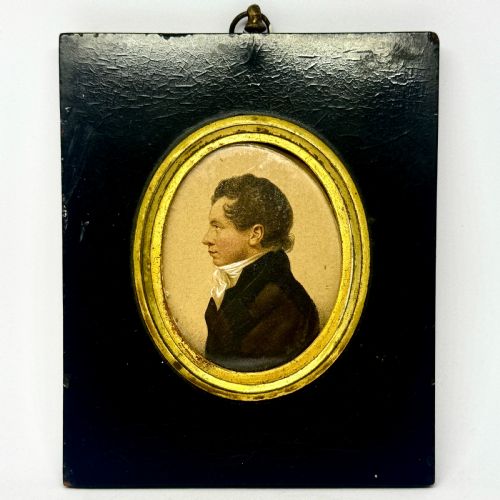


Ebonised Frame Profile Art
Ebonised frame profile art consists of dark wooden profile portraits and miniatures that bring crisp historical character to any wall.
Ebonised Frame Profile Art
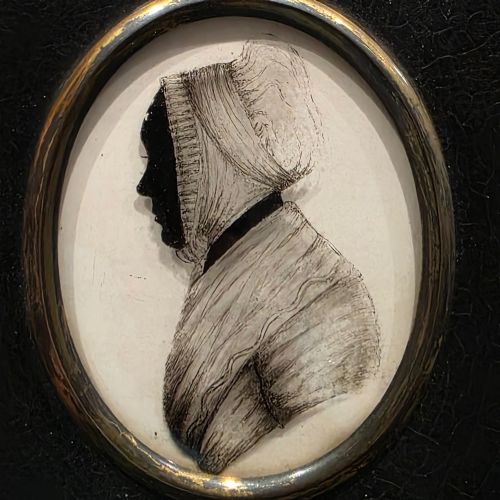
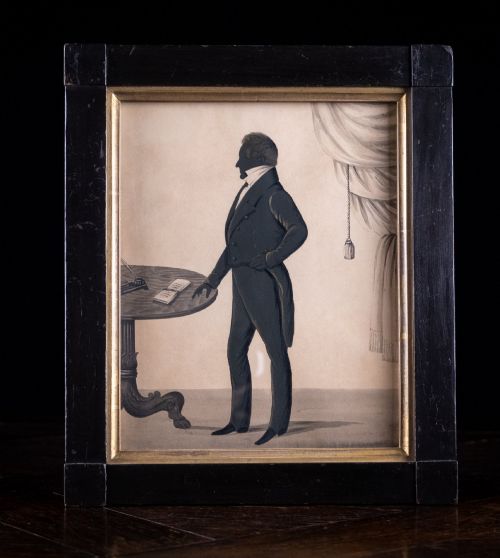
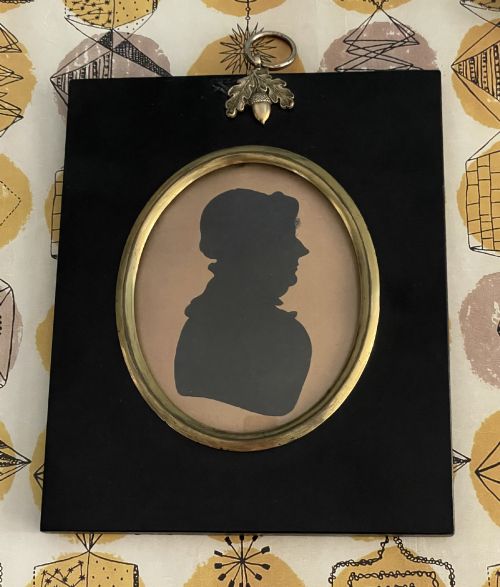
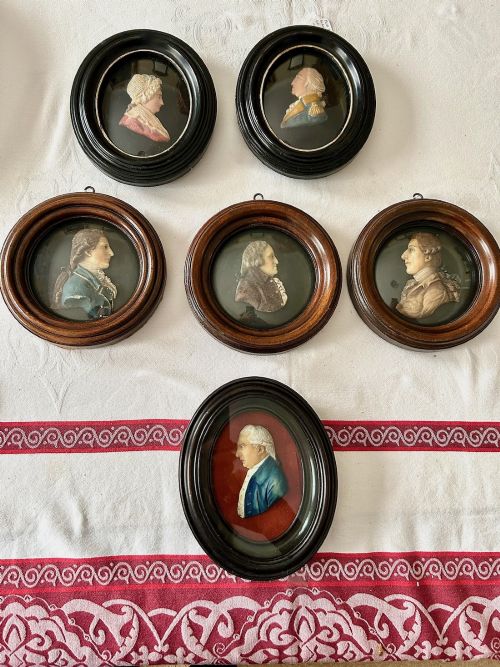
When you search for ebonised frame profile art, you encounter portrait miniatures, silhouettes, wax portraits, and painted studies dating from the eighteenth and nineteenth centuries. These works present distinct profiles of sitters, captured through painting, cutting, or wax modelling.
The pieces appearing here span the Georgian, Regency, and Victorian periods, reflecting the shifting portraiture tastes of those eras. You will frequently find subjects rendered in ink, watercolour, or paint upon glass, paper, card, or ivory.
Framing is integral to these objects, utilising dark ebonised wood often paired with brass accents or glass protection. This grouping provides a direct link to historical likenesses through intimate, small-scale visual records.
How they were made
Makers utilised wood finished in an ebonised dark tone to construct the protective surrounds for these profile portraits. Brass fittings and glass frequently complete the composition, safeguarding the delicate interior works.
The internal portraits rely on diverse techniques including watercolour, ink, and paint applied to paper, card, glass, or ivory. Certain examples incorporate cut paper silhouettes or moulded wax to achieve the raised profile effect.
Listings here feature works from the 18th century, Georgian period, Regency era, and 19th century, utilising glass, brass, paper, wood, and ivory.
What varies in quality
The integrity of the original ebonised frame and its housing influences the overall character of the piece. Well-preserved materials and authentic period mountings contribute to the coherence of the historical object.
George Atkinson·James Gillespie·Thomas London·Archibald Skirving·John Miers·Jeremiah Steele
The Ebonised Frame Profile Art Glossary
- Ebonised wood
- Timber treated to resemble ebony, providing a deep black finish common on profile frames. This technique creates a high-contrast border that accentuates the light tones of the portrait within.
- Silhouette
- A portrait represented as a solid shape of a single colour, usually black, showing the profile in sharp outline. Artists created these by cutting paper or painting directly onto card and glass.
- Portrait miniature
- A small-scale painting or likeness executed with meticulous detail on materials such as ivory, card, or paper. These portable works became popular keepsakes during the Georgian and Regency periods.
- Reverse painted
- A technique where the artist applies paint to the back of a piece of glass so the image is viewed through the front. This method gives the surface a glossy, protected depth.
Ebonised Frame Profile Art: Frequently Asked Questions
What periods do these profile portraits come from?
The pieces span the eighteenth and nineteenth centuries, encompassing the Georgian, Regency, and Victorian eras. This timeframe covers the peak popularity of profile silhouettes and miniature portraiture.
Craftsmen and artists during these periods utilised materials such as ivory, glass, paper, and ebonised wood to create these intimate likenesses.
How should I display profile art at home?
These small works suit intimate spaces where viewers can appreciate their fine detail at close range. Grouping several framed profiles together creates a strong visual impact on a wall.
Keep them away from direct sunlight to protect delicate watercolours, paper, and painted glass from fading over time.
How are silhouettes on glass different from paper ones?
Silhouettes on glass typically involve reverse painting, where the artist applies dark pigment directly to the rear surface. This creates a glossy finish viewed through the transparent pane.
Paper examples rely on cutting or ink work mounted flat against a contrasting background behind protective glass.
Can I identify the sitter in these portraits?
Some pieces retain handwritten inscriptions on the reverse or contemporary documentation naming the individual depicted. Others record the sitter's identity through family descent or historical provenance.
Many historic profiles remain unidentified, presenting anonymous faces from past centuries for modern collectors to appreciate.