
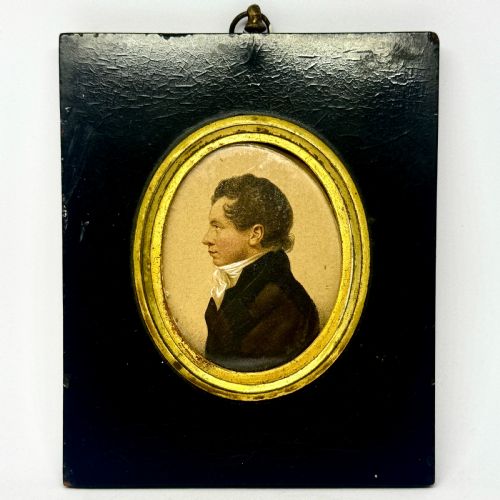
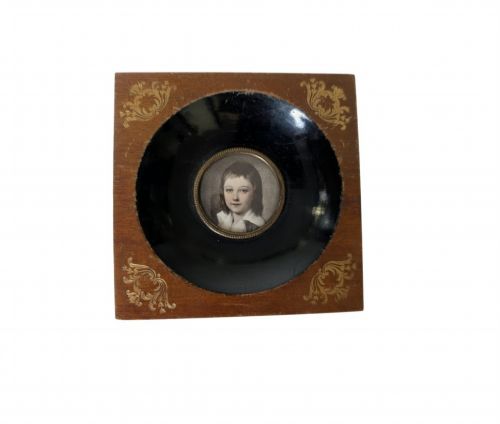


Papier Mache Portrait Frame
These papier mache portrait frame pieces are tactile domestic objects housing silhouettes and miniatures, prized for their intimate historical character.
Papier Mache Portrait Frame
A papier mache portrait frame houses intimate likenesses, mostly taking the form of silhouettes or portrait miniatures. When you search for a papier mache portrait frame, you encounter works spanning the Georgian, Regency, and nineteenth century periods.
The objects on this page typically present profile portraits painted or cut on paper, wood, or glass. Many examples feature delicate painted details or gilded highlights that catch the domestic light.
Most pieces combine papier-mache with ebonised wood or brass surrounds to create a striking contrast against the pale face of the sitter. These compact frames were designed to hang in groups or sit on intimate parlour walls.
Materials and construction
Makers formed the dark surrounds using compressed paper pulp or layered paper treated with bindings to create sturdy papier-mache. Artisans often ebonised wooden elements or applied fine brass bezels to edge the sight window.
Glazing protected the delicate works, which frequently held watercolours, paper silhouettes, or paintings executed directly on glass. Frame makers balanced heavy paper bodies with slim protective glass plates.
Listings feature items from the Georgian, Regency, and nineteenth century periods utilising materials such as brass, glass, paper, and ebonised wood.
Markers of quality
The integrity of the papier-mache body and the original brass hangers or bezels separate fine examples from simpler utilitarian items. Well-preserved surface finishes without extensive restoration command greater appreciation.
George Atkinson·Thomas London·J. Deacon
The Papier Mache Portrait Frame Glossary
- Silhouette
- A profile portrait filled in with a solid dark colour, usually black, or cut from paper. This technique enjoyed great popularity during the Georgian and Regency eras.
- Ebonised wood
- Timber stained or painted to imitate dense, black ebony. This dark finish provided a dramatic contrast for painted portrait miniatures.
- Portrait miniature
- A small, highly detailed painting executed on ivory, vellum, card, or glass. These portable likenesses were often housed within protective papier-mache surrounds.
- Bezel
- A metal rim holding the glass pane securely within the frame. Brass bezels frequently adorned Regency portrait housings.
Papier Mache Portrait Frame: Frequently Asked Questions
What periods do these frames date from?
The pieces span the Georgian, Regency, and nineteenth century periods. Most examples reflect the aesthetic preferences of the early decades of the eighteen hundreds.
Craftsmen of these eras produced small, dark surrounds designed specifically to highlight intimate profile portraits and silhouette likenesses.
How were these frames displayed originally?
Owners typically hung these compact frames closely together in intimate domestic spaces like parlours or private chambers. Their dark profiles created striking gallery arrangements on wallpapered walls.
Many featured small brass rings or hangers at the top to facilitate this clustered wall display style.
What is inside the frames?
The surrounds hold silhouettes cut from paper, painted profiles, or detailed portrait miniatures on glass and paper. Some works include delicate added watercolour or gilded highlights.
Artists such as J. Deacon and George Atkinson produced the likenesses housed within these historic surrounds.
How do I care for papier-mache frames?
Keep the objects away from direct sunlight and damp environments to protect the fragile paper pulp and ebonised finishes. Dust gently with a dry, soft cloth without applying liquid cleaners.
Stable indoor humidity preserves both the exterior papier-mache structure and the delicate artwork residing beneath the glass.