


Ebonised Accent Armchairs
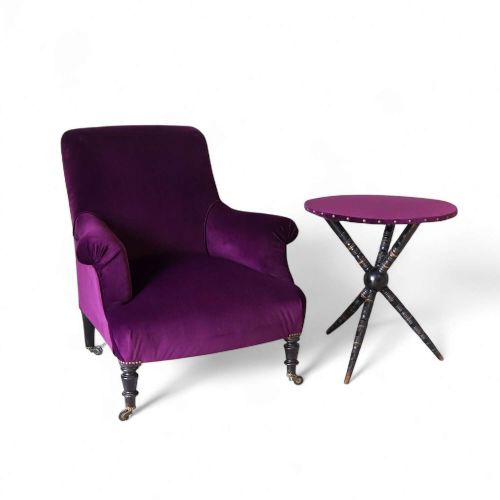
These ebonised accent armchairs bring dark wood elegance and nineteenth-century forms directly into modern rooms.
Ebonised Accent Armchairs
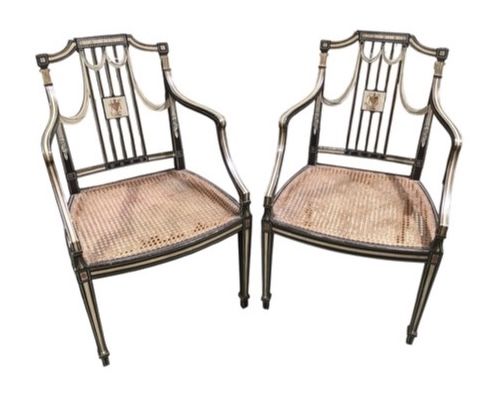
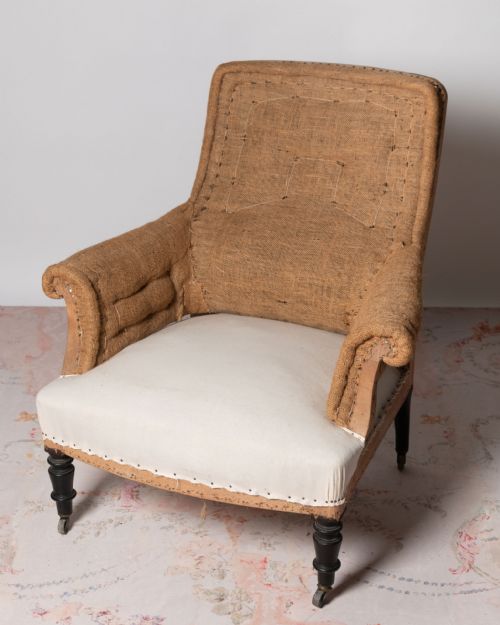
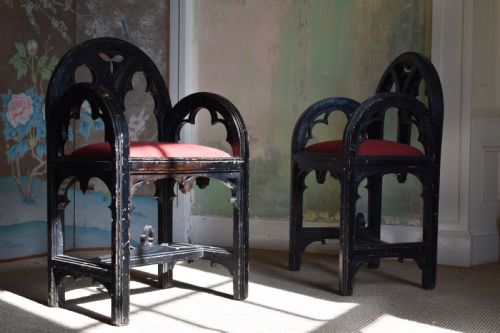
When you search for ebonised accent armchairs, you encounter nineteenth-century seating unified by dark finishes applied to woods like beech, birch, and mahogany. These forms span Victorian, Regency, and Napoleon III periods, often appearing as low salon chairs, corner chairs, and library seating.
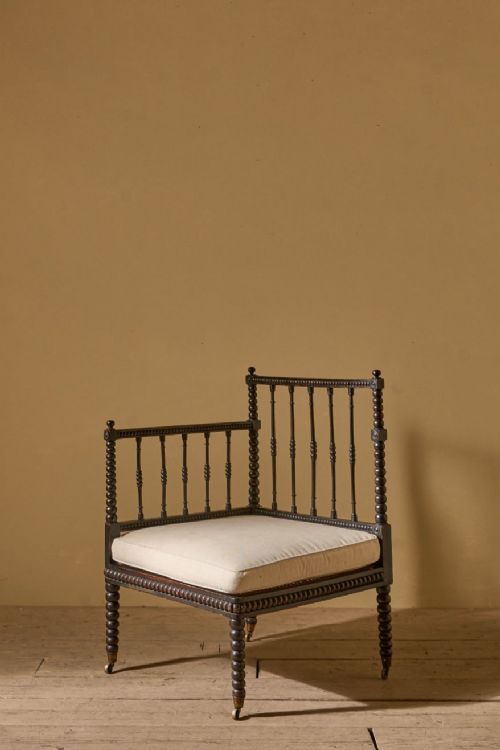
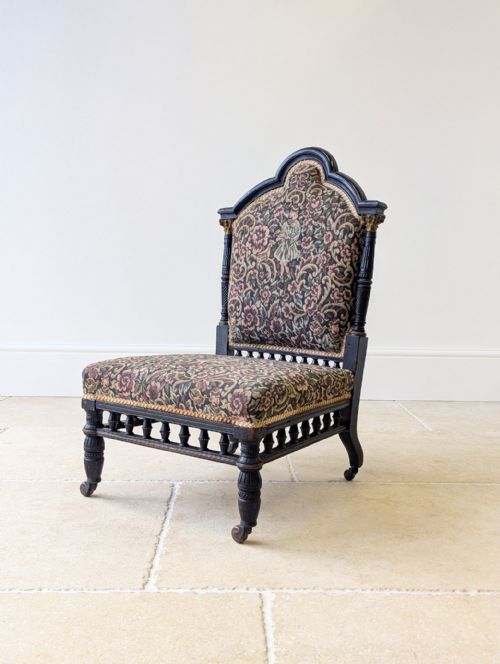
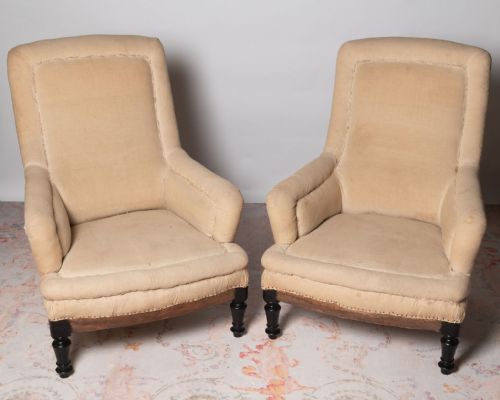
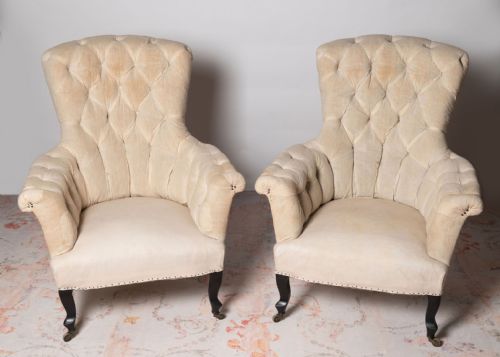
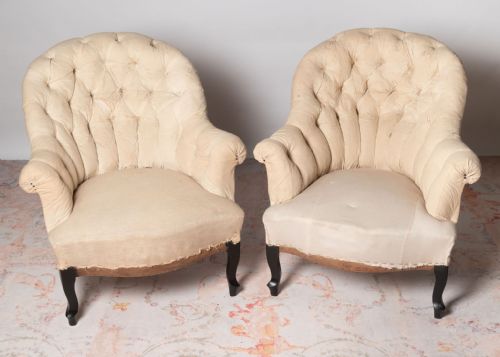
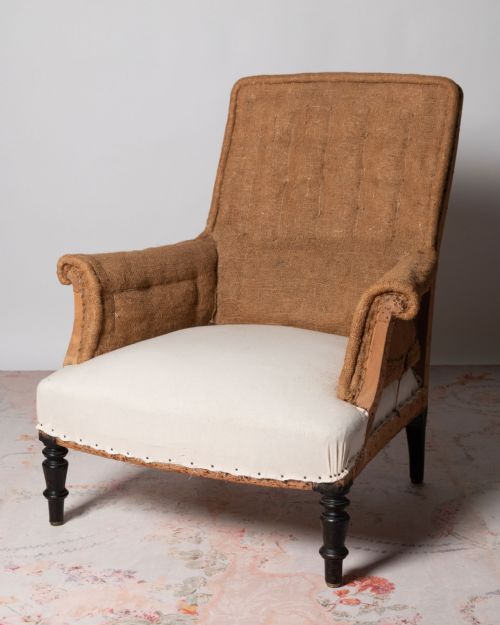
The version you are most likely to meet on this page is the Victorian or Napoleon III ebonised armchair, frequently featuring turned members, bobbin details, or button-upholstered backs. French Napoleon III and English aesthetic movement examples dominate the selection, bringing distinct continental and domestic styling from the 1800s.
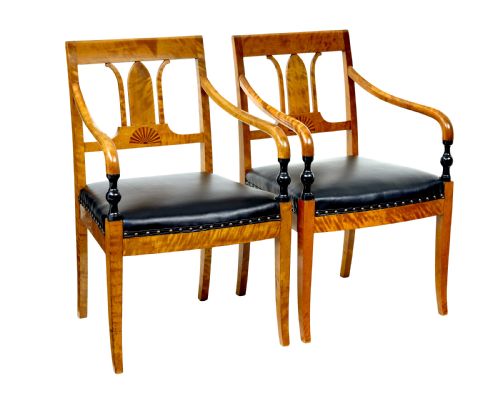
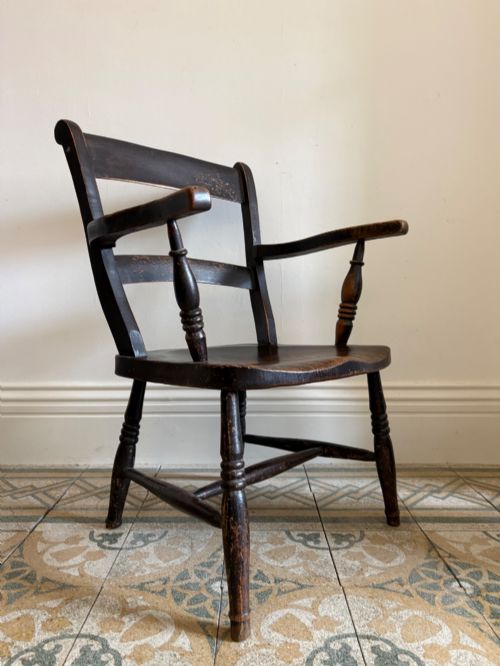
Alongside dedicated armchairs, the inventory includes occasional bedroom chairs, rocking chairs, and paired salon seating. These pieces combine structural hardwoods with decorative ebonised surfaces, offering compact seating options designed for drawing rooms and boudoirs.
How they were made
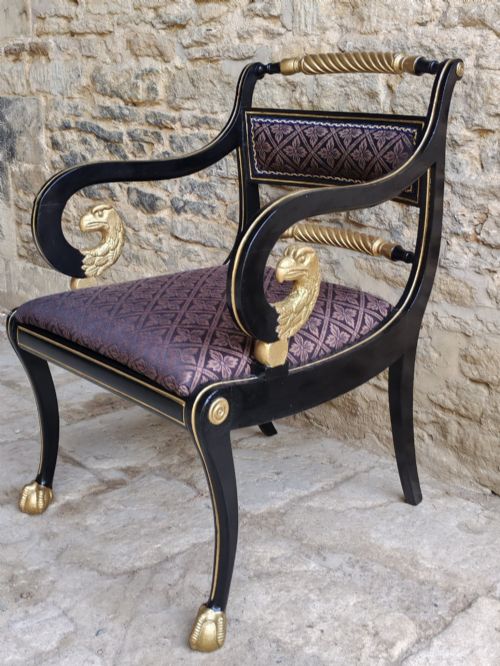
Cabinet makers achieved the characteristic ebonised finish by staining or painting fruitwoods, beech, and birch to imitate expensive ebony. This dark surface was frequently paired with brass mounts, gilding, or contrasting woods to highlight carved details.
Upholstery methods relied on traditional stuffing techniques using hessian and calico foundations, finished with velvet, fabric, or buttoned silk. Frames were constructed using standard nineteenth-century joinery, incorporating turned elements like bobbin turnings or faux bamboo moulding.
Several chairs feature turned wooden bobbins that make them look like they were built entirely out of oversized sewing threads.
What varies in quality
The distinction between standard commercial production and finer maker-attributed seating lies in the crispness of the turnings and the depth of the ebonised finish. Pieces bearing workshop signatures display superior joinery and more refined carving in woods such as mahogany and birch.
Upholstery execution and frame rigidity dictate the overall integrity of each chair. Higher quality examples maintain firm internal webbings and precise buttoning, while retaining original surface patination beneath the dark finish.
Collier and Plucknett
The Ebonised Accent Armchairs Glossary
- Ebonised
- Wood treated with stain or paint to resemble solid ebony. This technique was widely utilised during the Victorian and aesthetic movement periods.
- Bobbin turning
- A form of woodturning resembling a string of beads or bobbins. It appears frequently on nineteenth-century frames and corner chairs.
- Napoleon III
- A nineteenth-century French style characterised by eclectic revivalism and luxurious button-upholstered seating. Pieces from this era often feature curved backs and exposed dark frames.
- Aesthetic Movement
- A late nineteenth-century design style promoting art for art's sake. Furniture from this movement often employs ebonised finishes and simple, geometric lines.
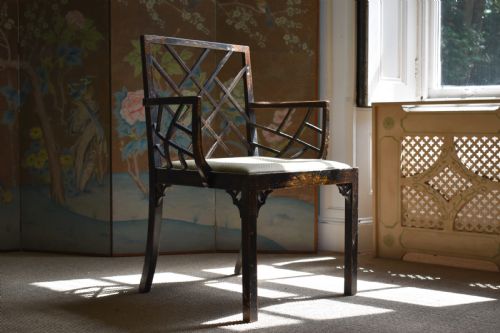
- Cockpen
- A type of Chinese Chippendale lattice-back chair popular in eighteenth and nineteenth-century seating. The open woodwork forms a geometric grid pattern.
Ebonised Accent Armchairs: Frequently Asked Questions
How do I identify a true ebonised finish?
Examine areas of wear to see if the dark coating is a surface stain or paint applied over a lighter timber like beech or birch. Solid ebony is exceptionally heavy and dense, whereas ebonised pieces reveal the underlying grain or pale wood beneath minor chips.
Many nineteenth-century makers used fruitwoods for these frames to achieve the fashionable dark aesthetic at a lower cost than importing tropical timber.
Where should I place an accent armchair?
These compact chairs suit bedrooms, reading corners, and drawing rooms where space is limited but visual weight is required. Their dark frames anchor lighter decorative schemes without overwhelming the surrounding furniture.
Pairing a single salon chair with an occasional table creates a functional focal point in a hallway or landing.
How do I date an ebonised chair?
Look at the turning style, upholstery construction, and secondary woods to determine the period. Bobbin turnings and buttoned velvet frequently point to Victorian and Napoleon III manufacturing dates.
Earlier Regency examples often utilise mahogany or faux bamboo turnings, while later pieces adopt simpler Edwardian boudoir proportions.
Can I reupholster a historic armchair?
Traditional upholstery can be updated using appropriate period fabrics such as velvet, damask, or simple calico. Maintain the original webbing height and stuffing profile to preserve the correct sit of the chair.
Consulting a professional restorer ensures the delicate ebonised frame remains protected during the reupholstery process.