

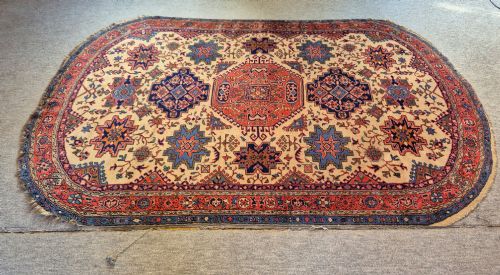
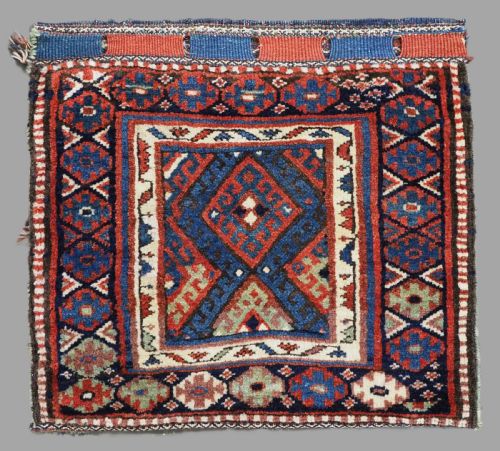


Eastern Persian Tribal Rug
An eastern persian tribal rug brings nomadic artistry and village craftsmanship straight to the floor, offering heavy wool construction and geometric designs that ground a room.
Eastern Persian Tribal Rug
An eastern persian tribal rug encompasses hand-woven floor coverings and textiles created by nomadic groups and village weavers across Persia, dating from the mid nineteenth century into the mid twentieth century. Buyers seeking this category encounter diverse formats ranging from full room carpets and long runner rugs to smaller area rugs, bag faces, and functional cushions.
The selections span distinct regional weaving traditions including Kurdish, Afshar, Malayer, Hamadan, Qashqai, Timuri, and Baluch groups. Pieces appear in various structural scales, from compact saddle-bags and scatter sizes to large kelleh formats exceeding four metres in length.
Materials and construction
Makers constructed these textiles predominantly using wool for the pile and foundation yarns, combined with cotton for structural warps and wefts in specific regional pieces. Artisans utilised hand-spinning techniques to produce durable yarns, which were then dyed in saturated tones and woven into place.
The physical build includes standard pile weaving alongside flat-woven plain weave backs on bags and utilitarian pieces. Weavers knotted or wove these items on portable vertical and horizontal ground looms set up within village and tribal camps.
Listings span dates from the 1850s to the 1940s, constructed in wool and cotton across diverse tribal attributions.
Evaluating quality and execution
Quality rests in the precision of the knotting, the handling of the wool, and the clarity of the drawing across the field and borders. Finer examples maintain structural integrity and balanced proportions while displaying intentional chromatic depth in the natural dyes.
Condition and completeness alter the standing of a textile, particularly when functional items retain original plain weave backs, flat-woven ends, or complete outer selvedges. The strength of the wool pile and the crispness of tribal motifs separate standard village output from superior nomadic work.
The Eastern Persian Tribal Rug Glossary
- Kelleh
- A long, rectangular format of carpet traditionally suited to narrow spaces or specific room layouts. These pieces often feature extended field lengths relative to their width.
- Plain weave
- A simple unpiled textile construction where warp and weft threads cross under and over each other. This technique appears on the backs of bags and utilitarian nomadic pieces.
- Prayer rug
- A small rug featuring a mihrab or arch design indicating the direction of prayer. Weavers across tribal regions produced these items for devotional use.
- Saddle-bag
- A paired utilitarian container designed for transport on animals, often separated later into individual bag faces or cushions. These items showcase compact tribal compositions.
- Warp
- The stationary vertical threads stretched across the loom that form the structural foundation of the textile. Wefts and knots are built upon this underlying grid.
Eastern Persian Tribal Rug: Frequently Asked Questions
How are tribal rugs different from city rugs?
Tribal rugs rely on memory patterns, asymmetrical details, and geometric motifs created by nomadic or village weavers working on portable looms.
City carpets generally exhibit formal medallion layouts, precise curvilinear lines, and commercial workshop supervision.
Where were these rugs made?
Weavers produced these textiles across various regional territories, village settlements, and nomadic encampments within Persia and adjoining borderlands.
Specific groups operated in western, southern, and north-eastern provinces such as Kerman, Kurdistan, and Hamadan.
How do I care for an old wool rug?
Regular gentle vacuuming without a rotating power head removes surface grit and protects the wool pile from abrasive wear.
Professional specialist cleaning handles deeper maintenance while preserving the historical dyes and wool fibres.
What is a bag face?
A bag face is the decorative front portion of a utilitarian transport sack originally used by nomadic families for storage and travel.
These panels survived independently after the original rear compartments wore away, prized for their dense tribal designs.