


Earthenware Transferware Platter
When you handle an earthenware transferware platter, you hold the industrial ambition and domestic dining habits of the nineteenth century in your hands.
Earthenware Transferware Platter
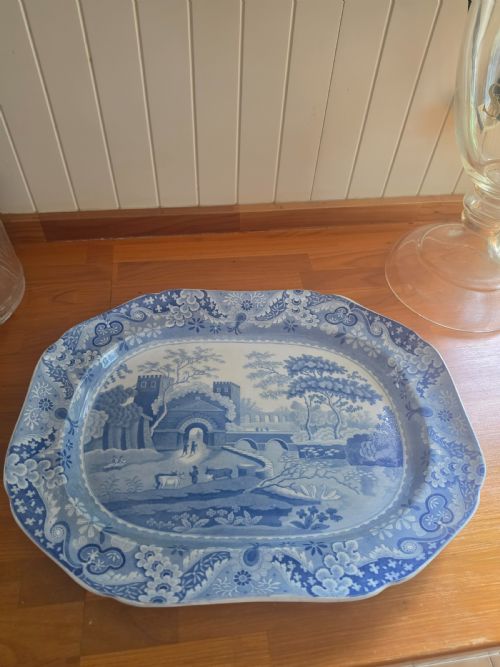
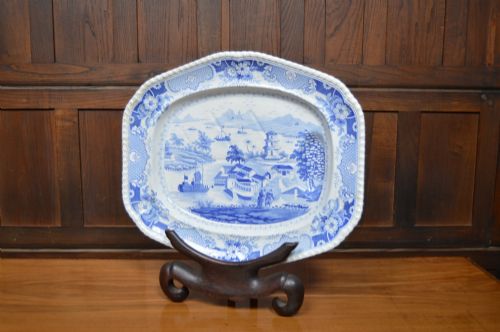
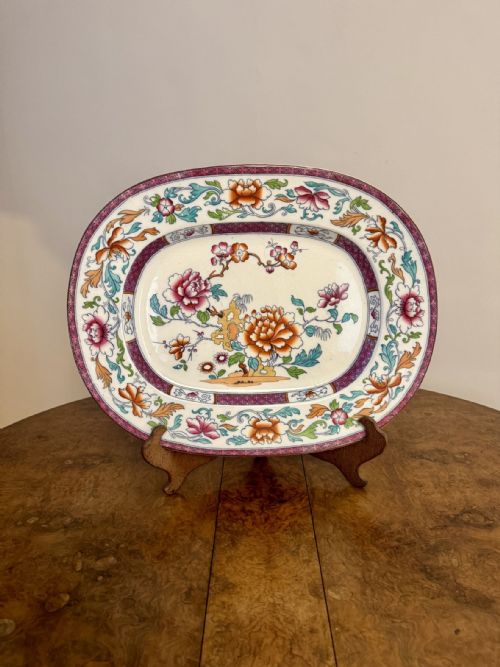
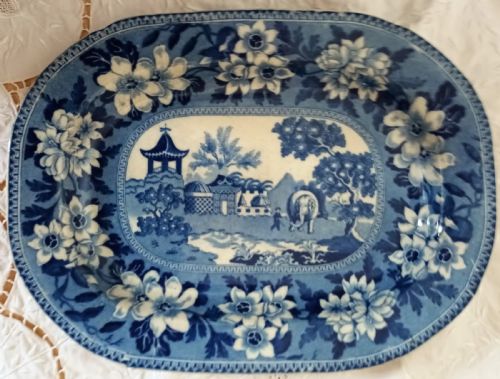
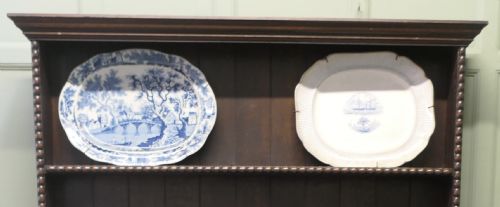
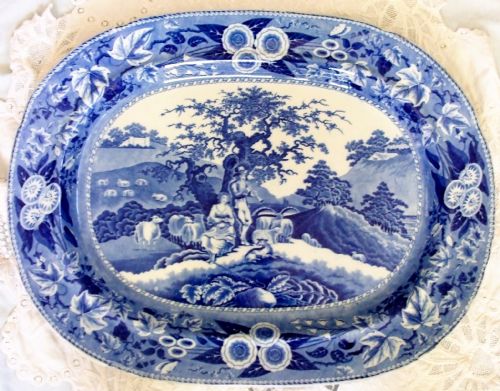
An earthenware transferware platter is a large ceramic serving dish decorated with a printed design applied using a copperplate and tissue paper method. You will most frequently encounter blue and white examples spanning the Georgian and Victorian periods, often taking the form of substantial meat platters.
The objects served a practical purpose on large dining tables for joints of meat and communal courses, while also displaying pictorial scenes ranging from British landscapes and Chinese-inspired motifs to topographical views. Makers utilised earthenware, pearlware, and ironstone as bodies, covered with a clear ceramic glaze that fixed the pigment.
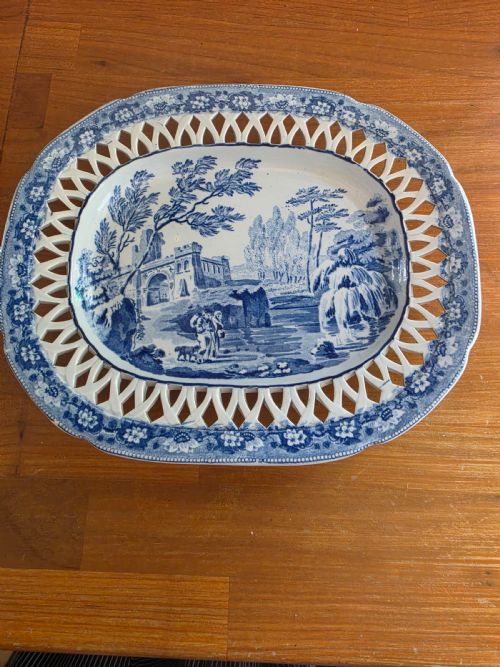
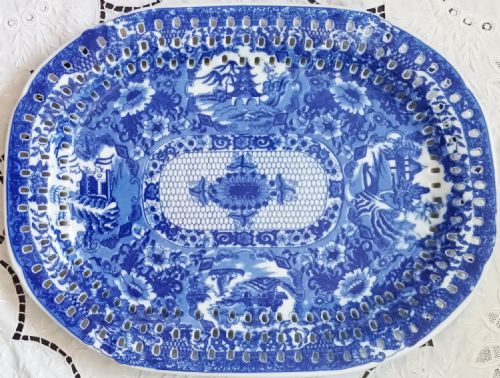
Many of these serving dishes survive from the nineteenth century, bearing patterns such as the Willow pattern, pastoral scenes, or architectural landmarks. They range from standard oval meat plates to pierced versions designed with integral drainers.
How They Were Made
Potters formed these pieces from clay bodies like earthenware or pearlware, shaping them on wheels or pressing them into moulds to create deep serving platters. Cobalt pigment formed the basis for the transfer prints, mixed with oils and applied to engraved copper plates before being transferred to the biscuity ceramic via tissue paper.
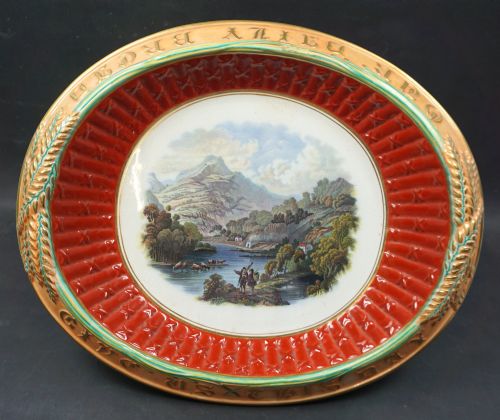
Once decorated, the ceramics received a transparent glaze and entered kilns for high-temperature firing, which fused the printed oxide into the surface. Some plates also received additional hand-painted enamel highlights over the glaze to add colour depth to the blue transfer prints.
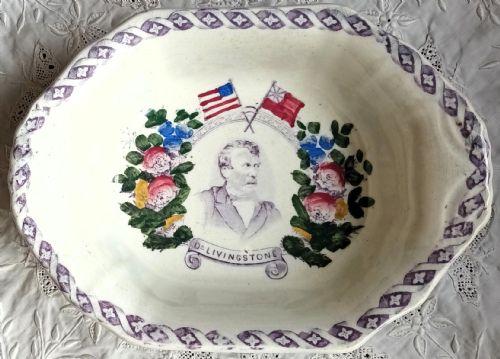
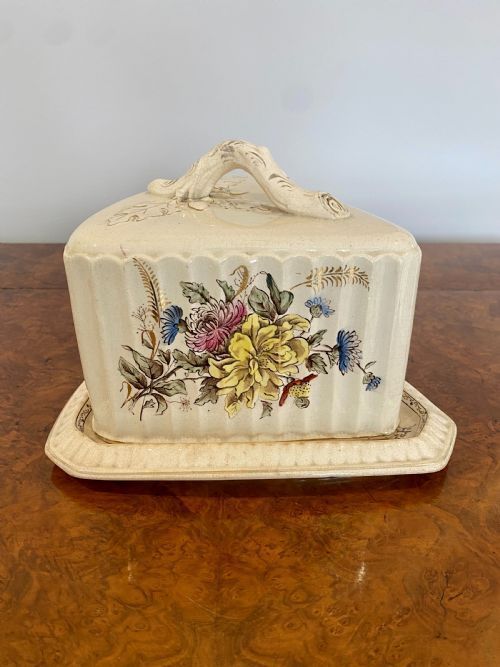
The selection includes specialised serving forms such as meat drainers, cheese dishes, and large commemorative chargers.
What Varies in Quality
Quality rests upon the crispness of the transfer print and the registration of the copperplate design onto the curved ceramic surface. Finer examples display sharp, unbroken lines without smudging, blurring, or overlapping transfer seams where the tissue paper met.
The clarity of the earthenware body and the smoothness of the glaze also dictate standard, where master potters achieved an even, unclouded finish free from heavy kiln ash or warping. Superior platters often feature complex multi-toned printing and balanced borders that complement the central topographical or narrative scene.
Spode·Davenport·John Rogers And Son·Wedgwood·Caughley·Copeland And Garrett·Stubbs·Minton
The Earthenware Transferware Platter Glossary
- Transferware
- Ceramic pottery decorated by transferring a printed design from an engraved copper plate onto the unglazed or biscuit body via tissue paper. This mechanised process allowed potteries to produce consistent pictorial scenes in large quantities during the nineteenth century.
- Pearlware
- A refined earthenware developed by Josiah Wedgwood in the late eighteenth century, featuring a slight bluish tint in the glaze due to the addition of cobalt. It served as a popular precursor and contemporary to standard white earthenware for blue and white printed tablewares.
- Ironstone
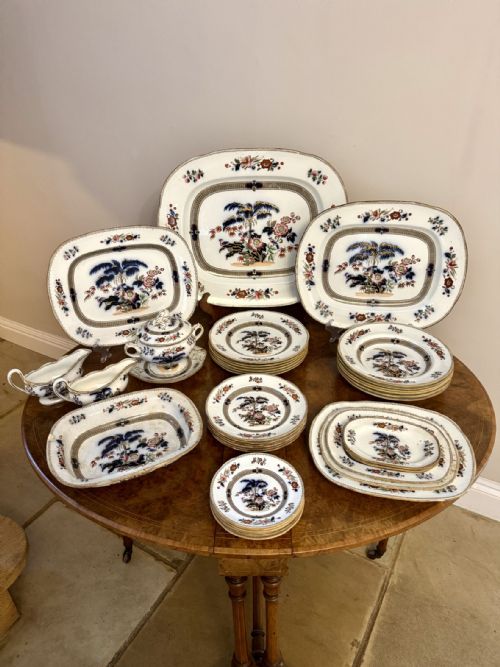
- A heavy, durable type of feldspathic earthenware patented in the early nineteenth century by Miles Mason. It offered superior strength compared to standard pottery, making it ideal for large domestic serving platters and heavy-use dinner services.
- Meat drainer
- A pierced ceramic insert designed to sit inside a large serving platter to let juices pool away from jointed meat. These removable liners often share the same transfer-printed patterns as the outer dish.
- Flow blue
- A style of blue and white transfer printing where the cobalt pigment intentionally blurred into the surrounding white glaze during the kiln firing. This created a hazy, atmospheric effect popular on mid-nineteenth-century earthenware services.
Earthenware Transferware Platter: Frequently Asked Questions
What were earthenware transferware platters used for?
These large ceramic dishes functioned primarily as serving platters for roasted joints of meat, poultry, and communal courses on nineteenth-century dining tables. Their generous proportions and sturdy earthenware bodies accommodated heavy food items during formal and domestic meals.
Many of these platters included integrated wells or separate pierced drainer inserts to catch meat juices during carving. Beyond the dining table, their decorative printed scenes allowed households to display topographical views, historical events, and exotic landscapes.
How do I tell Georgian platters from Victorian ones?
Georgian transferware platters, produced roughly from the late eighteenth century up to the 1830s, frequently utilise pearlware bodies with subtle bluish glazes and distinct romantic or chinoiserie border motifs. The blue pigment tends to be deep and pooling, reflecting earlier hand-engraved copperplate techniques.
Victorian examples, dating from the 1840s onwards, often employ heavier ironstone or whiter earthenware bodies with more mechanised, precise transfer printing. They frequently introduce named series, commemorative subjects, and richer floral borders that mirror changing industrial capabilities.
Can I use antique platters for serving food today?
These nineteenth-century ceramics are perfectly usable for serving dry foods, bread, or cold items at the table. Hand washing is essential to preserve the historic glaze and prevent modern detergents from harming the earthenware body.
Harsh automatic dishwashers and sudden temperature changes can cause micro-cracking in the old glaze, known as crazing. Treating the pieces with gentle care ensures the transfer-printed surfaces remain stable for daily or occasional display.
What do the different transfer patterns mean?
The printed scenes on these platters often reflected contemporary interests, ranging from idealized pastoral landscapes and British country views to famous international landmarks and historical battles. Series dedicated to specific travel views or literary themes were immensely popular among middle-class dining households.
Pattern names stamped or printed on the reverse often point to specific potteries or commemorative events of the era. Collecting specific patterns allows enthusiasts to trace nineteenth-century trade, exploration, and popular culture through ceramics.