



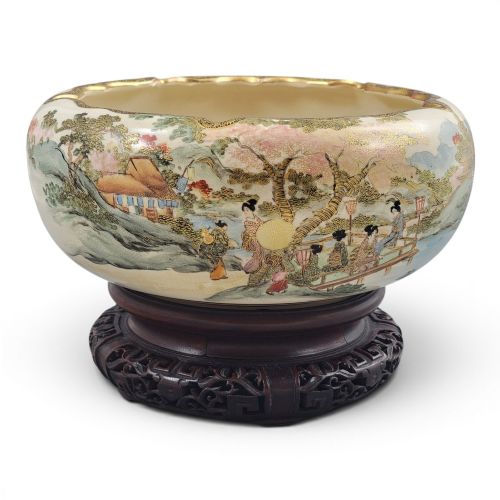
Earthenware Satsuma Porcelain
When you handle earthenware satsuma porcelain, you hold ceramic pieces defined by intricate enamels and gold leaf originating largely from the Meiji period.
Earthenware Satsuma Porcelain
These items encompass vessels and decorative objects created in Japan during the late nineteenth and early twentieth centuries, spanning the Meiji, Taisho, and Showa periods. The selection here leans heavily toward Meiji period production, featuring items originating from notable artistic centres such as Kyoto and Yokohama.
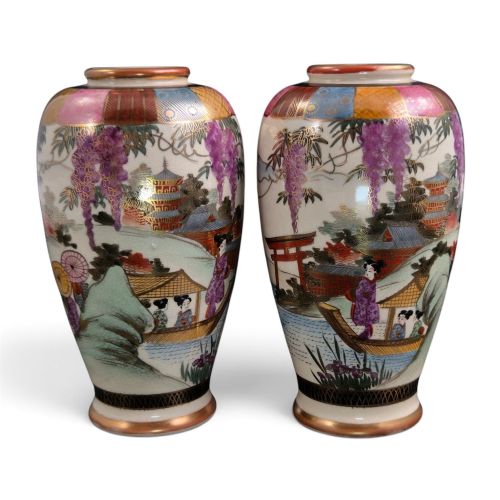
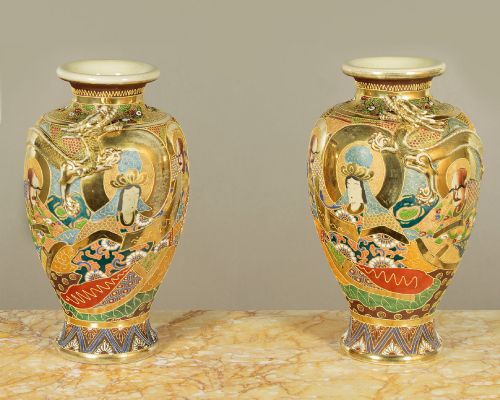
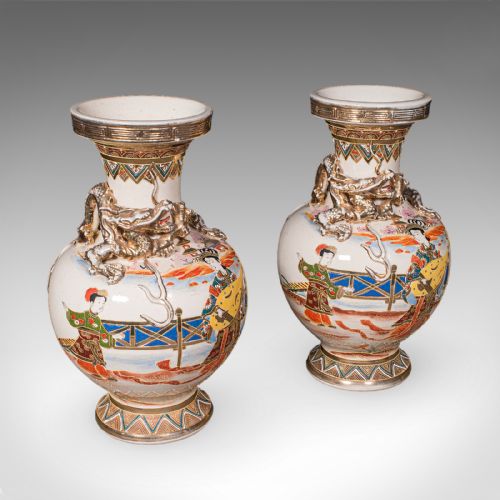
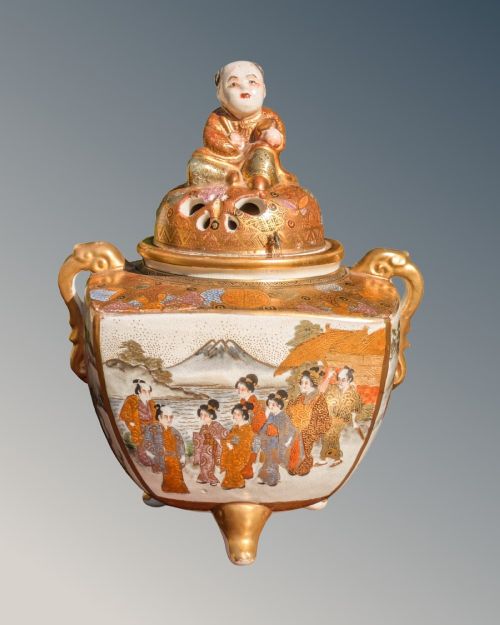
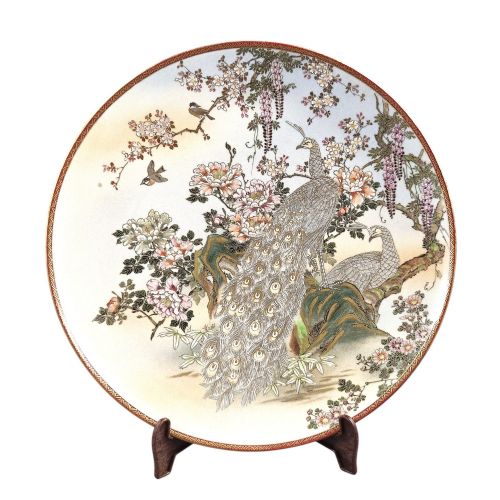
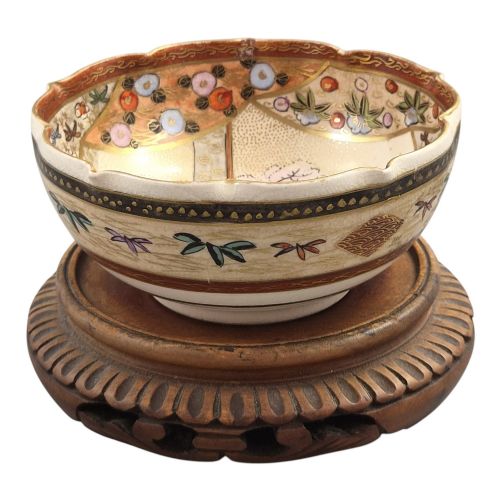
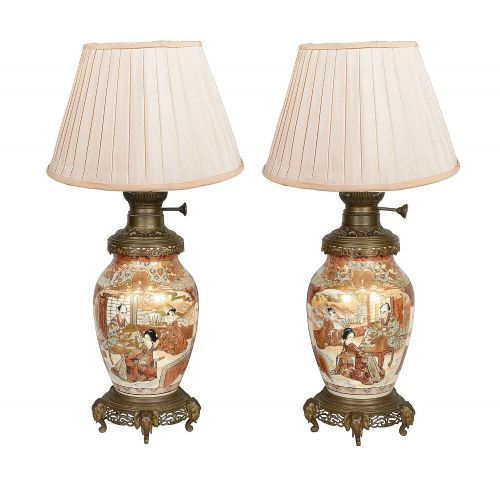
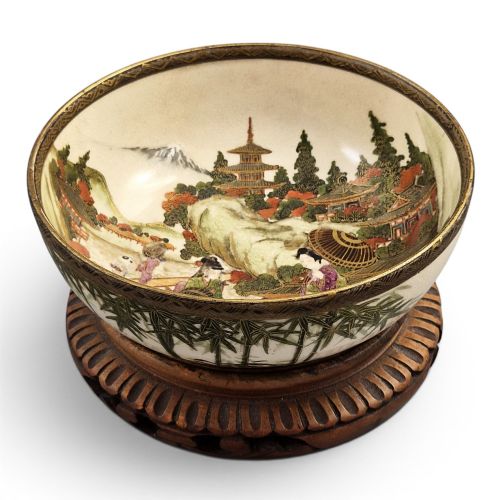
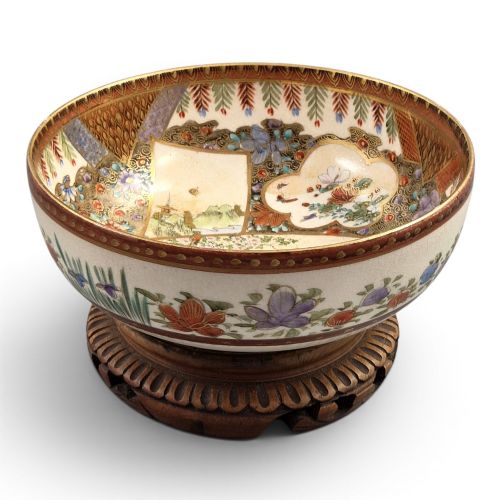
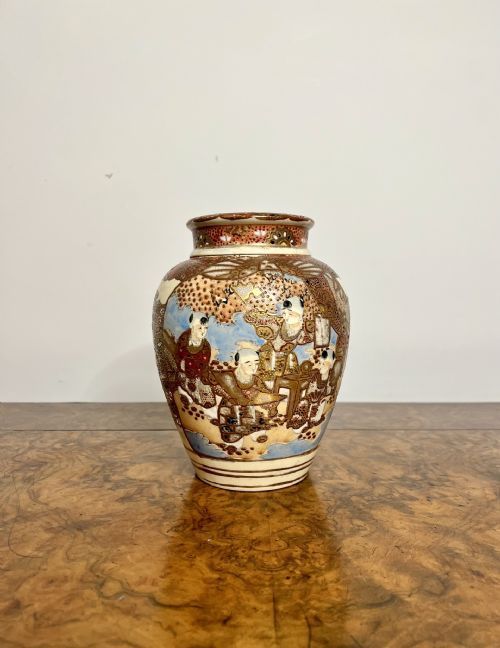
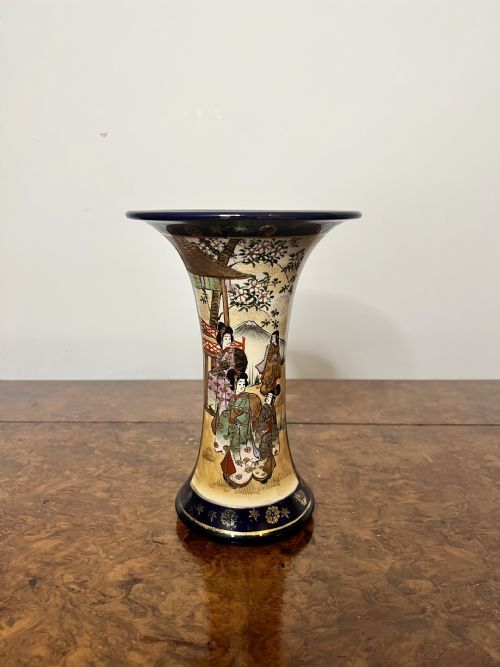
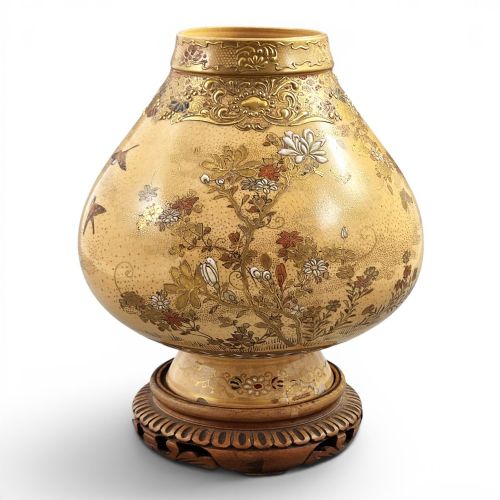
Forms range from large chargers, baluster vases, and ginger jars to smaller bowls, tea wares, and incense burners known as koro. Many pieces display traditional motifs such as wisteria, landscapes, court figures, arhats, and the Shimazu crest.
Makers and workshops including Kinkozan, Hotoda, and Kozan frequently signed their work, providing clear attribution for collectors. Alongside standard decorative vessels, buyers encounter boxed pairs and miniature vases carrying detailed pictorial narratives.
Materials and construction
Makers formed these wares using a characteristic earthenware body covered with a finely crackled ivory-toned glaze that received detailed hand-painted overglaze enamels. Artisans then applied extensive gold leaf and gilding to highlight borders, figures, and background patterns.
Relief work known as moriage built up thick dots and lines of slip beneath the enamel and gold to create tactile surface textures. Brass mounts and wooden presentation elements occasionally accompanied the ceramics for display or ritual use.
Keep watch for miniature vases so tiny they require steady fingers and good light to reveal a crowd of a thousand painted arhats.
Assessing quality in Satsuma wares
Excellence in these ceramics relies on the precision of the brushwork and the complexity of the figural or botanical compositions. Master painters achieved exceptional depth through careful control of palette and gold application.
The fineness of the crackle within the glaze and the restraint or abundance of the moriage relief work distinguish standard production from pieces bearing recognised signatures and workshop marks.
Koshida·Kozan·Kinkozan·Hotoda·Shizan·Chosei·Nanzan·Yamashu·Nikko·Kizan·Tagawa
The Earthenware Satsuma Porcelain Glossary
- Moriage
- A decorative technique where slip is piped onto the ceramic body in raised dots or lines before glazing and painting. This creates a tactile, three-dimensional surface texture.
- Koro
- A traditional Japanese incense burner typically featuring a pierced cover and supported by three or more feet. These vessels often incorporate guardian lion finials.
- Charger
- A large ornamental plate intended for display on a wall or stand rather than for dining use. These pieces frequently carry the most complex narrative scenes.
- Shimazu crest
- The heraldic badge of the Shimazu clan, featuring a cross within a circle. It frequently appears on Satsuma wares produced in the domain of Satsuma and by associated Kyoto workshops.
- Baluster
- A vertical vase form characterised by a rounded body that tapers toward a narrow neck and flares slightly at the rim. It remains one of the most common shapes in Japanese export ceramics.
Earthenware Satsuma Porcelain: Frequently Asked Questions
What is Satsuma ware?
Satsuma ware is a type of Japanese pottery with a soft, earthenware body and a characteristic creamy glaze covered in fine crackles. Artisans decorated these surfaces using elaborate enamel paints and heavy gilding.
Production shifted significantly during the Meiji period to cater to Western export markets, resulting in highly detailed pictorial vases, bowls, and chargers.
How do I identify a Meiji period piece?
Meiji period pieces usually date between eighteen sixty-eight and nineteen twelve, aligning with the reign of Emperor Meiji. These items often display dense gold and enamel work depicting court scenes, arhats, or natural motifs.
Many high-quality examples from this era carry painted artist signatures or workshop seals on the base, particularly associated with Kyoto makers.
Were these pieces made for use?
While items like incense burners and tea bowls served practical or ritual functions, the majority of export pieces were created strictly for display. Large chargers, ginger jars, and decorative vases acted as ornamental centrepieces in Western drawing rooms.
Their delicate earthenware bodies and elaborate gilt surfaces meant they were handled with care rather than utilised for everyday domestic tasks.
What causes the crackle in the glaze?
The crackle is an intentional characteristic of the glaze caused by the different rates of contraction between the ceramic body and the glass coating during cooling. Makers often enhanced these microscopic lines by rubbing dark pigment into them.
This network of fine lines forms a stable background pattern across the ivory surface beneath the painted enamel decoration.