





Cream Glazed Japanese Vessel
These cream glazed japanese vessel examples are finely potted ceramics that bring intricate hand-painted detail and quiet historic charm to any interior.
Cream Glazed Japanese Vessel
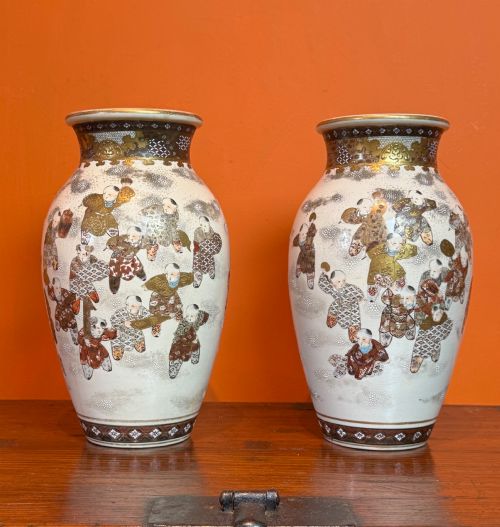
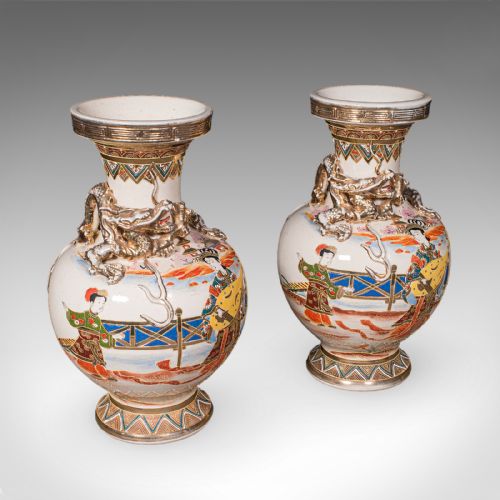
When you search for a cream glazed japanese vessel, you are looking at earthenware and ceramic pieces that span the Meiji, Victorian, and Taisho periods. These works include vases, tea caddies, sugar bowls, and incense burners originating from Japanese studios.
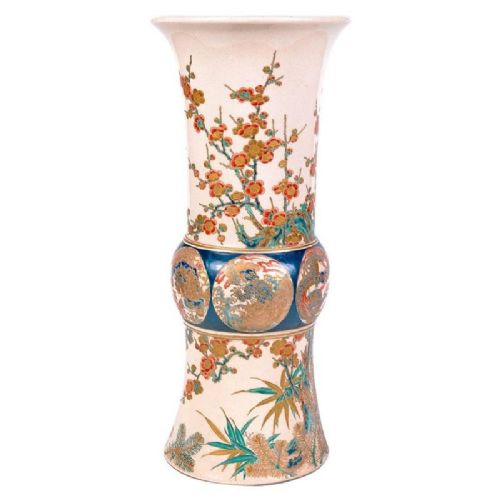
The most common examples encountered on this page are Satsuma vases, ranging from miniature vessels to large garlic head forms. These pieces often feature traditional figural processions, samurai scenes, or intricate flowerhead patterns.
Originating from production centres such as Kyoto and Tokyo, these decorative ceramics carry the distinct aesthetic of late nineteenth and early twentieth-century Japanese craftsmanship. Collectors value them for their historical context and delicate painted surfaces.
Materials and construction
The foundation of a cream glazed japanese vessel is typically earthenware or ceramic, shaped into forms such as baluster vases, tea jars, and footed bowls. Potters formed these bodies before applying the signature crackle-glazed cream surfaces that define the style.
Makers embellished the cream glaze using enamel paints and gold leaf, frequently adding gilt highlights to elaborate figural and floral scenes. Artisans in workshops like those in Kyoto applied these meticulous hand-painted details with fine brushes.
Cream Glazed Japanese Vessel Retail Price Guide 2026
Typical asking prices for cream glazed japanese vessel among the pieces listed under this phrase on Sellingantiques today, from the lower quarter to the upper quarter. They describe what is for sale here now, not the wider market.
Some miniature vases are so small they sit comfortably in the palm of your hand, yet contain entire battle scenes painted in gold.
Distinguishing quality in these ceramics
Quality in a cream glazed japanese vessel rests on the precision of the hand painting and the clarity of the enamel and gold leaf work. Superior examples display tightly controlled figural processions or dense flowerhead patterns executed with a steady hand.
The refinement of the ceramic body and the consistency of the crackle glaze also separate the finest studio output from more standard production. Signed pieces from recognised makers often reflect a higher level of artistic ambition and technical control.
Chosei·Tashiro·Tokyo Taizan·Shozan·Kinkozan
The Cream Glazed Japanese Vessel Glossary
- Satsuma
- A type of Japanese earthenware originating from Satsuma Province, known for its ivory-coloured, crackled glaze and elaborate enamel and gilt decoration. It became widely exported during the Meiji period.
- Meiji Period
- The era in Japanese history spanning from 1868 to 1912, characterised by the opening of trade with the West and a surge in the production of decorative arts for export.
- Baluster
- A vase form with a rounded body that tapers toward the base and swells near the lower middle, resembling the shape of a traditional architectural baluster.
- Enamel
- Opaque or translucent glassy material fused to ceramic surfaces through firing, used to create colourful painted designs on Japanese pottery.
- Garlic Head Vase
- A ceramic vessel featuring a bulbous constriction near the top of the neck that resembles the shape of a bulb of garlic.
Cream Glazed Japanese Vessel: Frequently Asked Questions
How do I care for my Satsuma vase?
Display your ceramic vessel away from direct sunlight and areas prone to rapid temperature fluctuations to protect the delicate enamel and gold leaf.
Dust the surface gently with a soft, dry brush and avoid using water or chemical cleaning agents on the porous crackle glaze.
Were these pieces made for export?
Many of these ceramics were produced specifically for Western export markets during the late nineteenth and early twentieth centuries, aligning with a global appetite for Japanese craftsmanship.
Studios in Kyoto and Tokyo tailored their decorative styles, such as detailed samurai scenes and flowerhead motifs, to appeal to international collectors.
What is the difference between Meiji and Taisho periods?
The Meiji period spans from 1868 to 1912, a time when Japanese decorative arts gained widespread international acclaim for intricate, densely painted export wares.
The subsequent Taisho period, running from 1912 to 1926, saw a continuation of traditional ceramic techniques alongside evolving aesthetic influences.
How can I identify a signed vessel?
Makers and studios frequently applied artist signatures or workshop marks to the underside of their ceramics in gold or red pigment.
These marks often provide clues to the specific origin, such as Kyoto, and can connect the piece to historic studios like Kinkozan or Chosei.