


Earthenware Milk Jug
An earthenware milk jug brings functional pottery into daily use, offering tactile warmth and hand-painted charm.
Earthenware Milk Jug
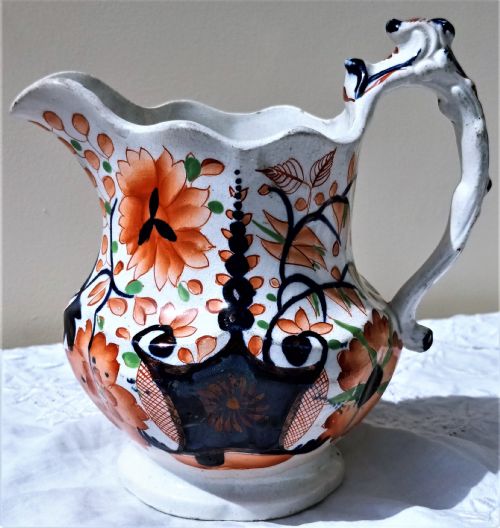
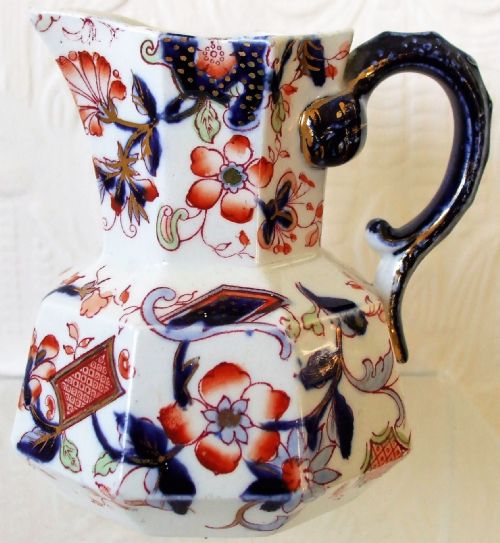
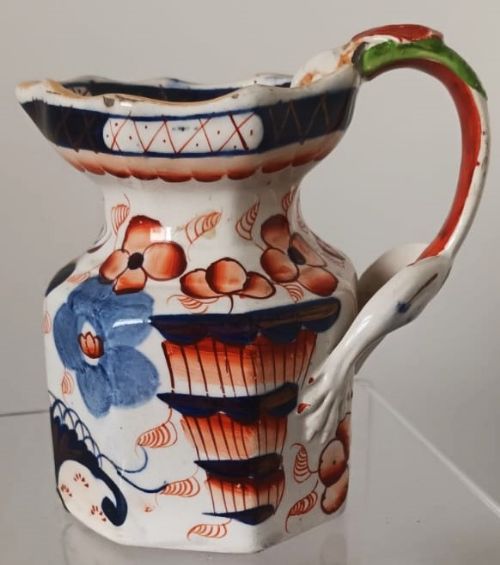
An earthenware milk jug is a pouring vessel designed for dairy service, appearing across various centuries with distinct regional patterns. The pieces gathered here span Georgian, Victorian, and early twentieth-century eras, reflecting domestic routines from different decades.
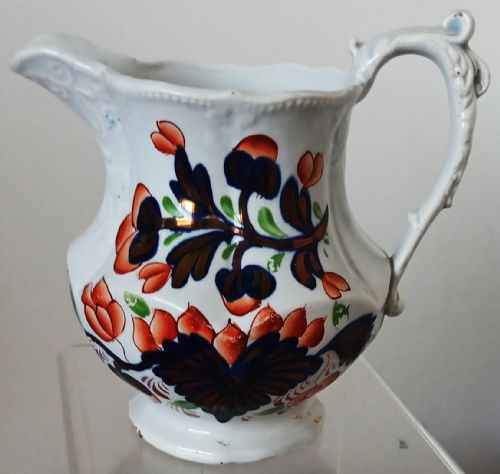
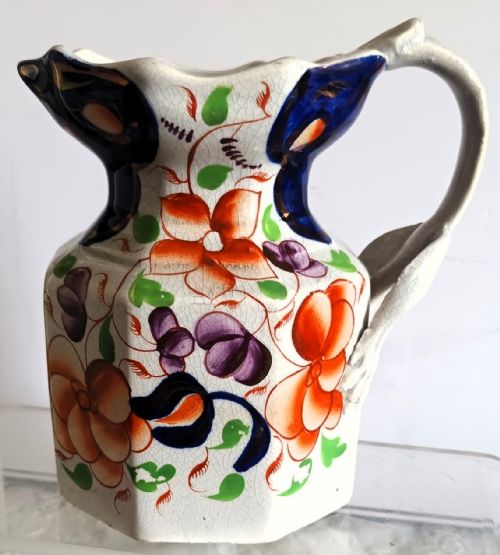
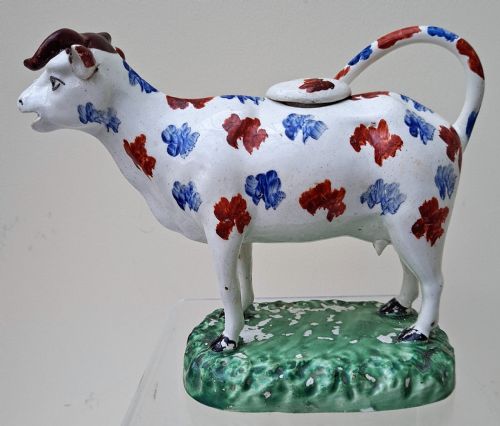
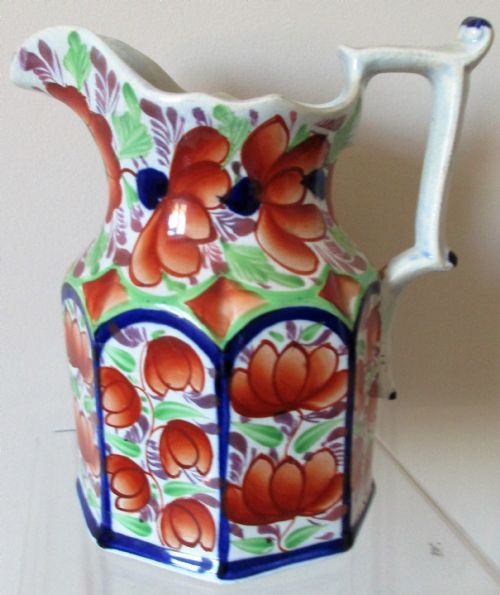
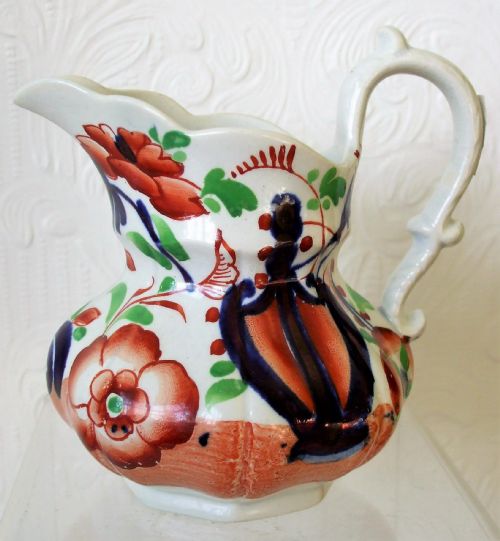
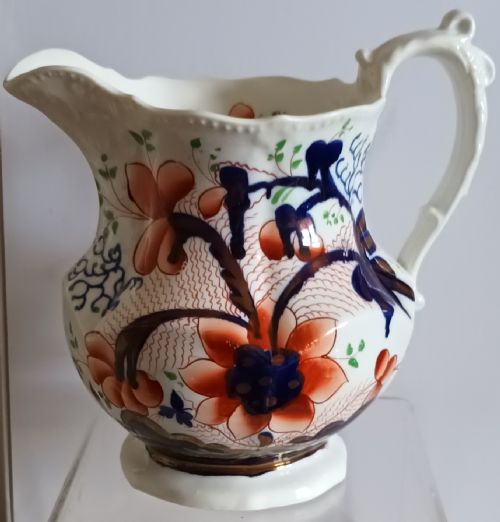
The selection includes Staffordshire animal creamers, Gaudy Welsh patterned pitchers, and moulded cream jugs in diverse shapes. These practical objects served households before modern refrigeration, carrying milk to tables in everyday settings.
Most examples originate from British potteries, showcasing regional styles such as Welsh floral motifs and Staffordshire copper lustre finishes. Buyers encounter varied forms ranging from standard pouring jugs to figurative cow creamers.
Making the jugs
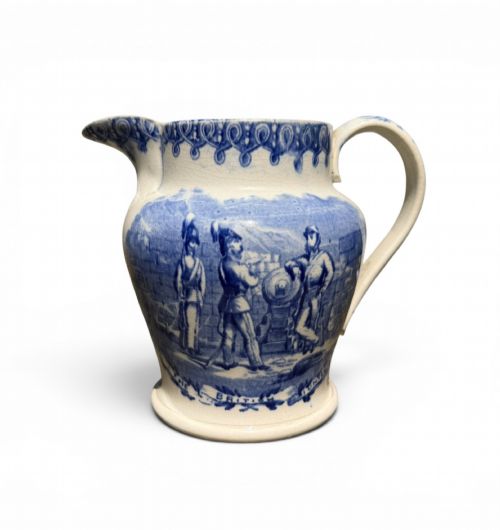
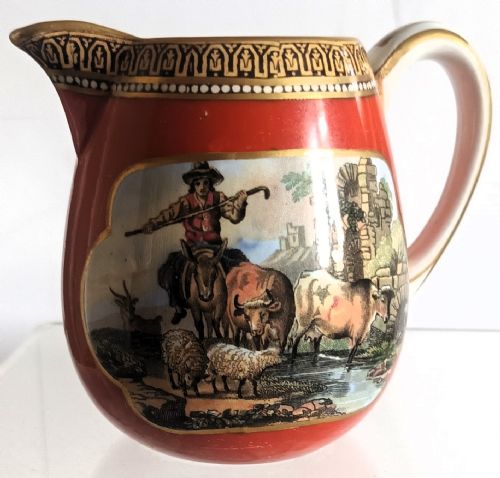
Potters shaped these vessels using earthenware and ceramic bodies, applying lead or tin glazes to seal the porous clay. Surface decoration relied on hand painting, enamel colours, and transfer printing to achieve geometric or floral motifs.
Specialised techniques included metallic copper lustre applications and black basalt bodies, creating distinctive reflective or matte finishes. Potters also moulded figurative pieces like cow creamers and faceted jugs using two-part plaster moulds.
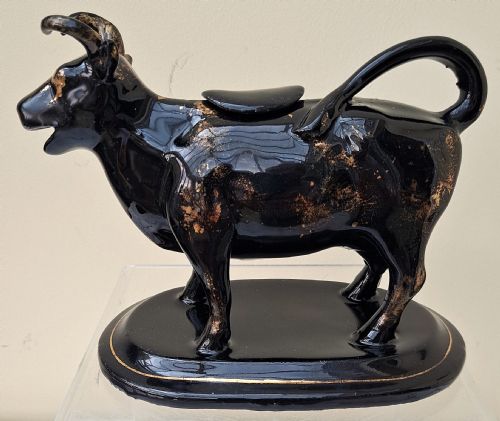
Victorian cows served cream from their mouths while users hoisted them by their tails.
Judging quality
Quality rests on the crispness of moulded details and the steady application of hand-painted enamels. Superior pieces display vibrant, well-fixed colours and balanced pouring spouts without structural warping from the kiln firing.
The finesse of hand-painted patterns, particularly in Gaudy Welsh and Staffordshire wares, distinguishes standard domestic items from finer decorated examples. Integrity of the glaze and clarity of printed or painted scenes remain central to the overall standard.
Keeling & Co.·Leeds Pottery·Phillips & Bagster·Wedgwood
The Earthenware Milk Jug Glossary
- Earthenware
- Porous pottery fired at lower temperatures, requiring a vitreous glaze to hold liquids. This body forms the structural foundation of traditional milk jugs.
- Copper Lustre
- A metallic glaze finish imparting a reflective, coppery sheen to the ceramic surface. This technique creates a distinct metallic appearance popular on nineteenth-century jugs.
- Cow Creamer
- A hollow ceramic figure of a cow designed with a pouring aperture on the back and a tail serving as the handle. These novelties served cream at tea tables.
- Gaudy Welsh
- A style of brightly coloured pottery featuring cobalt blue, iron red, and copper lustre accents, often produced in Welsh and English potteries for domestic use.
- Basalt
- A fine-grained, unglazed black stoneware developed by eighteenth-century potters. This dark body yields matte vessels with a stony texture.
Earthenware Milk Jug: Frequently Asked Questions
How were earthenware milk jugs used?
These vessels held milk or cream for tea service and daily dining tables, transferring dairy from larger storage containers to individual cups. Households relied on them during breakfast and afternoon tea routines.
Their practical design included secure handles and functional spouts for steady pouring. They occupied a central place on dining tables across Georgian and Victorian homes.
How do I identify a Victorian milk jug?
Victorian examples often feature vibrant Gaudy Welsh patterns, copper lustre glazes, or moulded animal shapes like cow creamers. The earthenware bodies and specific decorative motifs align with nineteenth-century manufacturing standards.
Pottery marks, stylistic details, and glaze types help distinguish these pieces from earlier Georgian or later twentieth-century wares. Examining the base and handle construction provides further clues to their period.
Can I use an antique milk jug today?
While these jugs were made for functional dairy service, many collectors prefer to display them as decorative objects. Using them requires care due to the age of the porous earthenware and delicate glazes.
Hand washing is essential to preserve the hand-painted enamels and metallic lustre finishes. Modern use should account for potential hairline cracks or crazing acquired over centuries.
What is a cow creamer?
A cow creamer is a ceramic pitcher moulded in the shape of a cow, with an opening on the back for filling with cream or milk. The animal's tail forms the handle while the mouth acts as the pouring spout.
Potters in Staffordshire and Wales produced these novelty vessels during the nineteenth century. They added a playful element to tea service traditions.