




Staffordshire Ceramic Creamer
A Staffordshire ceramic creamer brings functional folk art and vibrant early earthenware directly to the table.
Staffordshire Ceramic Creamer
A Staffordshire ceramic creamer encompasses the small milk jugs, creamers, and figurative cow creamers produced across the nineteenth century. These utilitarian vessels span Georgian, Regency, and Victorian periods, reflecting the shifting domestic tastes of British households.
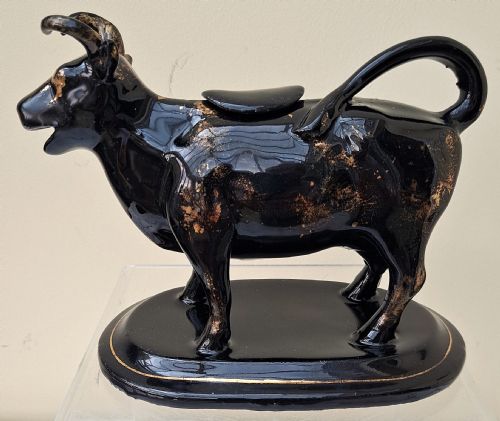
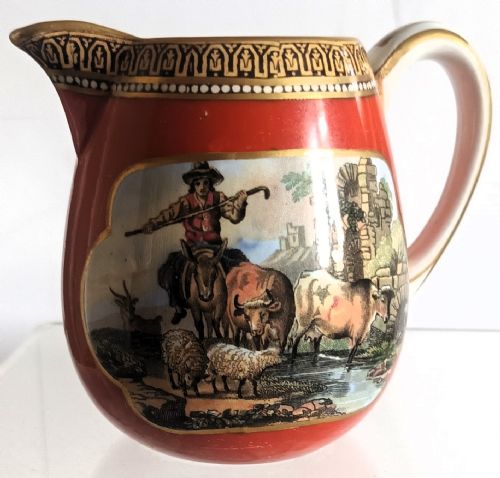
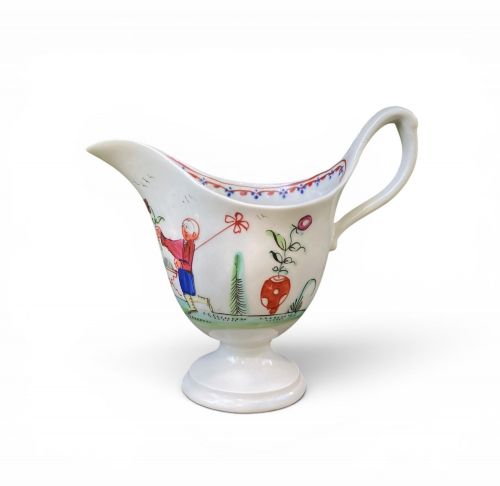
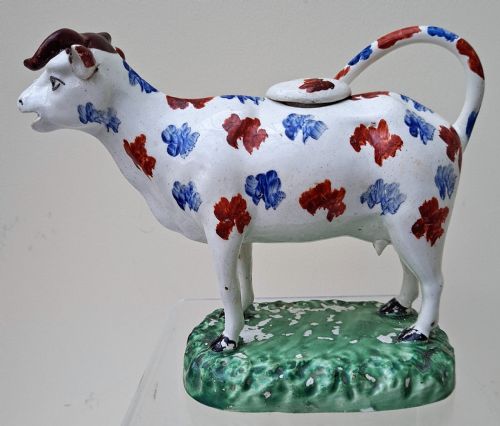
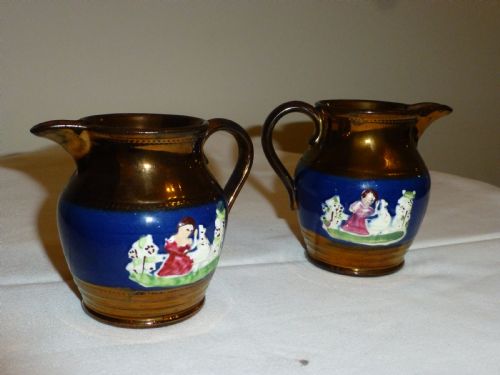
Cow creamers dominate the figural examples, frequently featuring milkmaid figures and flat bases. Other forms range from copper lustre pitchers to blue and white transfer-decorated milk jugs.
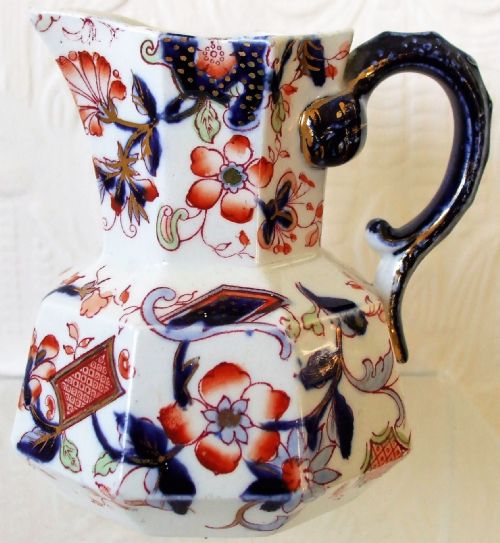
Makers such as Keeling and Co., H and R Daniel, and Copeland Spode appear among the porcelain and earthenware pieces. Collectors encounter both functional pouring jugs and whimsical animal forms across these listings.
Materials and construction
Potters shaped these creamers from earthenware, pearlware, and porcelain, applying lead glazes to seal the porous clay bodies. Some pieces utilise ironstone china or Jackfield black glaze for distinct surface finishes.
Decoration relied on hand-painted enamel colours, purple transfer printing, and copper lustre finishes. Artisans often added gilt highlights or gilding to elevate the appearance of utilitarian porcelain.
The listings include earthenware, pearlware, and porcelain, spanning nineteenth-century Georgian, Regency, and Victorian periods.
Qualities of distinction
The precision of the transfer printing and the depth of the copper lustre or enamel painting determine visual impact. Early pearlware bodies and well-preserved gilt accents elevate the stature of an individual creamer.
Keeling and Co·H and R Daniel·Copeland Spode·Mason's Ironstone
The Staffordshire Ceramic Creamer Glossary
- Cow creamer
- A hollow ceramic vessel in the shape of a cow, filled through a lid on the back and poured from the animal's mouth. These charming figural pieces were popular on tea tables.
- Pearlware
- A refined earthenware developed in the eighteenth century featuring a subtle blue-tinted glaze that pooled in recesses. It bridged the gap between creamware and true porcelain.
- Copper lustre
- A metallic glaze technique imparting a reflective, coppery sheen to the ceramic surface. Potters achieved this effect by applying metallic salts during firing.
- Jackfield pottery
- A type of earthenware distinguished by a glossy black glaze, often accented with gilding. It originated in Shropshire and later influenced Staffordshire production.
- Transfer printing
- A mechanical method of applying complex decorative patterns to ceramics using engraved copper plates and tissue paper. This technique allowed for consistent blue or purple designs.
Staffordshire Ceramic Creamer: Frequently Asked Questions
How do you fill a cow creamer?
Liquid milk is poured through an aperture located on the back of the animal, often fitted with a small lid.
The tea drinker then pours the cream directly from the animal's protruding mouth into the cup.
How old is my creamer?
Dating relies on stylistic markers, clay types such as pearlware versus ironstone, and decorative techniques like copper lustre.
Most examples span the Georgian, Regency, and Victorian eras of the nineteenth century.
Were these jugs used daily?
Many creamers served a strictly functional purpose on domestic tea tables for serving milk or cream.
Figural cow creamers also held decorative appeal in addition to their serving duties.