



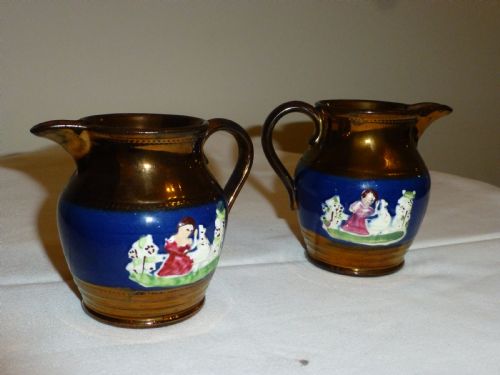

Victorian Lustreware Pitchers
These Victorian lustreware pitchers bring a metallic sheen and bold transfer prints to any table, offering a glimpse into nineteenth-century domestic pottery traditions.
Victorian Lustreware Pitchers
Victorian lustreware pitchers encompass a range of earthenware and ceramic vessels produced across the nineteenth century, including pieces from the Georgian and Victorian eras. These items frequently appear as jugs and pitchers, taking forms such as cream jugs, milk jugs, and large commemorative vessels designed for everyday use or display.
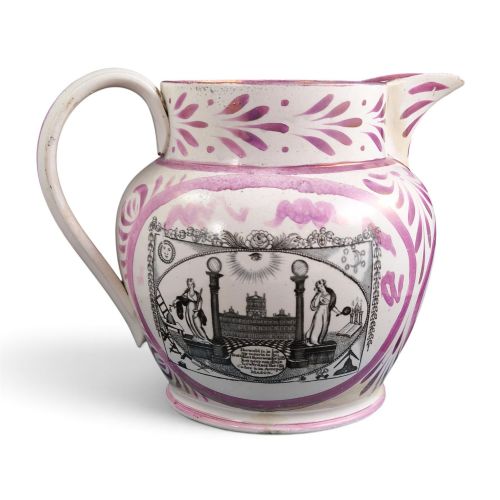
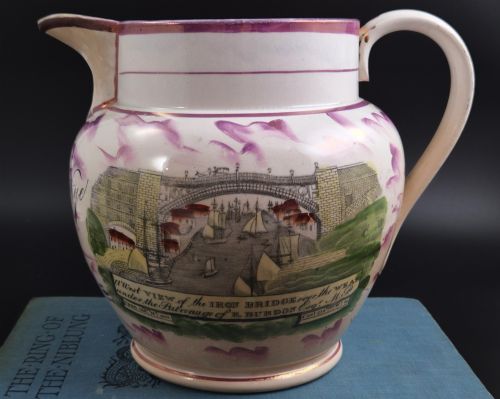
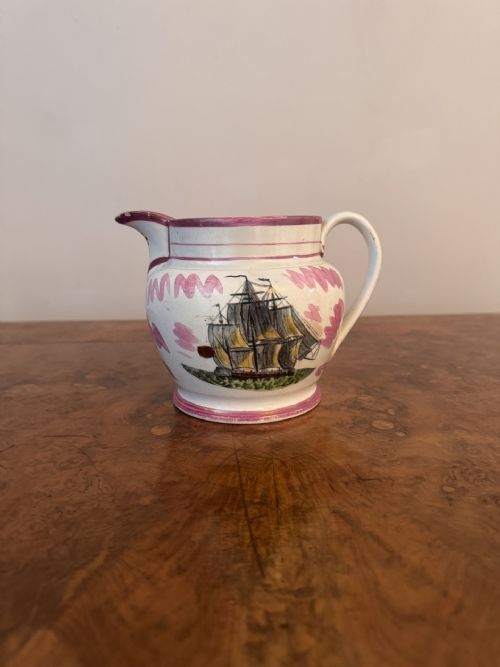
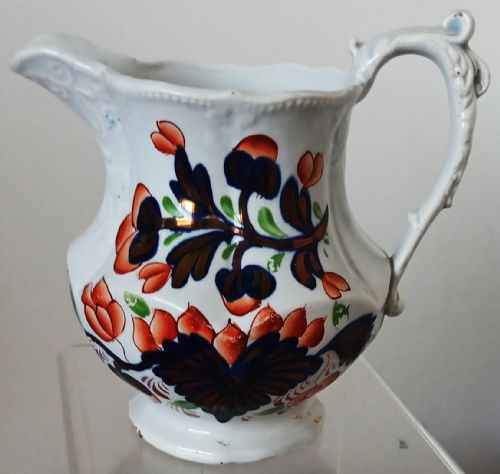
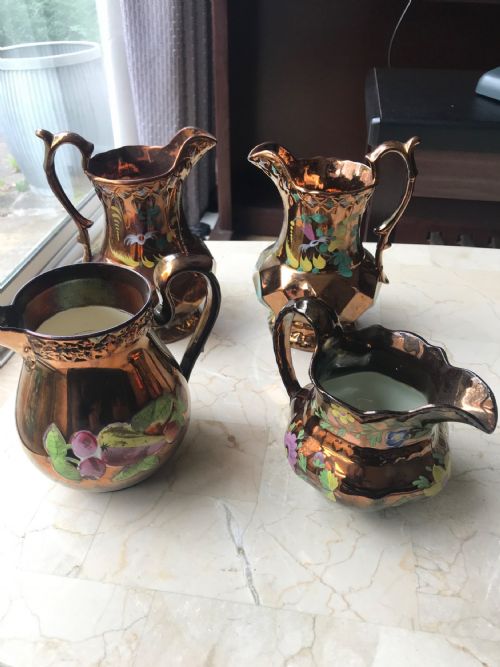
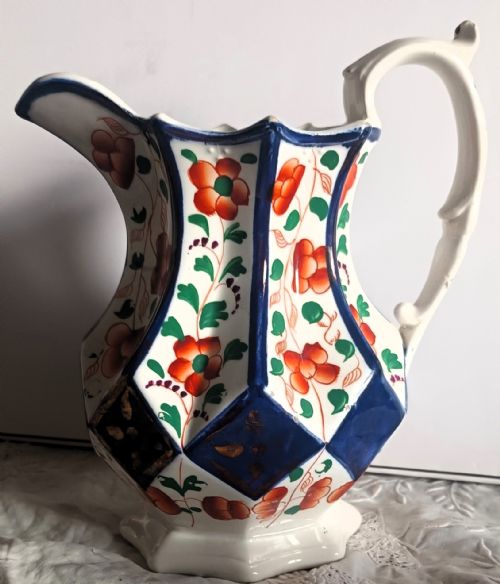
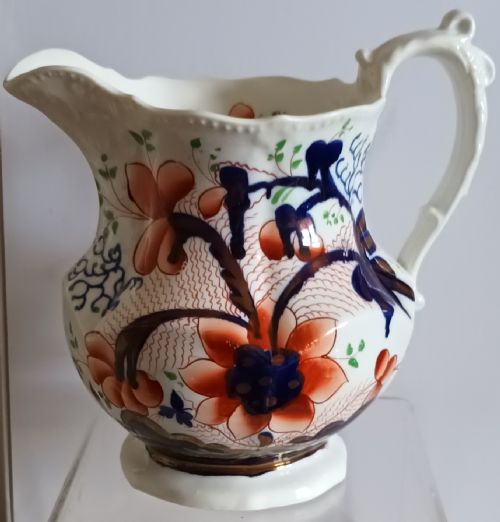
The selection here includes regional variations like Sunderland pink lustre jugs featuring maritime scenes and iron bridge motifs, alongside Staffordshire copper lustre pieces decorated with fruit or historical subjects. Alongside these, Gaudy Welsh patterns such as Grape, Harlech, and Aberaeron demonstrate the colourful palette typical of the period.
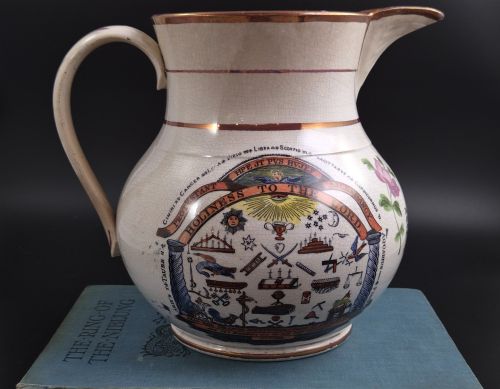
Buyers will also encounter specialised wares like the Staffordshire Orange Order commemorative jug and the Livesley Powell & Co botanical ironstone china jug. These vessels reflect the diverse output of nineteenth-century potteries, spanning simple domestic forms to richly decorated presentation pieces.
Judgements of quality
Quality in these pitchers rests upon the clarity of the transfer prints and the consistency of the lustre glaze across the ceramic body. Finer examples display sharp details in subjects like maritime scenes or botanical motifs without blurring.
The execution of hand-decorated elements also separates standard production from superior pieces, particularly in polychrome Gaudy Welsh patterns where brushwork defines the floral and geometric motifs. Well-preserved metallic surfaces retain their reflective quality rather than appearing dull or patchy.
Early nineteenth-century potters occasionally borrowed the bridge over the Wear to decorate jugs, ensuring homes far from Sunderland enjoyed local engineering triumphs.
Livesley Powell & Co
The Victorian Lustreware Pitchers Glossary
- Lustre Glaze
- A metallic glaze applied to pottery to create a reflective, iridescent surface finish. This technique creates the signature sheen found on copper and pink lustre wares.
- Transfer Print
- A method of applying engraved designs to ceramics using paper or tissue from a copper plate. It allowed potteries to produce complex pictorial scenes like maritime views consistently.
- Gaudy Welsh
- A style of nineteenth-century pottery decorated with vibrant cobalt blue, copper lustre, and iron-red enamel. It gained popularity for its striking palette and traditional patterns.
- Earthenware
- A porous ceramic body fired at lower temperatures, commonly used for utilitarian vessels throughout the Victorian period. It requires glazing to become impermeable to liquids.
- Ironstone China
- A durable type of vitreous earthenware patented in the nineteenth century for commercial utility. It offered greater strength than standard earthenware bodies.
Victorian Lustreware Pitchers: Frequently Asked Questions
What is pink lustre ware?
Pink lustre ware is a type of nineteenth-century pottery featuring a distinct metallic glaze that produces a pink or purple iridescent sheen. These pieces often incorporate transfer-printed views of local landmarks or maritime subjects.
The pink effect results from a thin application of gold or other metallic compounds fired onto the ceramic body. Sunderland potteries became particularly well known for producing these decorated jugs.
How do copper lustre jugs differ?
Copper lustre jugs utilise a metallic glaze containing copper to create a warm, reflective finish that mimics polished metal. They frequently feature hand-decorated floral or fruit motifs painted over or under the glaze.
These vessels were widely produced in Staffordshire during the nineteenth century for household use as milk and water jugs. Their robust earthenware bodies made them practical for daily kitchen tasks.
How were these pitchers used?
Victorian pitchers served practical functions in the home as water jugs, milk jugs, and creamers for daily meals. Larger examples also functioned as presentation pieces or commemorative items for specific events and organizations.
Their decorative transfer prints and lustre finishes meant they were frequently displayed on mantelpieces or dresser shelves when not in active service. This dual role of utility and display explains their survival in varied conditions.
How do I identify the period?
Identifying the period involves examining the ceramic body, glaze characteristics, and decorative styles typical of nineteenth-century production. Early pieces often employ pearlware bodies, while later Victorian examples utilise denser earthenware and ironstone.
Specific subjects, such as named bridges or historical commemorations, provide precise chronological markers when combined with the technical methods of the era. Comparing the transfer print style helps narrow down the manufacturing decade.