




Antique Earthenware Creamer
These antique earthenware creamers are charming domestic vessels, shaped from fired clay and finished with lustres or glazes to grace any tea table.
Antique Earthenware Creamer
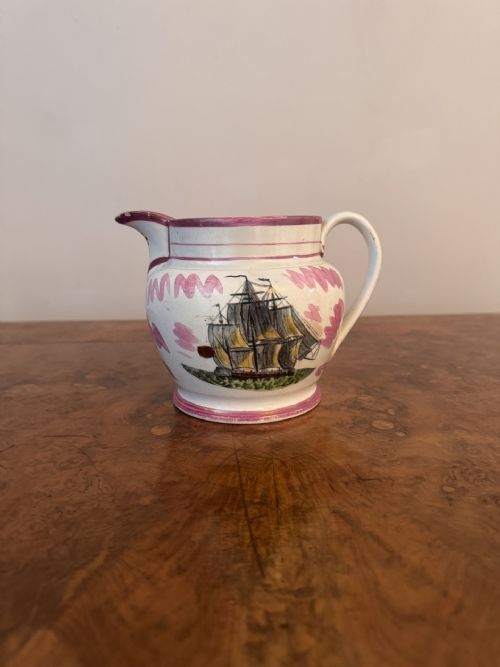
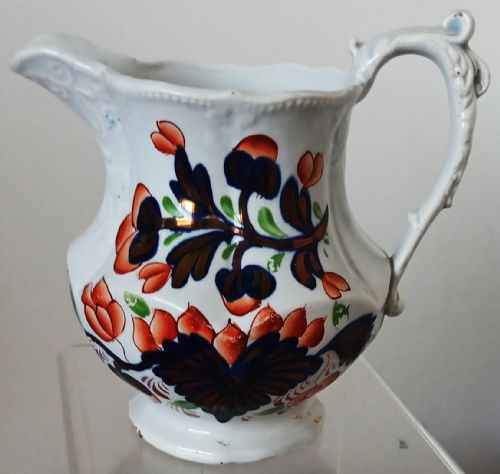
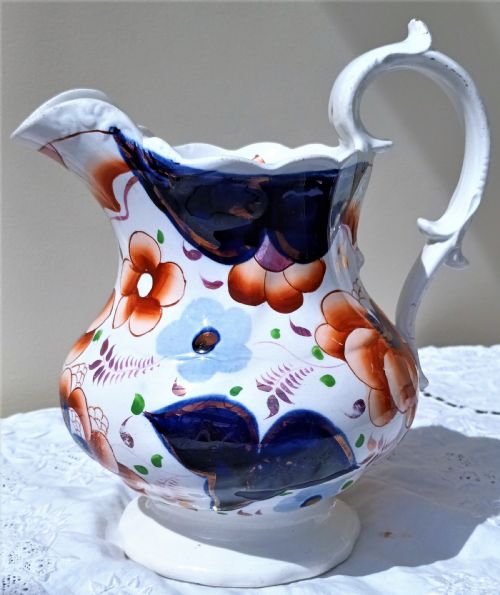
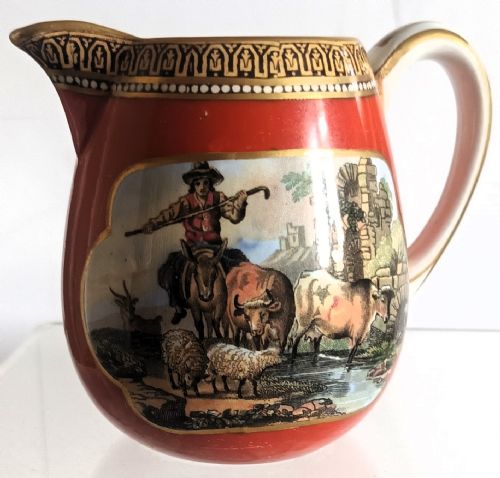
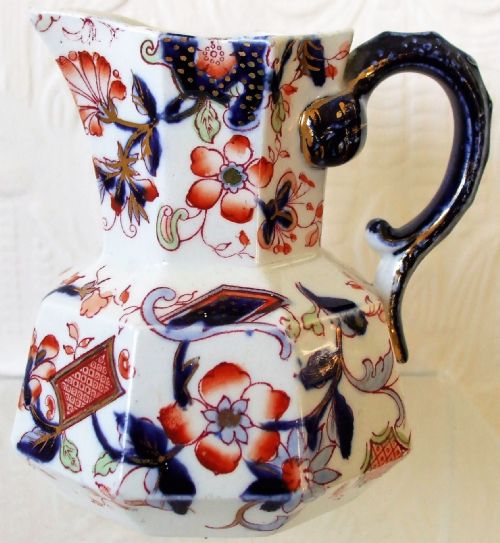
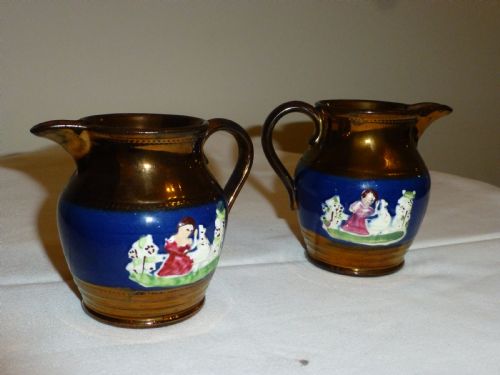
An antique earthenware creamer is a small ceramic jug designed for serving milk or cream at tea, appearing in forms from simple bulbous bodies to novelty animal shapes. The pieces on this page span the eighteenth and nineteenth centuries, including Georgian and Victorian examples decorated with everything from copper lustre to blue and white transfer prints.
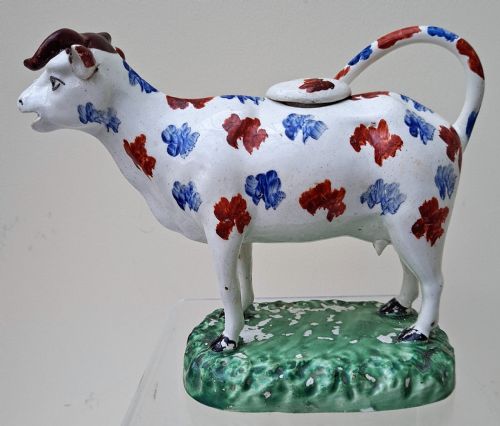
Buyers will encounter various regional styles and utilitarian forms, such as Staffordshire cow creamers, Gaudy Welsh pattern jugs, and Leeds creamware. These items served a practical purpose in British households before modern refrigeration, which accounts for their robust earthenware bodies and functional handles.
The selection here encompasses tin-glazed delftware, Jackfield black wares, and Pratt-ware alongside Sunderland lustre and basalt. Each variant reflects the specific potting traditions and domestic habits of its period, offering a tangible link to historical dining practices.
Methods and materials
Potters shaped these creamers from local or refined earthenware clay, often throwing them on a potter's wheel or casting them in moulds for animal figures like cows. The shaped clay underwent a primary firing to create porous bisque before receiving its decorative treatment.
Surface finishes include tin glazes, metallic oxide lustres, and enamels applied by hand or via early transfer printing techniques. A final glaze firing sealed the porous body and fixed the colours, resulting in the glossy or metallic sheens seen on copper lustre and Sunderland pieces.
The listings on this page span the 18th and 19th centuries, featuring earthenware, glaze, enamel, and metallic oxide materials.
Evaluating the pieces
The brilliance and stability of the metallic lustres or enamel colours also distinguish superior specimens from standard utilitarian wares. A well-balanced form with clean potting and vibrant, secure decoration marks the better end of the available range.
Keeling & Co.
The Antique Earthenware Creamer Glossary
- Creamware
- A fine-grained, cream-coloured earthenware perfected in Yorkshire during the eighteenth century. It revolutionised table ceramics with its light weight and smooth pale glaze.
- Copper Lustre
- A pottery finish incorporating a metallic copper film that creates a reflective, iridescent surface. It gained immense popularity in nineteenth-century Staffordshire wares.
- Cow Creamer
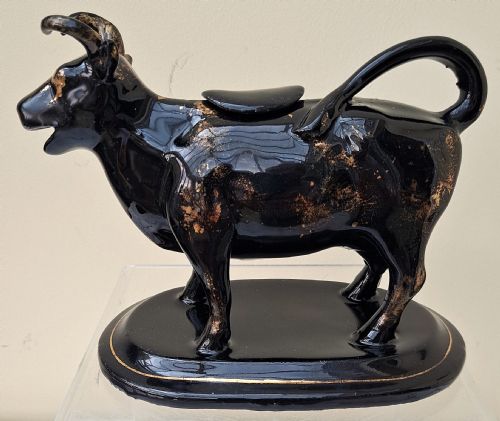
- A milk jug modelled in the shape of a cow, where milk is poured from an opening on the back and the tail forms the handle. They were novelty items popular in Georgian and Victorian households.
- Delftware
- Earthenware coated with an opaque white tin glaze, typically painted with blue designs inspired by imported Chinese porcelain. It represents some of the earliest tin-glazed pottery produced in Britain.
- Jackfield
- A type of glossy black-glazed earthenware originating in Shropshire. The dark metallic-looking surface was often highlighted with touches of gilding.
Antique Earthenware Creamer: Frequently Asked Questions
What is a cow creamer used for?
These whimsical vessels served as functional milk jugs for the tea table, designed so that guests could pour cream directly from the animal's mouth.
They added a touch of amusement to formal or rustic dining settings in Georgian and Victorian homes.
How do I clean an antique creamer?
Wash these pieces gently by hand using lukewarm water and mild soap, avoiding harsh scrubbing or modern dishwashers.
Earthenware and delicate overglaze enamels or lustres require gentle handling to preserve their historic surfaces.
How do I date an earthenware creamer?
Examine the base, the weight of the ceramic body, and the style of decoration to estimate the period of manufacture. Georgian pieces often feature creamware or tin-glazes, while Victorian examples frequently showcase bold transfer prints or bright copper lustre.
Can I use these jugs for serving?
While structurally sound, many collectors prefer to display these fragile historic items rather than use them for daily dining. Historic glazes and porous earthenware can be sensitive to modern foodstuffs and frequent washing.