
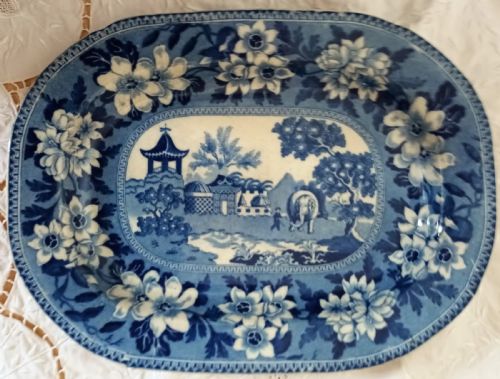
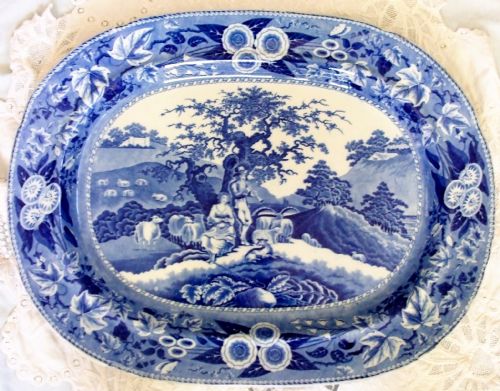


Earthenware Meat Dish
These earthenware meat dish listings bring heavy serving platters from Georgian and Victorian dining rooms directly to your table.
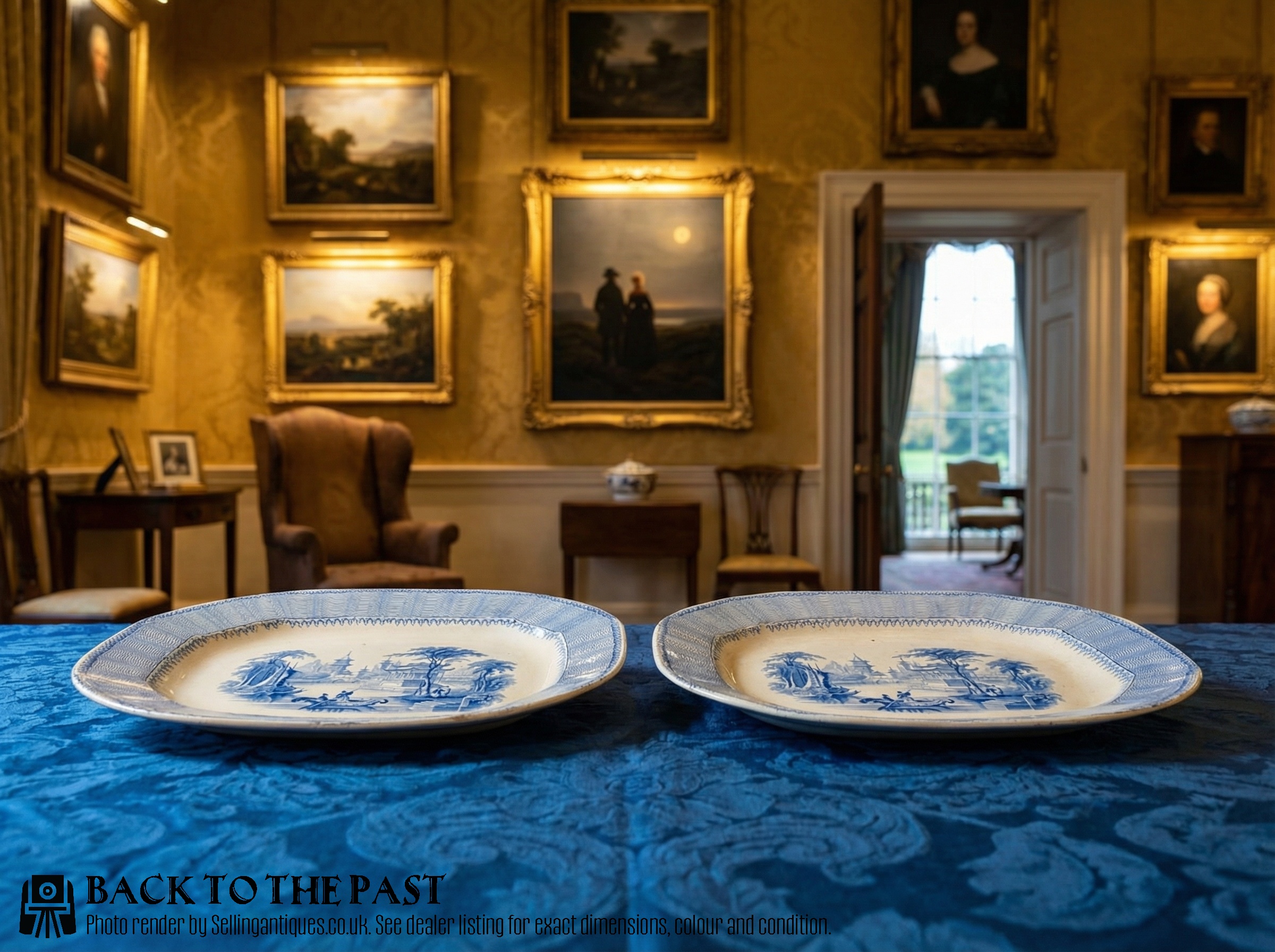
Earthenware Meat Dish
An earthenware meat dish is a large serving platter designed to hold joints of meat, poultry or game at the dining table. When you search for this phrase, you find substantial ceramic trays intended for substantial feasts.
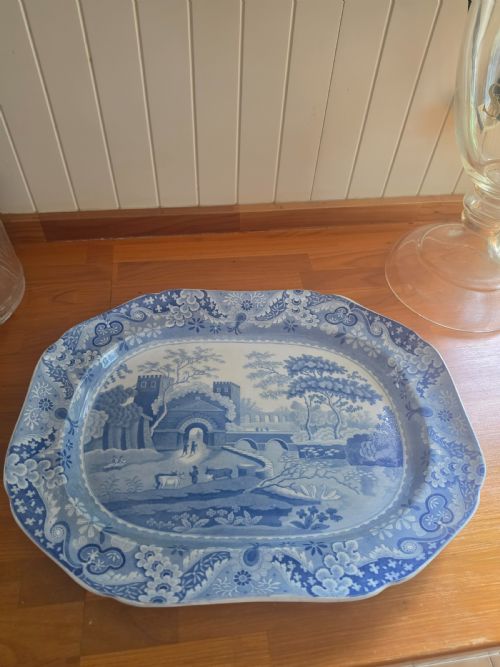
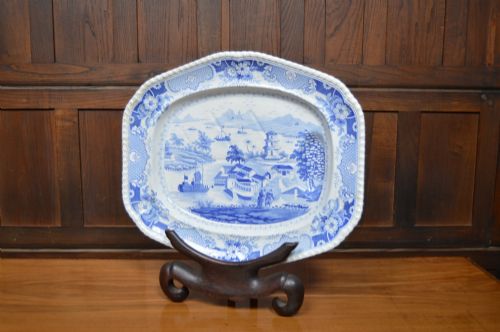
The versions you meet most often on this page span the eighteenth, nineteenth, Georgian and Victorian periods, often decorated with blue and white transfer printing. These platters served households that required durable yet decorative tableware for large gatherings and family dinners.
How they were made
Potters shaped earthenware, creamware and pearlware bodies, applying glaze and ceramic pigments before firing the clay in kilns. Many pieces utilise cobalt pigment applied through transfer printing to transfer complex pictorial scenes onto the ceramic surface.
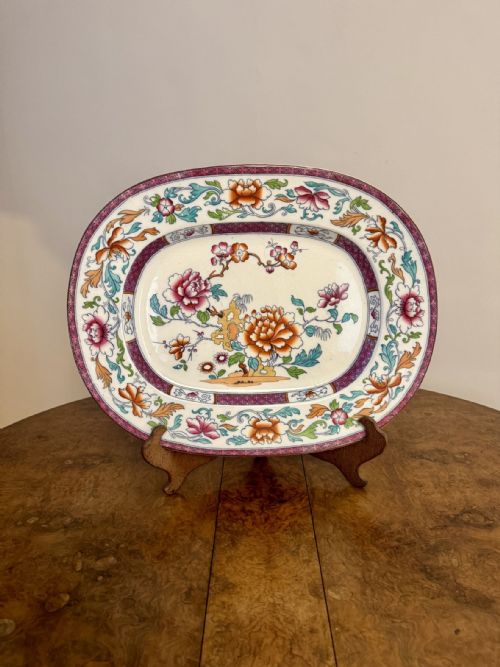
Makers finished these dishes with clear or tinted ceramic glazes to seal the porous earthenware beneath. Some platters received hand-painted enamel touches over the transfer print to add colour to the borders and central motifs.
Earthenware Meat Dish Retail Price Guide 2026
Typical asking prices for earthenware meat dish among the pieces listed under this phrase on Sellingantiques today, from the lower quarter to the upper quarter. They describe what is for sale here now, not the wider market.
Pattern names on these dishes frequently record historic naval battles, classical ruins and pastoral scenes.
What varies in quality
The clarity and crispness of the blue and white transfer print set the visual standard for these dishes, separating clear pictorial scenes from blurred or smudged impressions. The depth of the modelling in moulded borders and well-and-tree reservoirs also distinguishes finer production.
The weight, heft and proportion of the earthenware body dictate the physical presence of the platter. Superior examples maintain a balanced thickness that supports the heavy load of roasted meat without excessive bulk.
Spode·Wedgwood·John Rogers and Son·Thomas Lakin·Don Pottery·Minton·Copeland and Garrett·Elkin Knight and Bridgwood·Mason's Ironstone
The Earthenware Meat Dish Glossary
- Pearlware
- A refined earthenware developed in the late eighteenth century featuring a subtle bluish-white glaze that pooled in recesses. This body served as a popular canvas for blue and white transfer-printed meat dishes.
- Creamware
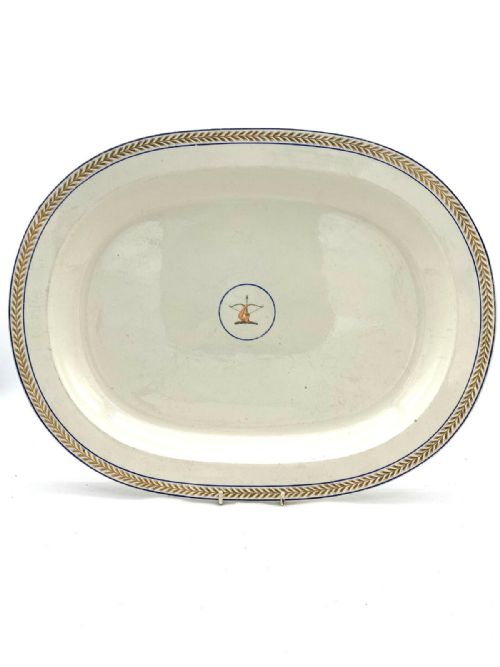
- A fine earthenware with a warm, cream-coloured glaze created by Josiah Wedgwood and adopted by other Staffordshire potteries. It provided an elegant background for armorial decoration and simple serving wares.
- Transferware
- A pottery decoration technique where an engraved copper plate transfers a printed design onto tissue paper, which is then pressed onto the unglazed or bisque ceramic body. This method allowed complex landscape and architectural patterns to be reproduced efficiently.
- Well and tree
- A platter design featuring a system of channels and a central well carved into the ceramic surface to collect meat juices during carving. This practical innovation kept joints raised above their own liquid.
- Ironstone
- A durable type of heavy earthenware patented in the nineteenth century to imitate Chinese porcelain. It resisted chipping and proved exceptionally suitable for large meat platters subjected to heavy daily use.
Earthenware Meat Dish: Frequently Asked Questions
How were they used?
Households used these platters to carry large joints of meat from the kitchen to the dining table for formal carving. The generous surface area accommodated whole birds and substantial cuts.
Gravy wells and reservoirs helped collect juices, keeping the meat elevated and preventing spills on the table linen. Afterwards, they served as decorative centerpieces on sideboards or dressers.
How do I live with one?
You can display these platters on walls using secure plate hangers or stand them upright on dresser shelves to showcase the transfer-printed scenes. Their robust earthenware construction suits continued domestic service for large gatherings.
Hand washing preserves the historic glaze and prevents damage to the ceramic body. Avoid abrasive cleaners that might dull the nineteenth-century surface.
How do I tell periods apart?
Eighteenth-century examples often use creamware bodies with minimal decoration or hand-painted armorials. Nineteenth-century pieces frequently feature deep blue and white transfer prints with detailed Victorian border patterns.
Pearlware dates predominantly from the late Georgian era, identifiable by the bluish tint pooling in the glaze. Victorian pieces commonly incorporate heavier ironstone bodies and elaborate architectural or botanical motifs.