


Earthenware Jardiniere
An earthenware jardiniere brings sculptural plant housing into interiors, prized for rich glazes and sturdy pottery construction.
Earthenware Jardiniere
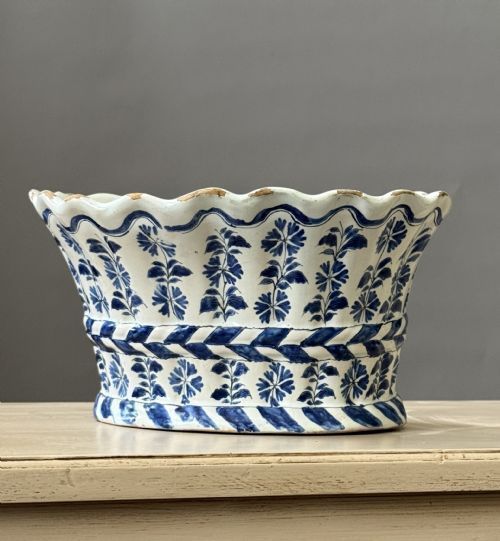
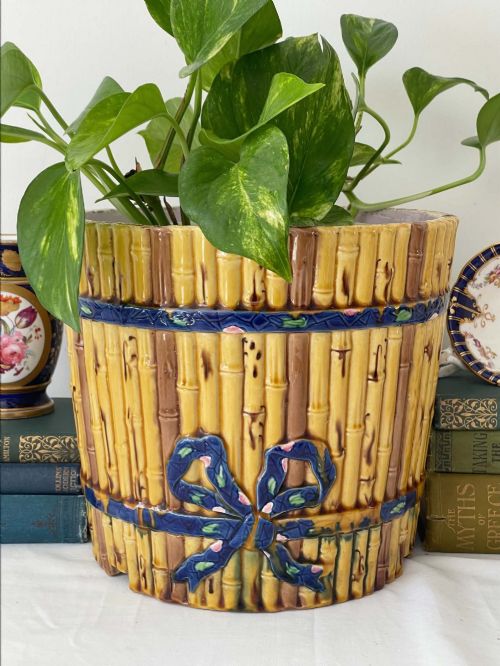
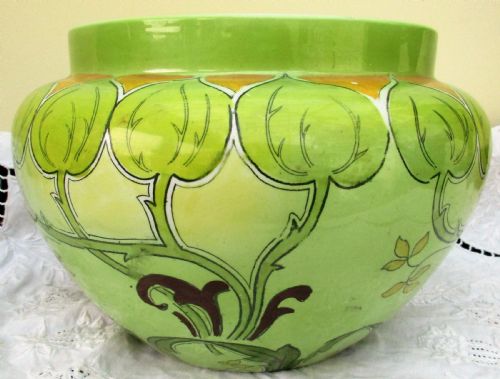
An earthenware jardiniere is a decorative plant pot designed to hold indoor greenery, frequently encountered in nineteenth-century and early twentieth-century ceramic forms. These vessels appear across various styles, including Victorian majolica, Art Nouveau, and Arts & Crafts designs.
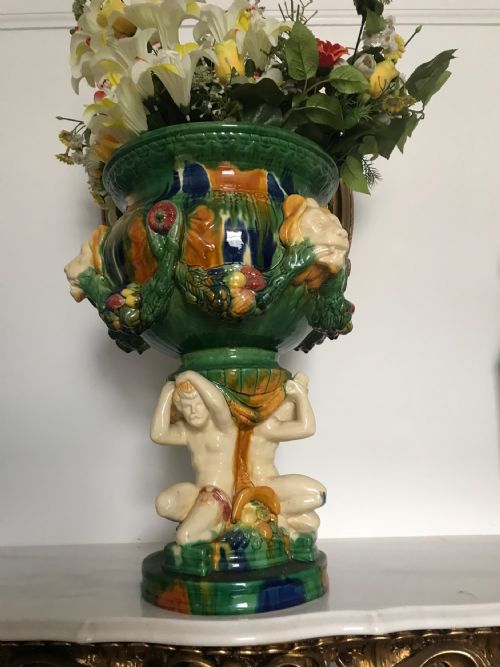
Makers produced these planters as standalone pots or combined them with matching pedestals and stands to elevate greenery within a room. The selections on this page span British art pottery, continental European works, and Japanese stoneware vessels.
Common regional variations include English earthenware bodies, Italian terracotta urns, and Japanese glazed stoneware creations. Buyers encounter single vessels alongside paired planters and complete plant stand assemblies.
How they were made
Potters shaped earthenware, terracotta, and stoneware bodies on wheels or cast them in moulds to create substantial vessels capable of holding soil and water. Artisans applied coloured enamel, lustre glazes, and tin-based coatings to the clay before firing.
Techniques such as majolica glazing produced vibrant, glossy surfaces over moulded relief decoration, whilst earthenware and faience bodies offered porous structures suited for decorative plant housing.
Several planters include sculptural griffin stands and lions head decorations to keep watch over the ferns.
What varies in quality
Quality rests in the crispness of moulded relief work, the depth and evenness of coloured glazes, and the presence of documented ceramic artists or factory marks. Superior examples display controlled kiln finishes and robust structural integrity across large forms.
The sophistication of surface decoration separates standard production pieces from studio outputs, particularly where hand-painted details or lustre effects enhance the ceramic body.
W.A. Adderley·Burmantofts Art Pottery·Makuzu Kozan II·Doulton Burslem·Doulton Lambeth·Clement Massier·Royal Doulton·Royal Worcester·Julius Dressler·George Jones·William Adams And Sons·Linthorpe Pottery
The Earthenware Jardiniere Glossary
- Majolica
- A type of pottery glazed with tin enamel and decorated with coloured metal oxides, producing vibrant and glossy surfaces popular during the Victorian era.
- Cache pot
- An ornamental flowerpot used to conceal a plain inner plant container, often sharing forms with larger jardinieres.
- Faience
- Tin-glazed earthenware produced in various European potteries, known for decorative painted or moulded surfaces.
- Stoneware
- A heavy, durable ceramic fired at high temperatures until vitrified, making the body impermeable to water.
- Bough pot
- An early form of vessel designed to hold cut branches or flowers before evolving into later planter and jardiniere shapes.
Earthenware Jardiniere: Frequently Asked Questions
What is an earthenware jardiniere used for?
These vessels serve as decorative containers for housing potted plants and greenery inside domestic interiors.
They function as standalone display pieces on tables or as combined arrangements set upon matching ceramic pedestals.
Are these planters waterproof?
Most ceramic and stoneware pieces possess glazed interiors that resist moisture from damp potting soil.
However, collectors often place a liner inside older earthenware vessels to protect the porous ceramic body from prolonged moisture contact.
How do I identify Art Nouveau examples?
Art Nouveau pieces display characteristic flowing organic lines, stylised floral motifs, and asymmetrical naturalistic shaping.
These designs emerged during the late nineteenth and early twentieth centuries, frequently utilising lustre glazes.