
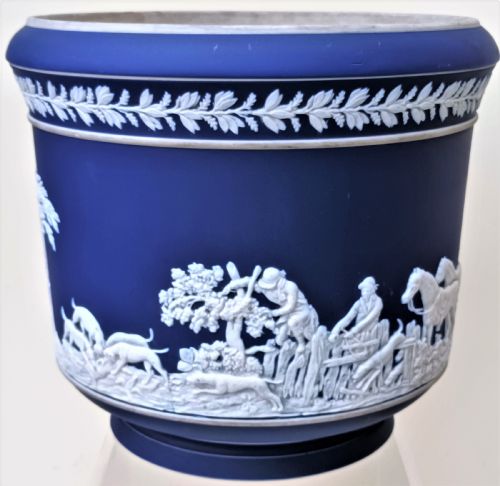


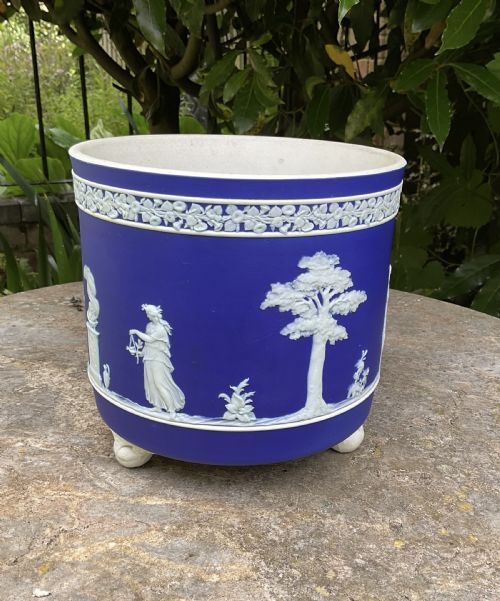


Antique Cobalt Planter
An antique cobalt planter brings rich indigo depth to interior planting, offering vessels shaped as jardinieres, cachepots, and bowls.
Antique Cobalt Planter
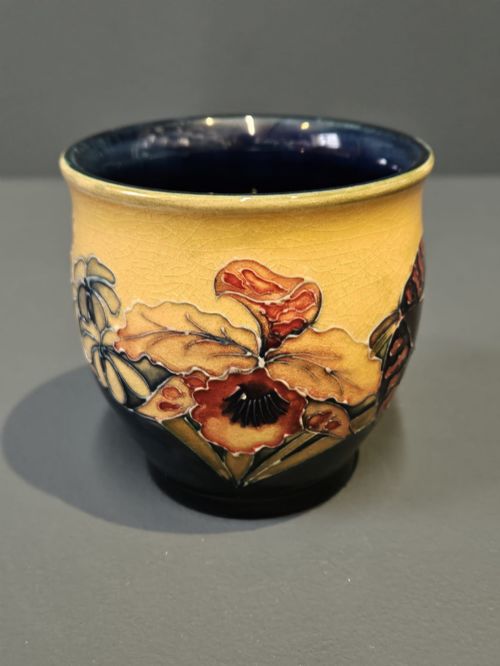
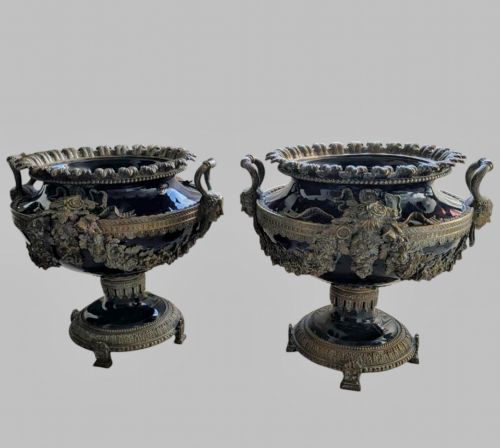
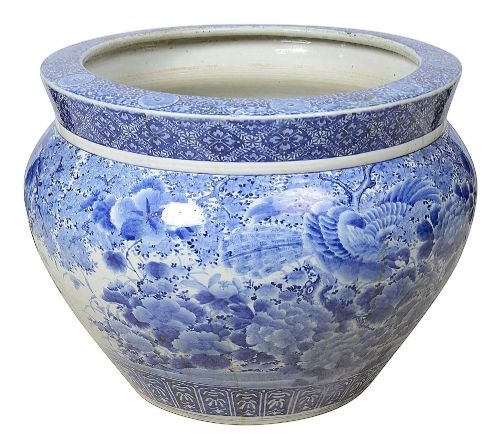
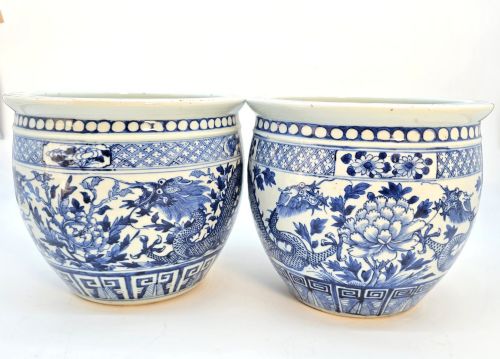
An antique cobalt planter encompasses vessels intended to hold growing plants or house potted greenery indoors, frequently described as jardinieres, cachepots, or fish bowls. When searching for an antique cobalt planter, buyers encounter diverse forms ranging from Victorian English earthenware to Japanese Meiji period porcelain and Chinese blue and white ceramics.
The pieces appearing here span the late nineteenth century into the early twentieth century, incorporating Victorian, Qing Dynasty, and Japanese Meiji aesthetics. Forms include footed bowls, oval planters, and larger cylindrical vessels suited for displaying palms or floral arrangements.
Makers represented in these listings include English potteries like Royal Doulton, Doulton Lambeth, Minton, George Jones, Coalport, and William Adams and Sons alongside continental and Asian workshops. Most examples rely on rich blue pigments applied underglaze or through distinct regional glazing traditions.
Distinctions in quality
Quality rests upon the crispness of the moulded relief, the depth of the cobalt pigment, and the precision of the glaze application. Finer pieces maintain clean potting with even wall thickness and well-defined decorative motifs.
The presence of registered maker marks, balanced ormolu mounts, and intact salt glaze finishes elevate certain examples. Superior weight and balanced proportions distinguish exceptional studio and factory output from routine production.
Some nineteenth-century fish bowls were spacious enough to double as indoor aquatic ponds for prize goldfish.
William Adams and Sons·Royal Doulton·Doulton Lambeth·Minton·George Jones·Coalport·Wedgwood
The Antique Cobalt Planter Glossary
- Jardiniere
- A decorative ceramic pot or stand designed to hold growing plants indoors. These vessels often sit directly on floors or furniture surfaces.
- Cachepot
- A decorative container used to conceal a plain flowerpot without a drainage hole. The French term translates directly as hide-pot.
- Jasperware
- A type of vitreous stoneware developed by Wedgwood featuring contrasting applied white reliefs on a coloured ground. Cobalt blue served as one of the signature background shades.
- Majolica
- A heavy earthenware pottery covered with an opaque coloured tin glaze, popular during the Victorian era for bold botanical designs. The technique allows for rich hues and modelled surface textures.
- Meiji Period
- The era in Japanese history lasting from 1868 to 1912, characterised by extensive craft exports to Western markets. Pieces from this time often display meticulous hand-painted blue and white or Imari designs.
Antique Cobalt Planter: Frequently Asked Questions
How were antique planters used?
These vessels functioned primarily as indoor plant holders or table centrepieces during the Victorian period. Gardeners placed potted ferns or palms directly inside them to decorate drawing rooms and parlours.
Larger versions often sat on dedicated pedestals or directly on the floor. Smaller cachepots protected fine furniture surfaces from moisture.
Are these planters waterproof?
Most ceramic and porcelain vessels hold water effectively due to their dense glazed bodies. However, unglazed interior areas or hairline age cracks can develop over time.
Using a modern plastic liner inside antique jardinieres protects the historic ceramic from mineral deposits and moisture damage.
How do I identify a Victorian piece?
Victorian examples frequently display registration marks, British registry diamonds, or impressed factory ciphers on the base. Stylistic clues include heavy majolica glazes, classical neoclassical motifs, or blue jasperware reliefs.
Matching the glaze characteristics and clay body weight to known nineteenth-century production helps confirm the manufacturing era.