

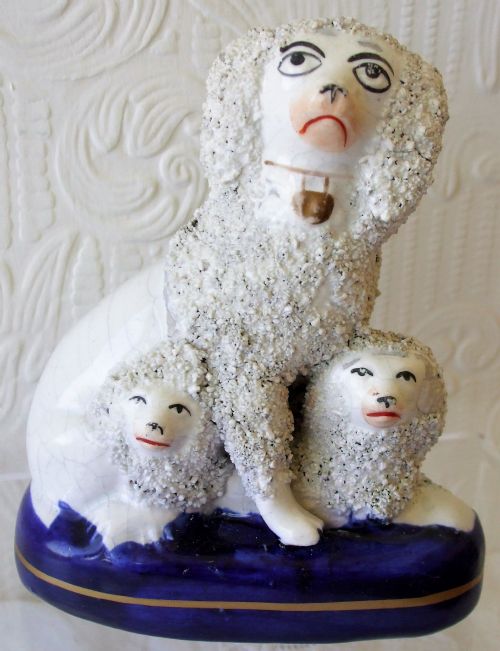


Earthenware Figure Group
These earthenware figure group pieces bring the storytelling of the Victorian parlour and earlier centuries straight to your mantelpiece.
Earthenware Figure Group
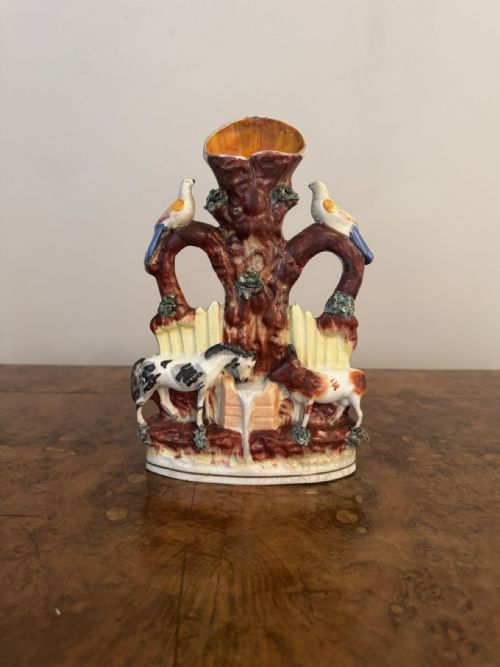
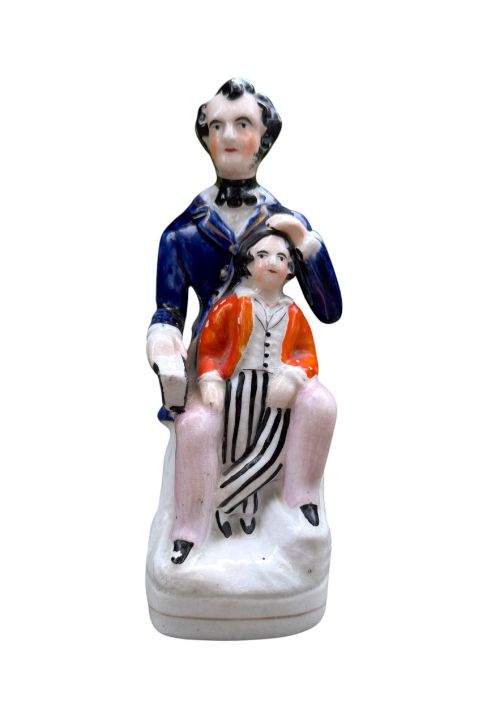
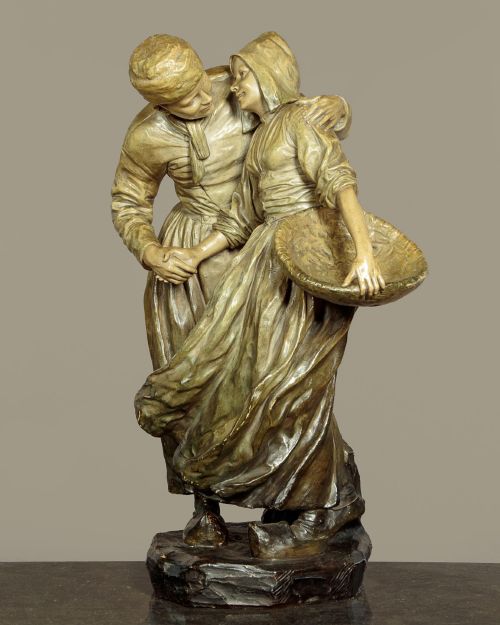
When you search for an earthenware figure group, you encounter sculptural ceramics that capture domestic scenes, literary characters, and political allegories from the eighteenth and nineteenth centuries. The majority of these works belong to the Victorian Staffordshire tradition, ranging from flatback portrait groups to elaborate spill vases and sculptural clock housings.
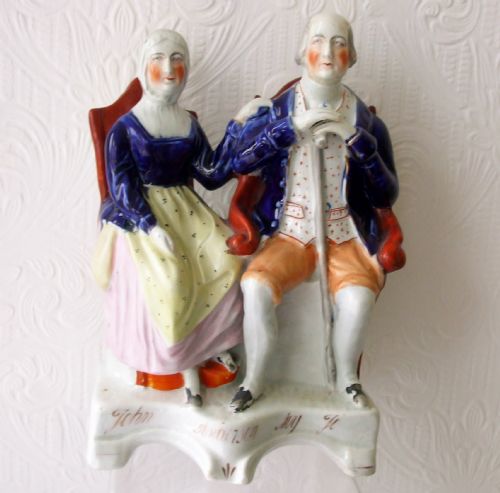
The subjects span from pastoral scenes like the Tithe Pig and literary pairs such as John Anderson, My Jo, to royal portraits and historical groupings from the Crimean War. Many take the form of animals, notably poodles, deer, and swans, modelled with naive charm and expressive detail.
Originating largely from English potteries, these pieces served as affordable domestic ornaments for homes across the nineteenth century. They bridge the gap between folk art and popular sculpture, recording the tastes and interests of the period in ceramic form.
Factors of Quality
Quality in an earthenware figure group rests primarily upon the crispness of the moulding and the expressive clarity of the hand-painting on faces and garments. Superior examples retain bright, well-fired enamels without excessive running or blurring.
The ambition of the composition also dictates standing, with multi-figure groups, detailed spill vases, and complex sculptural arrangements demanding greater technical skill from the potter. Finer pieces demonstrate careful attention to anatomical proportion and decorative detail rather than hasty mass production.
Poodles dominate the animal groups, often sporting stubborn ceramic curls formed from tiny blobs of clay applied by hand.
Goldscheider·Ralph Wood·Wedgwood and Co Ltd
The Earthenware Figure Group Glossary
- Earthenware
- A porous ceramic body fired at lower temperatures than stoneware or porcelain. It requires a glaze to become impermeable to liquids.
- Pearlware
- A refined earthenware developed in the eighteenth century, featuring a thin lead glaze with a faint bluish tint pooling in recesses. It provided a whiter surface that imitated Chinese porcelain.
- Spill Vase
- A hollow ceramic vessel designed to hold taper spills used for lighting candles or fires. They often form part of a figurative group standing beside animals or human characters.
- Flatback
- A style of Staffordshire figure moulded with a finished front and a largely unglazed, flat or semi-flat back designed to stand against a wall. This technique saved time and material during production.
- Enamel
- A vitreous composition used as a decorative paint over the fired glaze. It required a subsequent low-temperature firing to fuse the colours to the ceramic surface.
Earthenware Figure Group: Frequently Asked Questions
What is an earthenware figure group?
An earthenware figure group consists of multiple modelled ceramic figures joined on a shared base, depicting narrative, historical, or domestic scenes.
Most examples date from the nineteenth century and originate from Staffordshire potteries, designed as decorative ornaments for the home.
How were these ceramic figures used?
These pieces served as mantelpiece ornaments and decorative displays in Victorian parlours, reflecting the owner's literary tastes, political loyalties, or moral interests.
Some variants, such as spill vases, also performed a practical domestic function by holding wooden tapers used to light candles and fires.
How do I identify Victorian Staffordshire pieces?
Victorian Staffordshire pieces typically feature earthenware bodies decorated with hand-painted enamel colours and finished with a clear lead glaze.
Many adopt the flatback construction method with unadorned backs, intended for display on shelves or mantelpieces against a wall.
What subjects appear on these figures?
The subjects range widely from literary and pastoral scenes to portrait groups commemorating royal events and military conflicts like the Crimean War.
Animal groups, including poodles, deer, and swans, also form a significant portion of the available figures.