



Earthenware Chinoiserie Charger
An earthenware chinoiserie charger brings together hand-painted Eastern motifs and tin-glazed pottery for a striking wall display or table centrepiece.

Earthenware Chinoiserie Charger
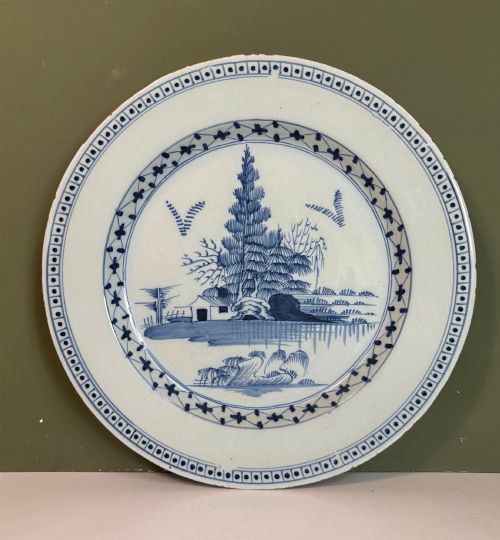
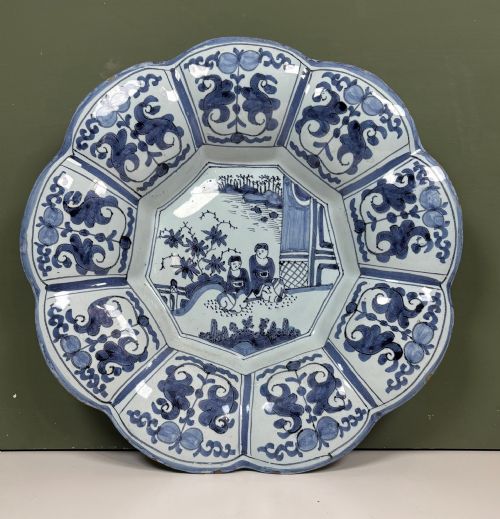
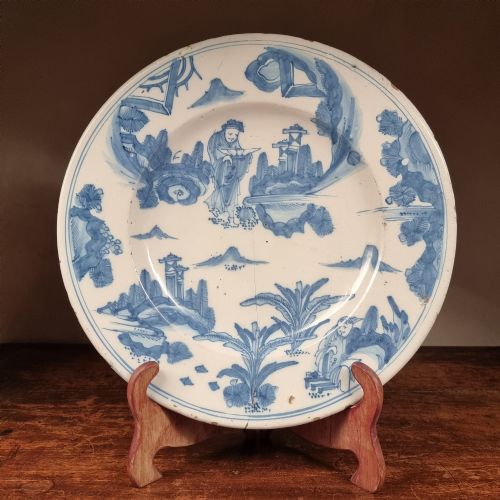
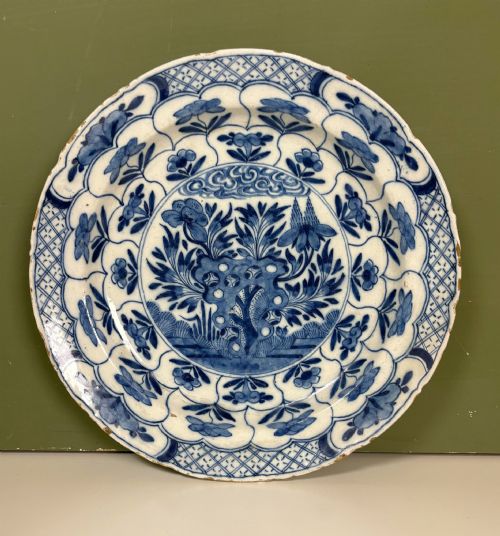
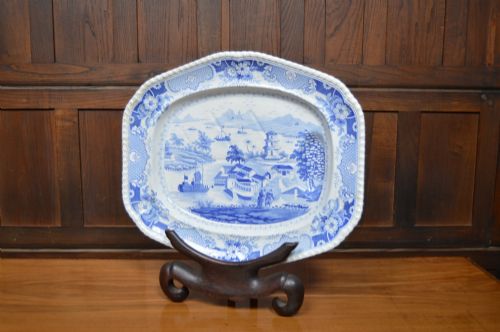
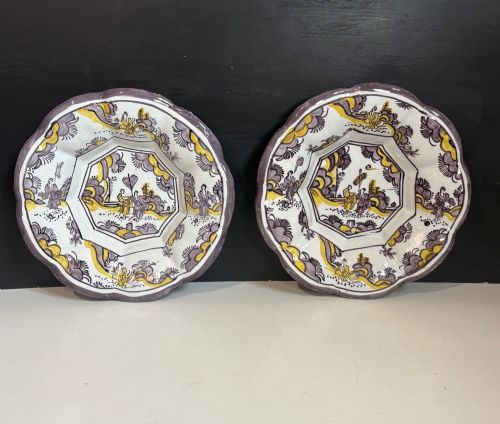
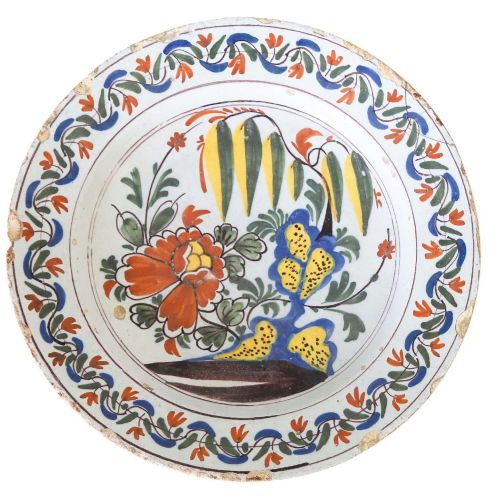
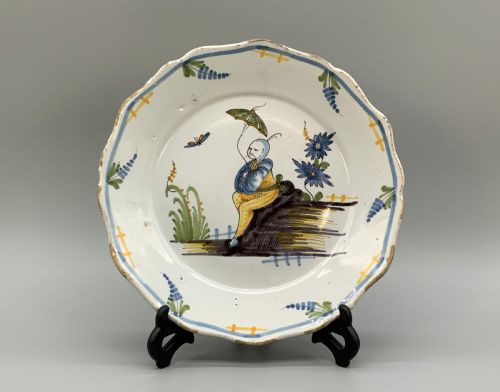
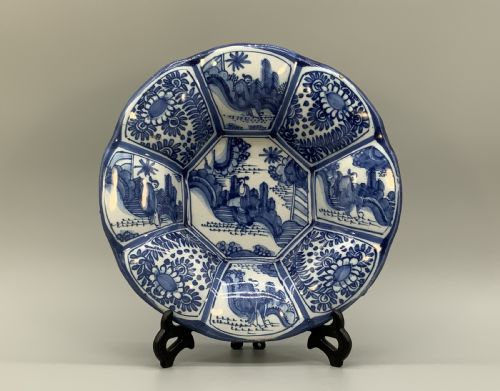
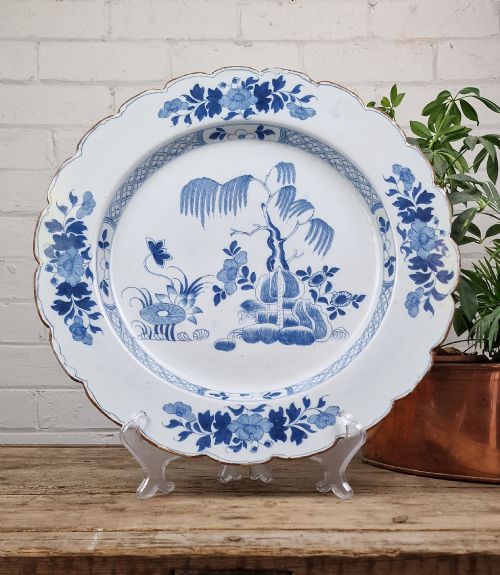
An earthenware chinoiserie charger is a large decorative plate or dish decorated with imaginative East Asian scenes, typically produced during the seventeenth, eighteenth, and nineteenth centuries. These pieces encompass English, Dutch, and French delftware, alongside pearlware and transferware chargers.
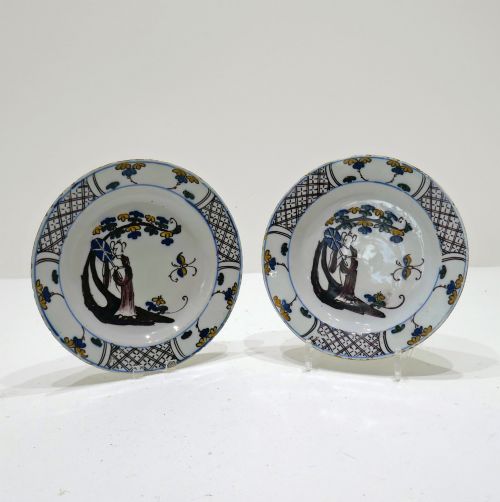
Most examples found here date from the eighteenth century, showing tin-glazed earthenware surfaces painted in cobalt blue or polychrome pigments. Makers such as Minton, Spode, and C.J. Mason also contribute nineteenth-century interpretations of these oriental designs.
How they were made
Potters shaped the earthenware body before coating it in an opaque tin glaze that provided a smooth white ground for painting. Cobalt oxide and various pigments were then applied directly to the raw glaze by hand.
Transfer printing emerged later, allowing detailed patterns like the willow pattern to be transferred onto pearlware and earthenware surfaces from copper plates before final firing.
Some eighteenth-century painters included whimsical pagoda towers that defy all known laws of Eastern or Western architecture.
What varies in quality
Quality rests upon the crispness of the hand-painted brushwork and the depth of the tin glaze, which can appear milky and even or thin and pooled. Early pieces display painterly confidence in their rendering of figures and foliage.
The precision of the transfer printing and the smoothness of the ceramic body distinguish standard production wares from finer factory pieces originating from established potteries.
C.J. Mason·Minton·Spode
The Earthenware Chinoiserie Charger Glossary
- Tin glaze
- An opaque white glaze containing tin oxide that forms the characteristic glossy surface of delftware. It absorbs cobalt pigment during firing to create soft-edged painted designs.
- Chinoiserie
- European artistic interpretations of Chinese and East Asian styles, featuring fanciful pavilions, figures, and landscapes. This aesthetic dominated eighteenth-century ceramic decoration.
- Charger
- A large decorative plate or dish traditionally intended for ceremonial table service or wall display. These pieces measure considerably larger than standard dining plates.
- Polychrome
- Decoration utilising multiple colours, typically soft greens, yellows, manganese, and blues on earthenware. This palette distinguishes certain eighteenth-century delft chargers from standard blue and white pieces.
Earthenware Chinoiserie Charger: Frequently Asked Questions
How do I hang a heavy charger?
Large earthenware chargers require sturdy brass spring hangers that distribute weight evenly across the rim. Ensure the wall fixing engages securely with brick or studwork.
Avoid wire-only loops that grip the footring loosely, as nineteenth-century ceramic bodies carry substantial weight.
Were these chargers used for food?
Most seventeenth and eighteenth-century chargers served as ceremonial table platters or decorative wall dishes rather than daily tableware. Their porous earthenware bodies absorb moisture if repeatedly exposed to liquids.
Later nineteenth-century transferware plates saw more robust domestic service on the dining table.
How do I tell Dutch delft from English delft?
English delft chargers from centres like Bristol or Lambeth often feature warmer paste bodies and distinct polychrome palettes. Dutch pieces frequently exhibit cooler blue tones and characteristic glaze thinning on the reverse.
Examining the footring and rim glaze provides further clues to the pottery of origin.