





Chinoiserie Charger Dish
These chinoiserie charger dish examples bring European tin-glazed earthenware and porcelain together with imagined eastern motifs for display on walls or tables.

Chinoiserie Charger Dish
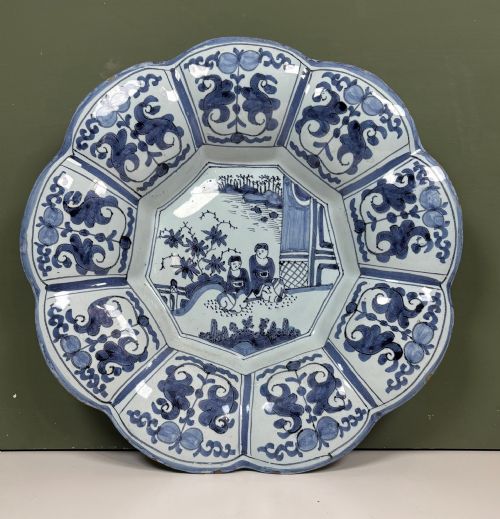
A chinoiserie charger dish combines large-scale serving plates or display platters with decorative schemes inspired by eastern design, frequently taking the form of tin-glazed earthenware or transferware ceramic pieces. These items serve primarily as decorative wall plates or large centrepieces for display rather than everyday dining use.
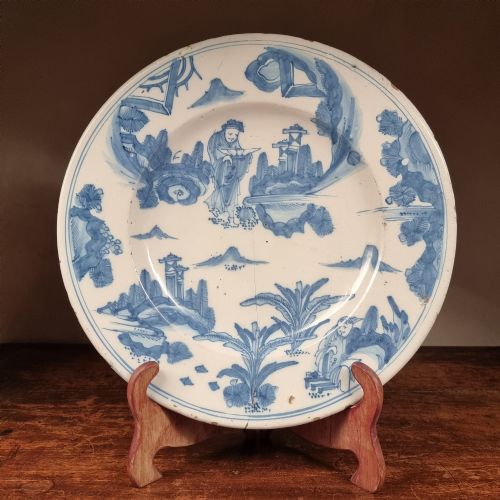
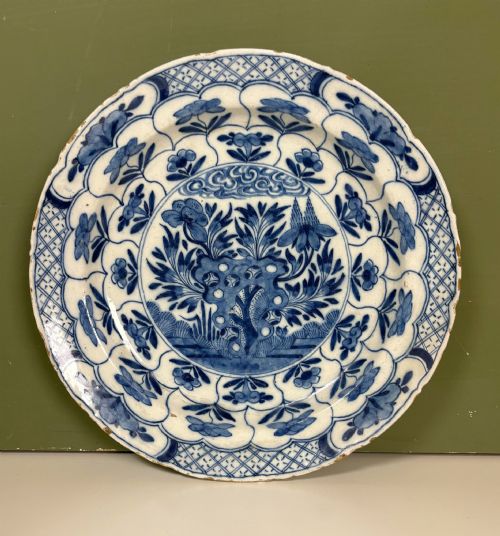
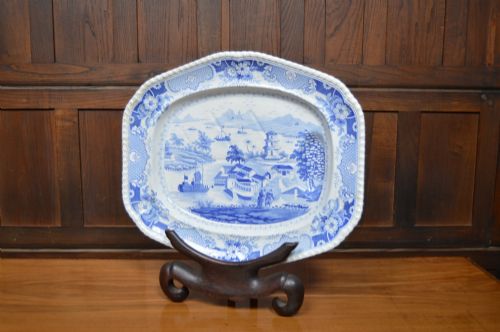
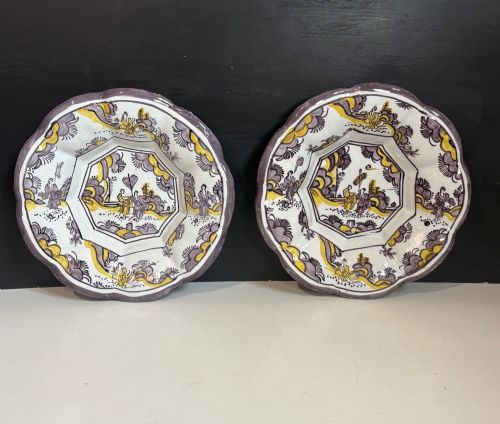
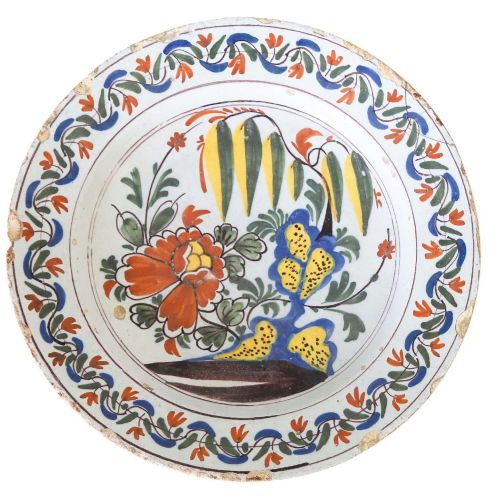
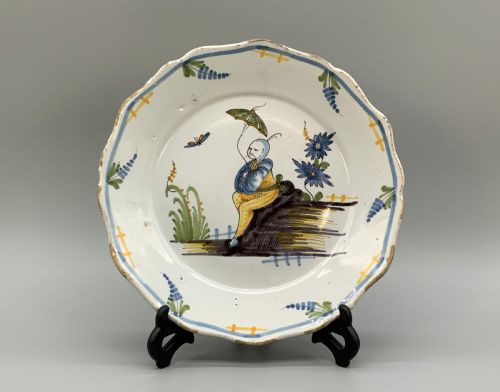
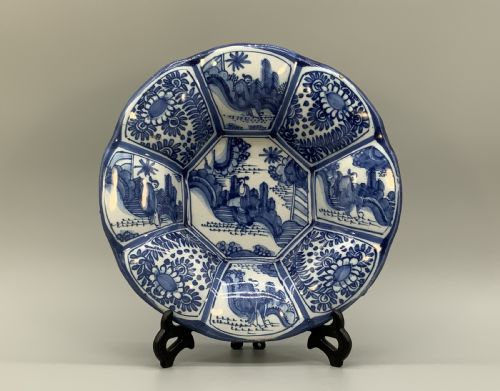
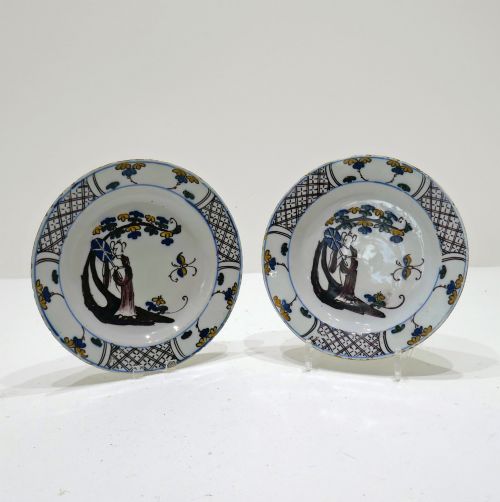
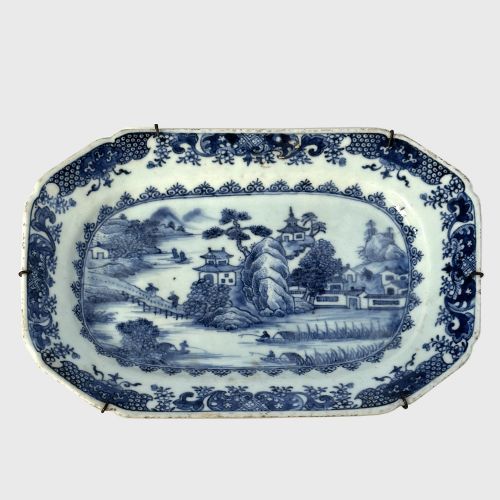
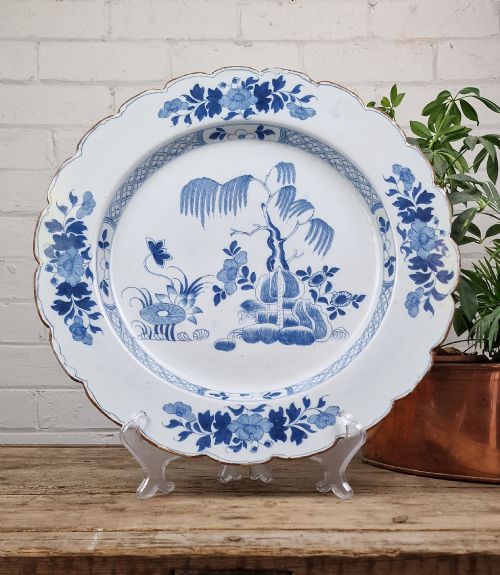
The versions most commonly met on this page originate from the eighteenth century, spanning English and Dutch delftware alongside nineteenth-century ironstone and porcelain adaptations. Forms range from deep chargers and lobed dishes to expansive meat platters displaying blue and white or polychrome scenes.
Materials and production methods
Makers utilised ceramic bodies formed from earthenware, ironstone, or porcelain, coated in tin glaze to create an opaque white surface suitable for painting. Artisans applied cobalt pigment, cobalt oxide, or manganese and yellow pigments directly onto the unfired or fired glaze before a final kiln firing.
Techniques varied between freehand brushwork executed by pottery painters and transfer printing methods introduced in later periods. Early examples rely on hand-painted floral and figurative compositions, whilst subsequent Victorian pieces incorporate transfer-printed motifs such as temple scenes.
Listings feature ceramics spanning the seventeenth, eighteenth, and nineteenth centuries, alongside Victorian and Edwardian periods.
Assessing visual quality
Quality rests upon the clarity of the painted brushwork and the control of the tin glaze over the ceramic body. Pieces displaying crisp cobalt pigment without excessive pooling or running demonstrate greater technical proficiency from the pottery workshop.
The crispness of the oriental-inspired motifs and the harmony of polychrome palettes distinguish standard production ware from superior examples. Preservation of the glaze surface and the depth of the painted border details further elevate the visual impact of an individual charger.
Mason·C.J. Mason·Minton·J.W.R.
The Chinoiserie Charger Dish Glossary
- Charger
- A large decorative plate or platter originally used for ceremonial dining or service, and later hung on walls for display.
- Tin Glaze
- An opaque white ceramic glaze containing tin oxide that provides a smooth ground for painted decoration.
- Delftware
- Earthenware covered with a tin glaze, produced in England, the Netherlands, and France during the seventeenth and eighteenth centuries.
- Polychrome
- Decoration employing multiple colours, typically executed in combinations of blue, yellow, red, and green on ceramic wares.
- Ironstone
- A heavy, durable type of ceramic patented in the nineteenth century as a robust alternative to porcelain.
Chinoiserie Charger Dish: Frequently Asked Questions
How were these dishes displayed?
These large plates were traditionally arranged on dresser shelves, mounted on walls using wire hangers, or set upon sideboards to showcase their painted decoration.
Their generous dimensions and striking blue and white or polychrome designs made them ideal for filling empty wall space in dining rooms and parlours.
How do I distinguish eighteenth-century delftware?
Eighteenth-century delftware typically exhibits a porous earthenware body beneath a white tin glaze that may show minor edge chipping or crazing. The hand-painted cobalt blue or polychrome motifs often display soft edges where the pigment absorbed into the glaze.
Examination of the underside often reveals kiln stilt marks or unglazed foot rims characteristic of early European pottery production methods.
Can I use these antique dishes for food?
Antique tin-glazed earthenware and nineteenth-century ironstone chargers are generally reserved for decorative display rather than serving food. The soft glaze and porous ceramic body can absorb moisture or sustain surface damage from modern cutlery and washing.
Preserving these pieces involves dry dusting and avoiding immersion in water to protect the historic glaze layers.