
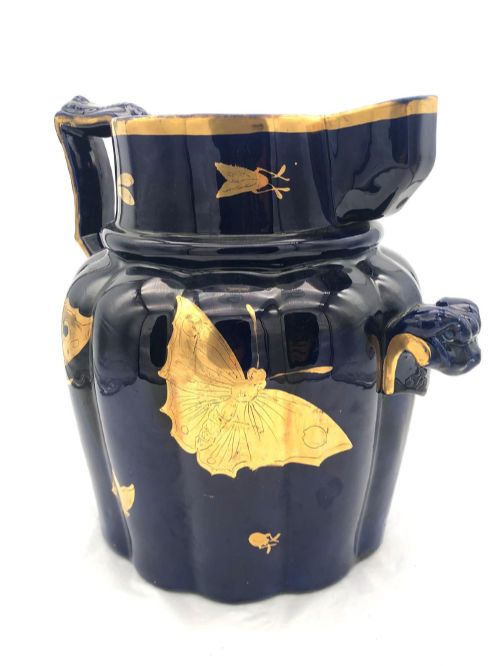
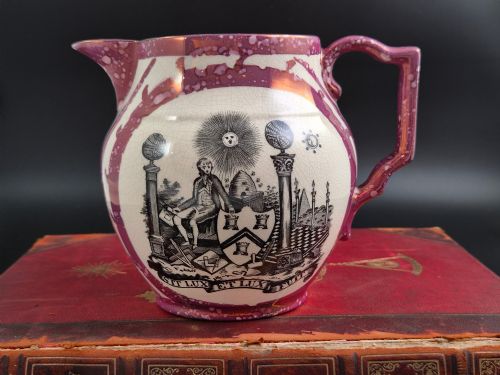
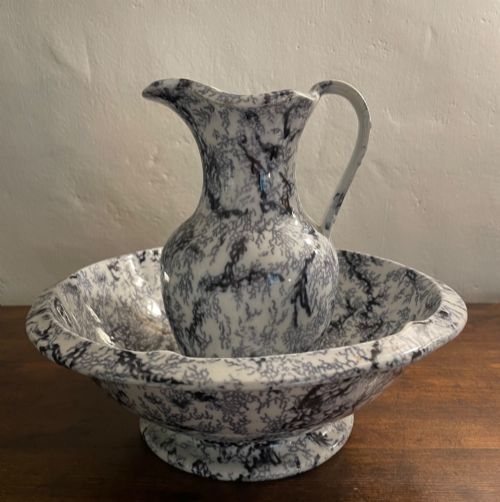
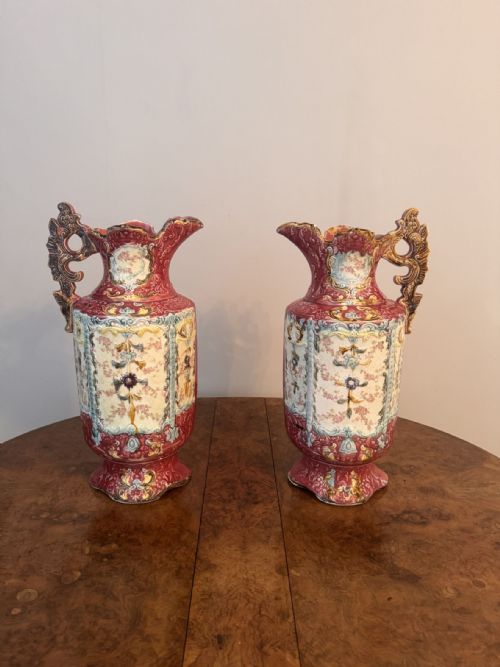
Earthenware Ceramic Pitcher
These earthenware ceramic pitcher selections bring tactile historic craft directly to your table, offering robust utilitarian charm rooted in centuries of diverse pottery traditions.
Earthenware Ceramic Pitcher
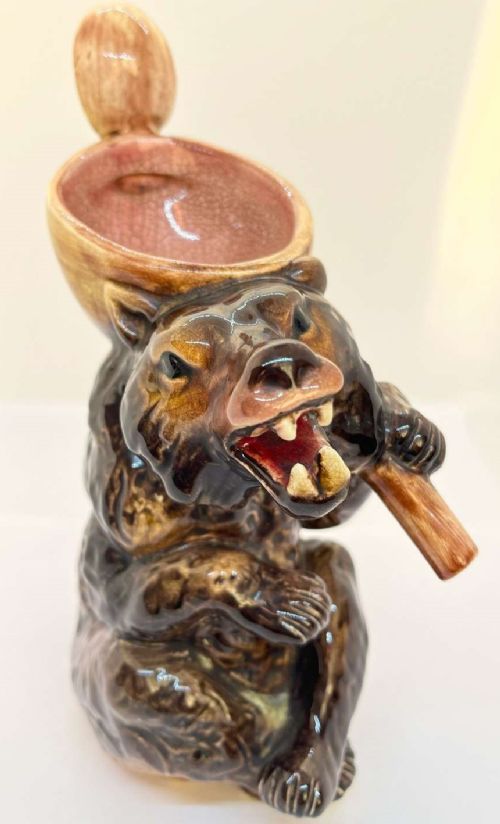
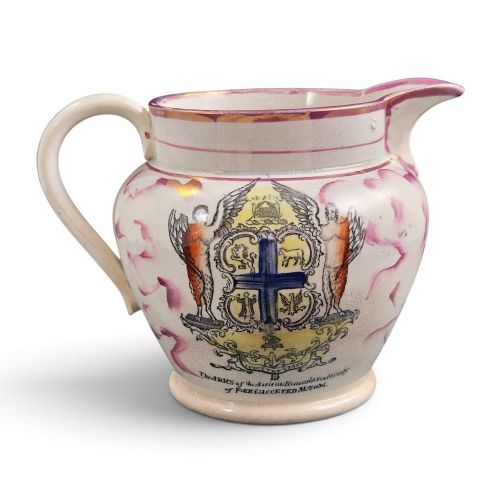
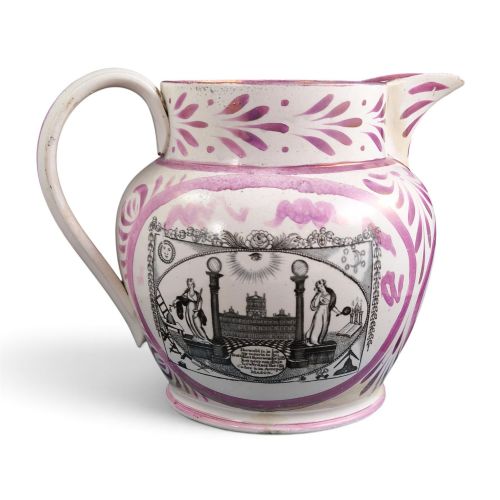
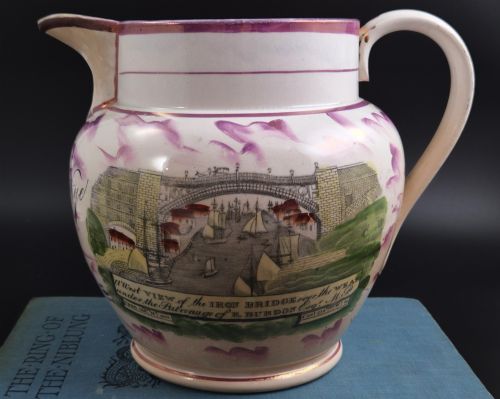
An earthenware ceramic pitcher serves as both a practical pouring vessel and a display of historical domestic pottery traditions spanning the Georgian and Victorian eras. When exploring an earthenware ceramic pitcher selection, expect to encounter forms ranging from slipware and creamware to majolica and Sunderland pink lustre jugs. These pieces reflect centuries of potting skill originating from English factories, Dutch kilns, and beyond.
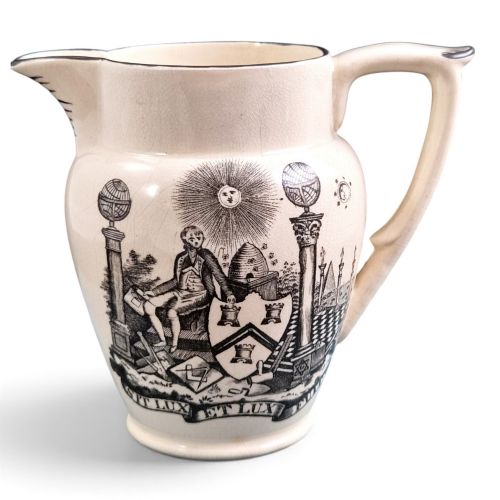
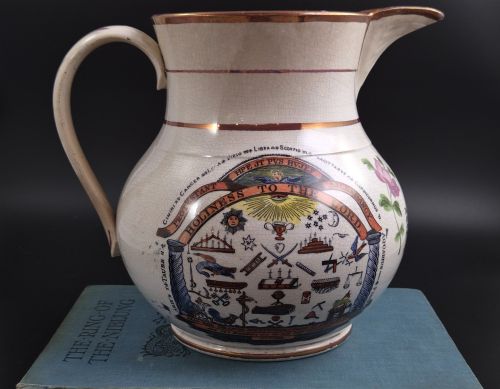
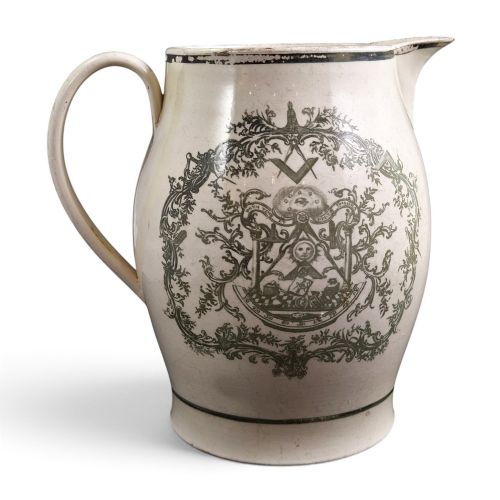
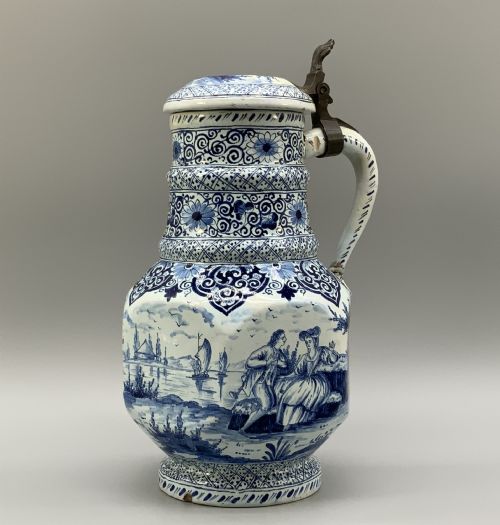
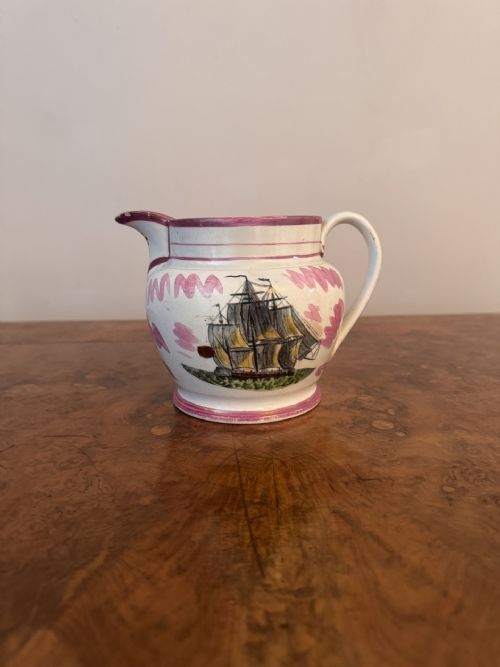
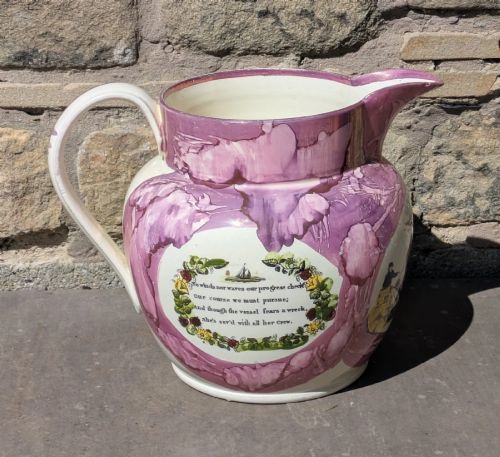
The dominant varieties on this page lean heavily towards nineteenth century Staffordshire production, featuring transfer-printed masonic themes, nautical subjects, and gaudy welsh patterns. Alongside these utility and commemorative jugs, buyers meet Dutch delftware vessels, early slipware, and occasionally pre-columbian terracotta vessels. Each earthenware ceramic pitcher carries the distinct hallmarks of its regional kiln and period style.
Materials and production techniques
Potters formed each earthenware ceramic pitcher using porous clay bodies fired at lower temperatures, then sealed them with lead, tin, or metallic glazes. Many examples incorporate creamware or pearlware bodies which provided a smooth pale canvas for hand-painting or transfer printing.
Decoration relied on complex techniques including black, blue, and magenta transfer printing, polychrome enamel painting, and lustring with metallic oxides to create characteristic pink splash effects. Some vessels feature applied slip designs or moulded reliefs finished with pewter lids or tin glazes.
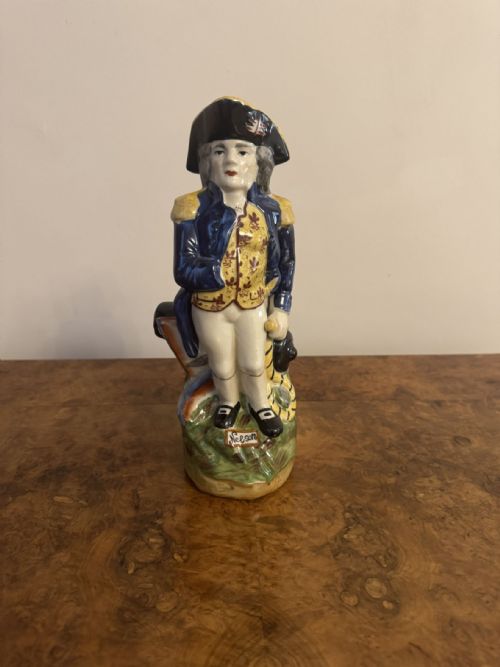
Amidst formal masonic jugs and maritime scenes, nineteenth-century potters delighted in fashioning grumpy ceramic cows and portly Lord Nelson likenesses into everyday pouring vessels.
Distinctions in craftsmanship and condition
Quality in these pitchers rests upon the crispness of the transfer print, the uniformity of the glaze, and the artistic control evident in hand-painted enamels. Superior examples display vibrant, stable colours without excessive firing smudges and retain crisp mould details on figures and relief decoration.
The distinction between ordinary utility ware and finer display pieces also lies in historical provenance, such as named maritime or masonic commemorations, and the intact preservation of delicate spouts, handles, and original pewter lids.
Minton·Cantagalli Florence·Keeling and Co
The Earthenware Ceramic Pitcher Glossary
- Creamware
- A refined light-coloured earthenware developed in eighteenth-century Staffordshire. It is known for its warm buttery tone and smooth lead glaze.
- Transfer printing
- A method of applying intricate designs to pottery using engraved copper plates and tissue paper. This technique allowed factories to mass-produce detailed historical or landscape scenes.
- Lustreware
- Earthenware decorated with a metallic film that produces an iridescent sheen. Sunderland pink splash lustre is a prominent variation seen on nineteenth-century maritime jugs.
- Delftware
- Tin-glazed earthenware originating from the Netherlands, traditionally painted in blue and white. It often mimics Chinese porcelain styles.
- Majolica
- A colourful lead-glazed earthenware popular during the Victorian period. It is characterised by rich modelled reliefs and vibrant opaque metallic oxide colours.
- Slipware
- Pottery decorated with liquid clay applied to a contrasting clay body before firing. It represents an older, rustic tradition of British domestic ceramics.
Earthenware Ceramic Pitcher: Frequently Asked Questions
What is an earthenware ceramic pitcher used for?
These vessels were primarily designed for pouring liquids such as water, milk, ale, or cider at the domestic table. Many pieces also served decorative purposes or commemorated specific societies, ships, and political events.
Over time, collectors repurposed them as floral vases or focal display items on dressers and mantelpieces. Their robust construction allows them to remain functional decorative objects today.
How do I date an antique earthenware pitcher?
Dating relies on stylistic clues, glaze characteristics, and potting techniques specific to certain decades. Georgian creamware differs visibly in body and print style from Victorian majolica or transfer-printed pearlware.
Makers' marks, when present on the base, provide direct attribution to factories operating within defined historical windows. Subject matter, such as specific ships or political slogans, also anchors pieces to exact historical years.
Are these pitchers safe for holding liquids?
While many historical pitchers were made for domestic utility, older glazes can contain lead that might leach into acidic liquids. It is generally advisable to treat antique earthenware as display items rather than functional tableware.
Hairline cracks or historical repairs also compromise the structural integrity of porous clay bodies. Enjoy them for their aesthetic and historical qualities rather than daily service.
How should I clean my antique ceramic jug?
Dusting gently with a soft dry cloth is the safest routine maintenance for antique earthenware. Avoid submerging historical pieces in water for prolonged periods, especially if they have existing hairline fractures or porous unglazed areas.
Harsh modern detergents and abrasive scrubbers will damage fragile enamels and historic glazes. Professional conservation advice should be sought for any deeper cleaning needs.