


Early Victorian Glass
Early victorian glass brings together deep colour, heavy lead weights and careful wheel cutting from the middle of the nineteenth century.
Early Victorian Glass
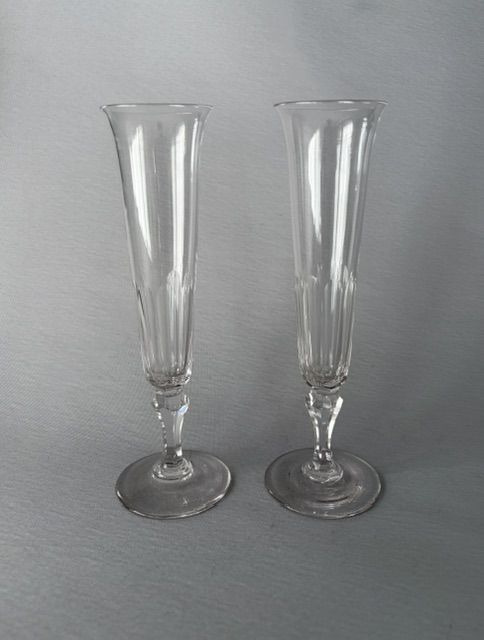
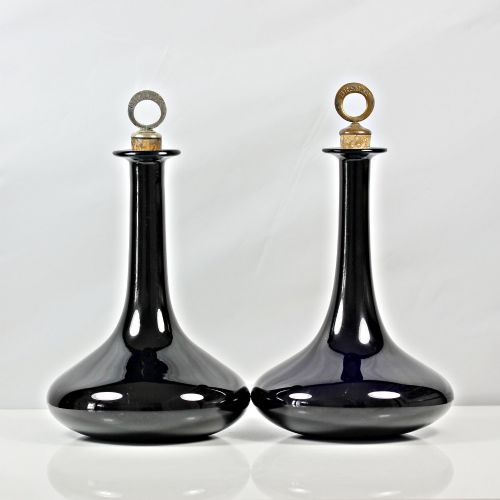
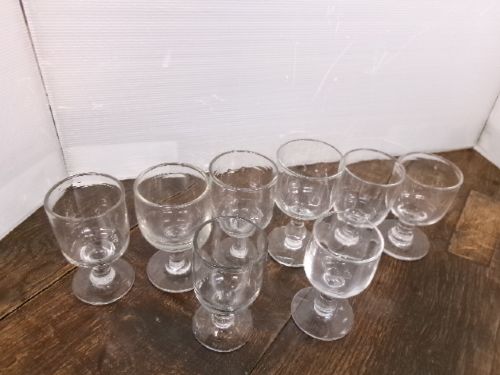
When searching for early victorian glass, collectors encounter functional tableware, decorative bottles and drinking vessels produced during the reign of Queen Victoria. The selection spans rich cobalt, amethyst and emerald hues alongside brilliant clear lead crystal designed for dining and display. Decanters, wine glasses, rummers and celery vases form the core of what appears in daily domestic contexts.
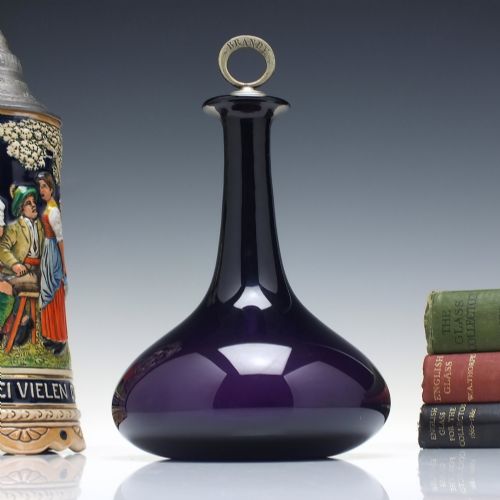
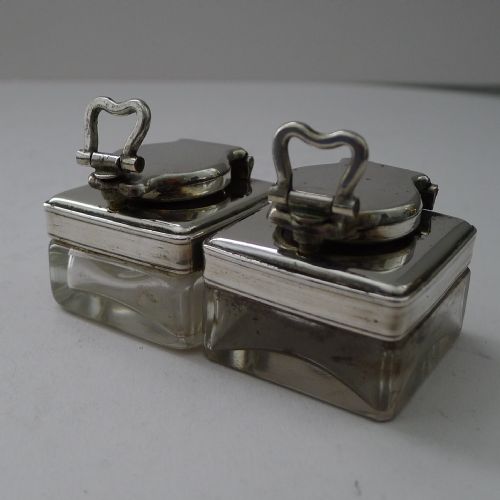
Beyond the dining table, the material extends to scent bottles, finger bowls and desk accessories mounted in silver, brass or pewter. These smaller items frequently display intense saturated colours or delicate engraved decoration characteristic of the period's output. Pieces range from simple utilitarian containers to complex cut crystal centrepieces.
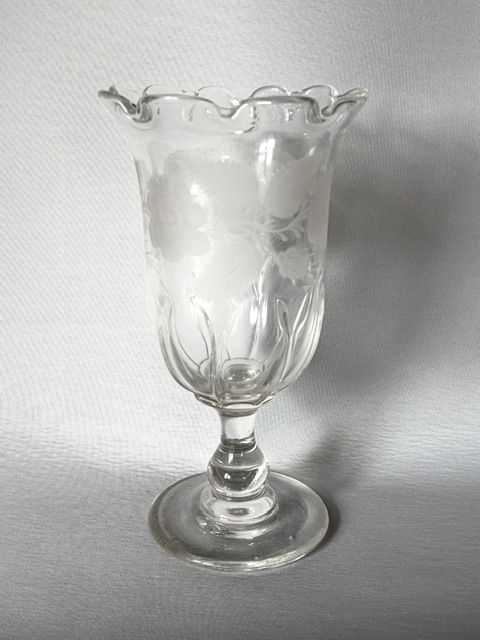
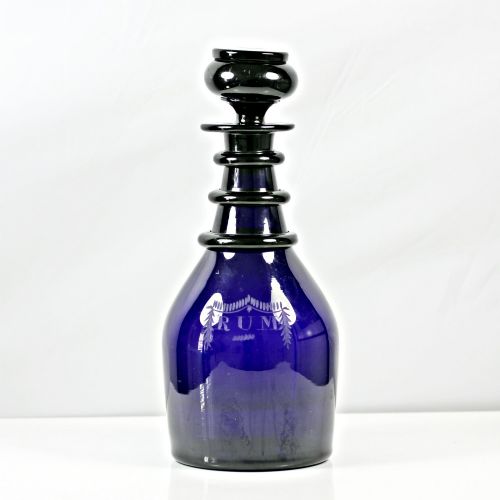
The objects reflect a period of confident manufacturing where traditional hand-blown techniques met heavier, more substantial forms. Whether looking at a plain ribbed celery vase or a complex three-ring decanter, the pieces demonstrate a clear shift towards decorative domestic luxury. Surviving examples show both everyday utility and high-status drawing-room adornment.
Materials and Craftsmanship
Makers relied heavily on lead crystal and potash metal, blown by hand into moulds or free-formed before undergoing extensive manipulation. The introduction of heavy lead content gave the metal a dense weight and a bright refractive clarity that distinguished British production from continental alternatives. Glassblowers shaped the molten material at the furnace before passing vessels to specialists for finishing.
Decoration relied on wheel-cutting, engraving, etching and the addition of applied metal mounts in silver and brass. Workers cut deep facets, flutes and star patterns into the cooled surface using abrasive wheels, creating sharp contrasts with polished panels. Coloured glass was achieved by adding metallic oxides to the batch, producing characteristic shades of Bristol blue, green, amber and amethyst.
Listings feature extensive tableware including wine glasses, decanters and celery vases alongside scientific mirrors and apothecary jars.
Evaluating Quality and Execution
Quality rests upon the purity of the metal, the crispness of the cutting and the symmetry of the blown form. Superior pieces exhibit a heavy, resonant ring, freedom from internal bubbles or cloudiness, and deep wheel cuts with sharp, clean margins. Lesser examples show surface ripples, thick and uneven walls, or shallow, rounded facet cuts that lack definition.
The integration of precious metal mounts also dictates the standing of an object, where hallmarked silver or finely chased bronze hardware elevates a simple scent bottle or inkwell. The finesse of hand-engraving, particularly on pictorial or armorial pieces, separates standard workshop output from exceptional commissions.
Thomas Rubergall·Charles Baker
The Early Victorian Glass Glossary
- Celery vase
- A tall, upright vessel created to hold and display stalks of celery on the dining table. These pieces usually stand on a short stem and feature heavy ribbing or cut decoration.
- Rummer
- A large, sturdy drinking glass with a short stem and a capacious bowl used for punch, ale or rum. They represent some of the heaviest blown forms of the period.
- Nailsea glass
- Glassware associated with the Nailsea glassworks featuring looped or speckled trails of white or coloured enamel embedded within a clear or tinted ground. Flasks and pipes are typical forms.
- Bristol blue
- A deep cobalt-blue coloured glass popular for finger bowls, decanters and scent bottles. The intense hue was achieved by adding cobalt oxide to the glass batch.
- Mell decanter
- A specific bottle shape featuring a wide base tapering towards the neck, often fitted with concentric rings for a secure grip. They were commonly used for serving spirits.
Early Victorian Glass: Frequently Asked Questions
What is early victorian glass?
It encompasses tablewares, decanters, scent bottles and decorative objects made in Britain during the mid nineteenth century. The category includes both heavy clear crystal and brightly coloured vessels.
Production during this period relied on traditional hand-blowing combined with sophisticated wheel-cutting and engraving techniques. These items were standard fixtures in middle and upper class nineteenth-century homes.
How do you identify coloured pieces?
Coloured glass derives its hue from metallic oxides added directly to the molten batch during production. Cobalt creates deep blue, while iron or copper produces greens and ambers.
Authentic pieces show natural variations in tone and depth rather than a surface coating or painted finish. Examining the base under light reveals the true saturation of the metal.
How should I clean them?
Gentle hand washing with warm water and mild soap preserves the delicate surfaces and metal mounts. Abrasive materials must be avoided to prevent scratching the softer lead crystal.
Items with fitted silver or brass hardware require care to keep moisture away from the joins. Air drying on a soft cloth prevents water spots from forming on the polished facets.