


Glass Decanter Ring Stopper
Glass decanter ring stopper pieces are classic vessels defined by their distinctive neck rings and stoppers, offering practical charm for a traditional dining table.
Glass Decanter Ring Stopper
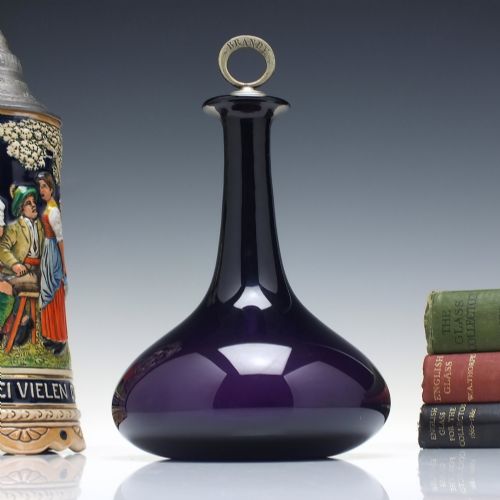
A glass decanter ring stopper brings together traditional drinkware forms dating from the eighteenth century through to the Edwardian era. When you search for glass decanter ring stopper items, you encounter vessels shaped for wine, spirits, and claret, including ship's decanters and Prussian styles.
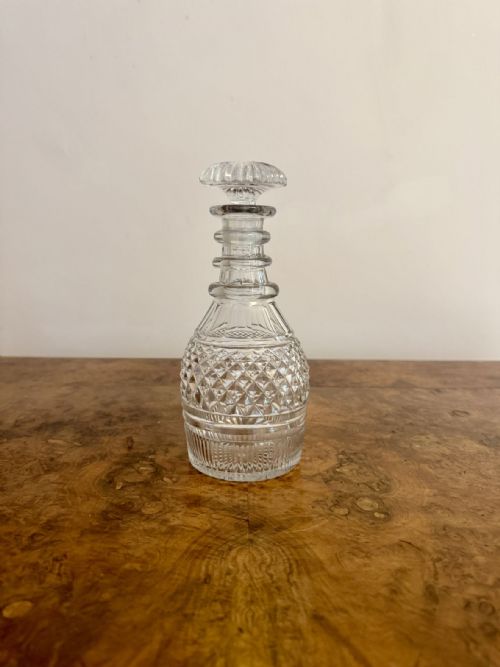
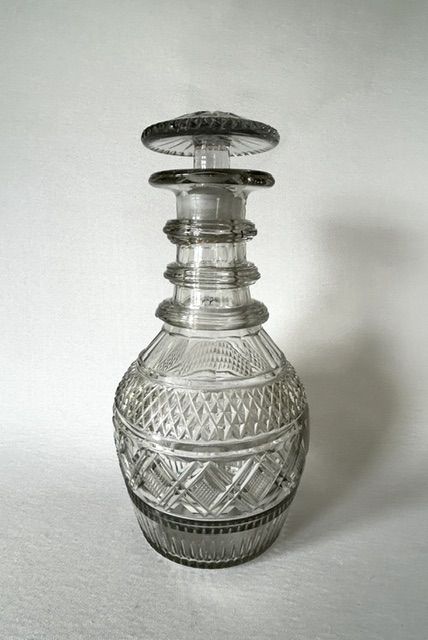
The pieces on this page span Georgian, Regency, and Victorian periods, alongside Edwardian examples. You are likely to meet three-ring Prussian style decanters and pieces paired as sets alongside single vessels with heart shaped stoppers.
Origins represented in these listings point towards English manufacture, with specific entries highlighting Irish cut glass. Forms range from personal pocket-sized vessels to full size table decanters.
How they were made
Makers utilised lead glass, lead crystal, and standard glass, sometimes working with coloured materials such as amethyst glass and amber glass. These molten materials were blown and shaped into bottles before receiving their characteristic neck rings.
Surface decoration relies heavily on cut glass techniques, producing faceted bodies and patterned necks that catch the light. Metal elements occasionally appear alongside the glass components, while stoppers are ground to fit individual necks.
What varies in quality
Clarity of the crystal and precision of the cutting separate finer examples from simpler production. Sharp, clean facets on the body and well-defined neck rings indicate skilled craftsmanship.
The retention of matching original stoppers and balanced proportions across pairs elevate a piece. Heavy lead glass weight and unclouded material substance distinguish the superior examples.
The Glass Decanter Ring Stopper Glossary
- Prussian style
- A decanter shape featuring a tapered body and multiple neck rings, popular during the Georgian and Regency periods. This design kept the vessel stable on board ships and dining tables.
- Lead crystal
- Glass containing a proportion of lead oxide that increases weight, brilliance, and acoustic resonance. It allows for deeper and sharper cutting.
- Ring stopper
- A stopper topped with a circular loop, or a decanter featuring applied glass rings around the neck. These rings originally caught drips or aided grip during pouring.
Glass Decanter Ring Stopper: Frequently Asked Questions
How do I date an old decanter?
Dating relies on examining the shape of the body, the style of the cut, and the form of the stopper. Earlier Georgian pieces often show pontil marks on the base and heavier lead glass construction.
Later Victorian and Edwardian examples introduce different cutting patterns and machine-smoothed finishes. Comparing the neck rings and overall proportions helps narrow down the period.
Were these decanters made in Ireland?
Irish glasshouses produced significant quantities of heavy cut glass decanters during the Regency period. Irish glass of this era is often noted for its distinct blueish tint and deep, sharp cutting.
Pieces attributed to Ireland command attention for their substantial weight and brilliant crystal clarity.
Can I use antique decanters for wine?
These vessels were originally designed for serving wine, port, and spirits at the dining table. Many buyers continue to use them for decanting modern vintages.
Careful hand washing is required, and one should check that the interior is clean and free from old sediment before filling.