







Early Oak Chest Drawers
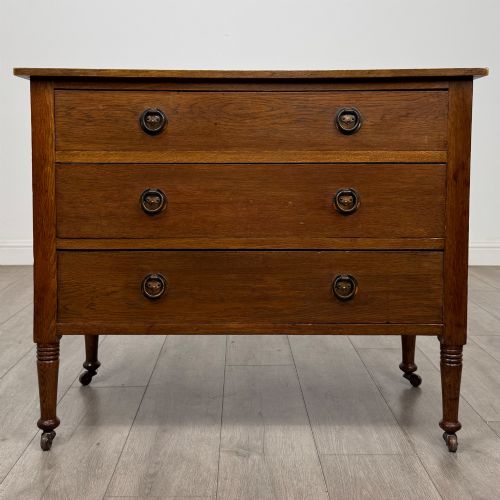
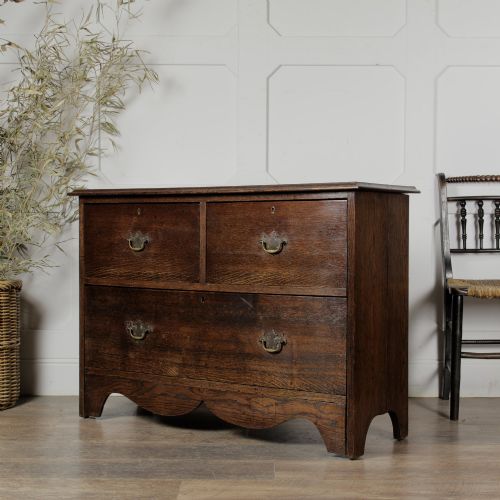
When you search for early oak chest drawers, you seek utilitarian storage pieces defined by solid timber construction and historic joinery.
Early Oak Chest Drawers
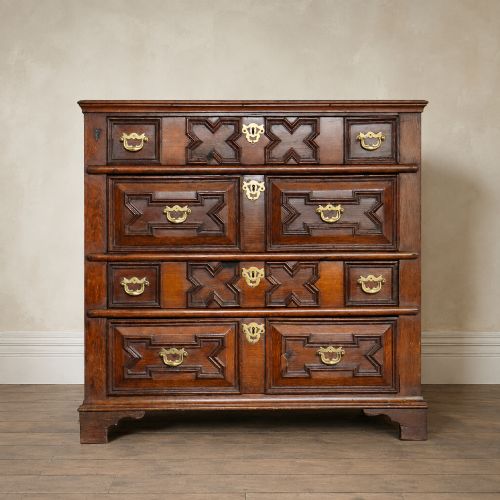
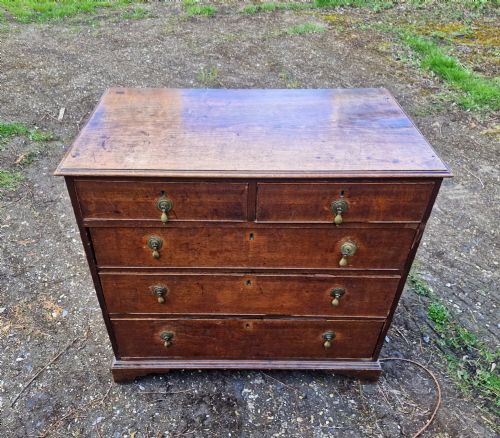
An early oak chest drawers search reveals utilitarian storage furniture originating predominantly from the seventeenth and eighteenth centuries, alongside later twentieth-century revivals. These pieces range from modest provincial examples to formal geometric moulded designs.
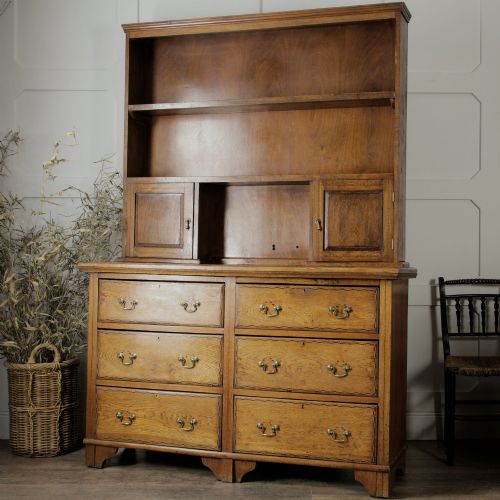
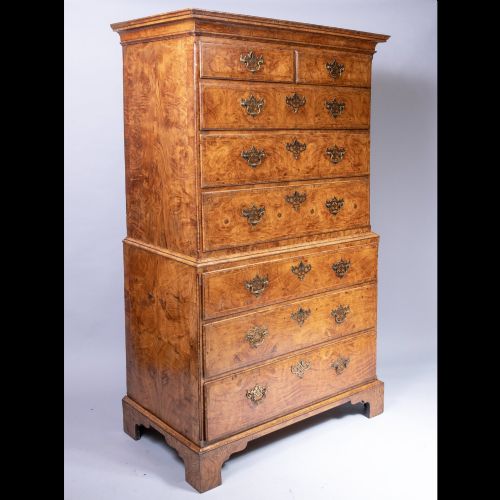
Buyers commonly encounter standard multi-drawer chests, tallboys, and chests on stands, constructed in regional British workshops as well as continental European centres. Their practical forms served domestic storage needs across centuries of changing interior styles.
Materials and Construction
Makers utilised solid oak as the primary timber, occasionally combining it with secondary woods such as elm, fruitwood, and walnut for decorative contrast. Timber selection depended on regional availability and the intended formality of the furniture.
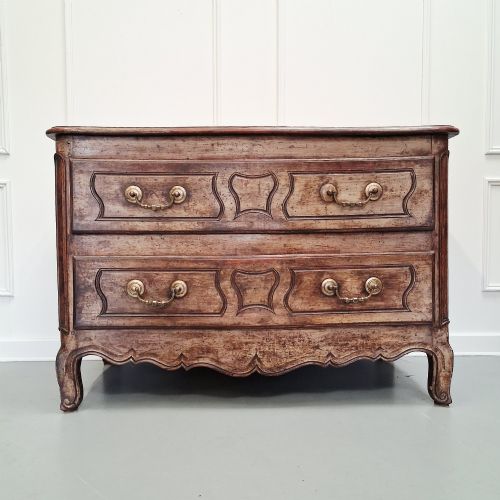
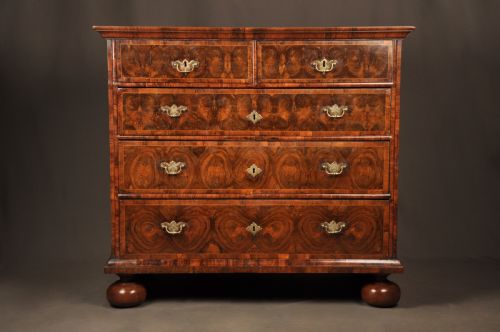
Construction relied on traditional joinery methods, including hand-cut dovetails for drawer boxes and mortise and tenon joints for the main frames. Surfaces frequently display geometric mouldings, oyster veneers, and brass hardware fixed by hand.
Listings feature oak alongside brass, iron, elm, burr elm, olive, and fruitwood across pieces spanning the seventeenth to the twentieth century.
Judging Quality
Quality rests upon the integrity of the timber and the retention of original surfaces, such as undisturbed wax patination and period brass handles. Altered drawer linings, replaced feet, and extensive timber substitution diminish the historical value.
The sophistication of the joinery and decorative detailing distinguishes standard regional work from finer pieces. Crisp geometric mouldings and well-figured veneer work indicate skilled workshop production.
Heals
The Early Oak Chest Drawers Glossary
- Geometric moulding
- Raised decorative wooden profiles applied to drawer fronts in repeating symmetrical patterns. This technique is characteristic of seventeenth-century case furniture.
- Chest on stand
- A storage chest elevated on an integrated support base featuring legs and sometimes a small drawer. This form lifts the main body off the floor.
- Tallboy
- A tall storage unit comprising a chest of drawers stacked upon another chest or base. These pieces maximise vertical storage capacity.
- Patina
- The surface sheen and colour developed by timber through age, handling, and waxing. A desirable surface shows depth without artificial gloss.
Early Oak Chest Drawers: Frequently Asked Questions
How do I date an oak chest?
Dating relies on observing construction methods, timber characteristics, and hardware types used during specific centuries. Hand-cut joinery and original locks offer primary clues for chronological placement.
Secondary woods and surface patination provide further evidence to distinguish seventeenth-century work from later Georgian or twentieth-century revival pieces.
Are these chests suitable for daily use?
Solid timber construction makes these pieces robust enough for contemporary domestic storage requirements. Drawers operate adequately when properly waxed and maintained.
Placing them away from direct heat sources protects the historic wood from splitting or warping over time.
What is a geometric moulded chest?
Geometric moulded chests feature applied decorative mouldings arranged in panels across the drawer fronts. This style emerged during the seventeenth century.
The intricate patterns create texture and visual depth on the flat oak surfaces of the period.
Why do some chests have stands?
Elevating storage boxes on stands improved domestic ergonomics and followed continental design influences during the seventeenth and eighteenth centuries. The base allowed easier access to contents.
Such configurations also added architectural presence to smaller rooms.