


Early Georgian Furniture
Early georgian furniture comprises walnut and mahogany chests, desks and chairs built to last centuries through honest cabinet-making.
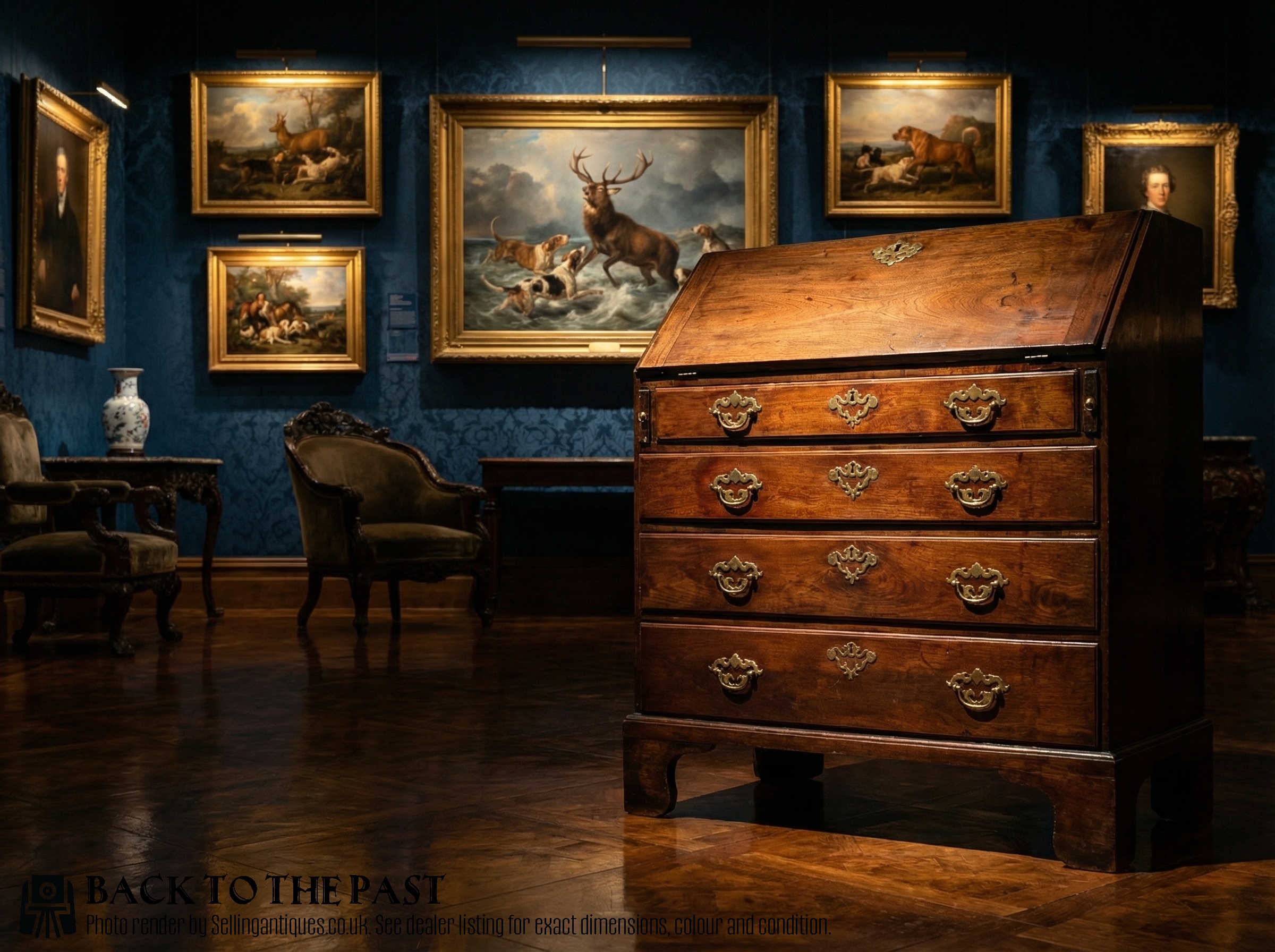
Early Georgian Furniture
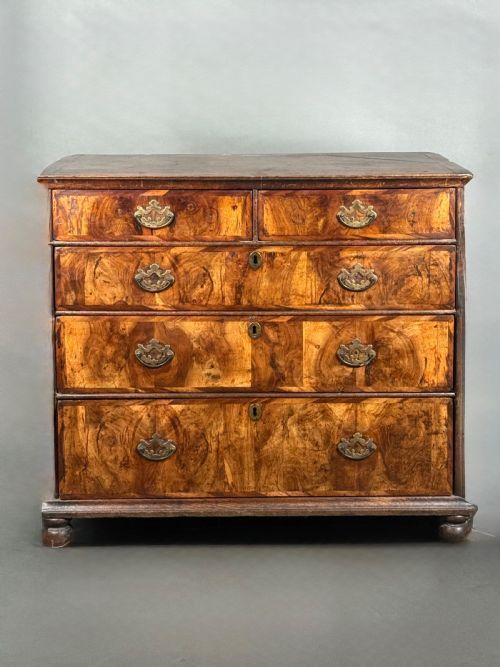
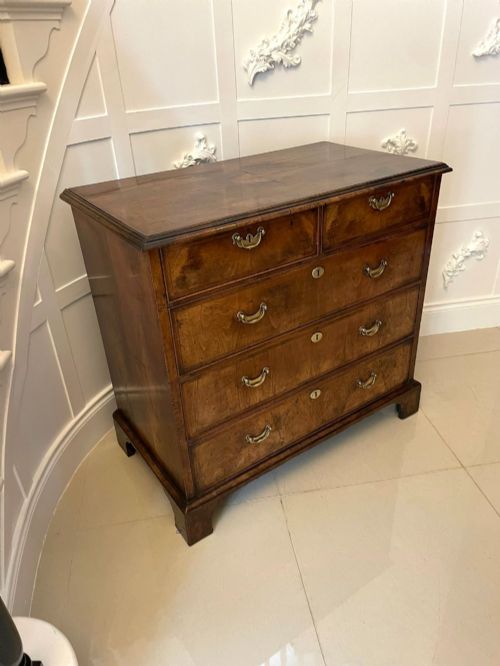
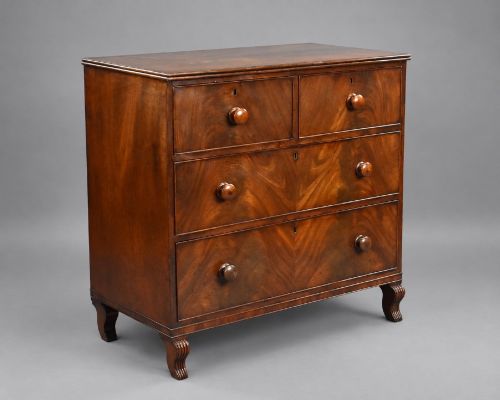
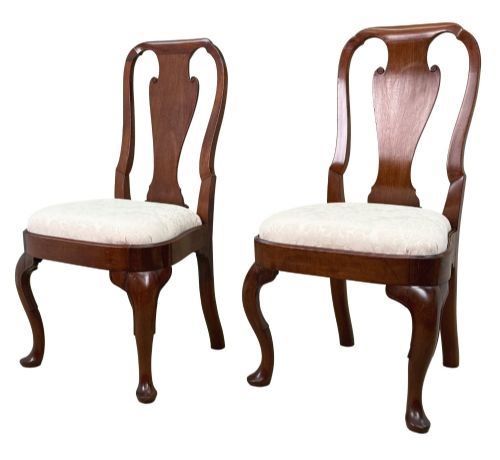
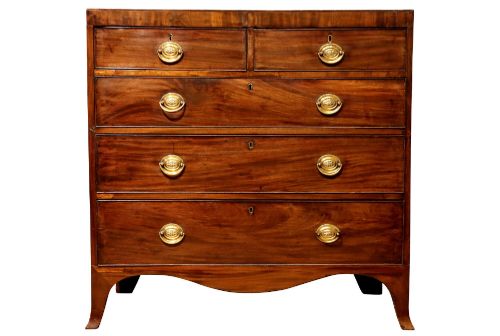
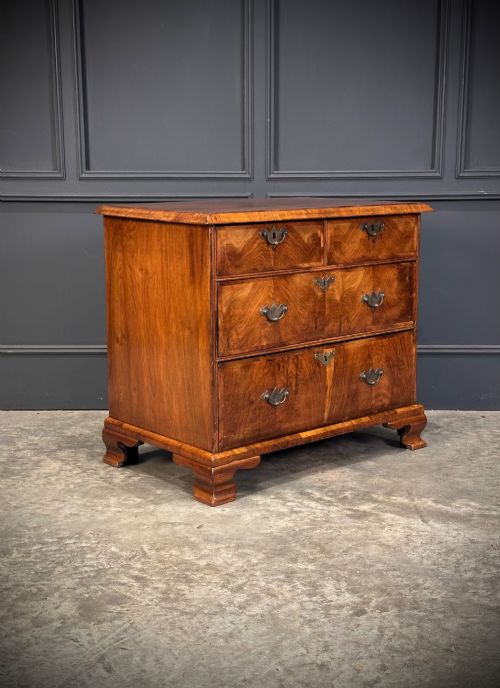
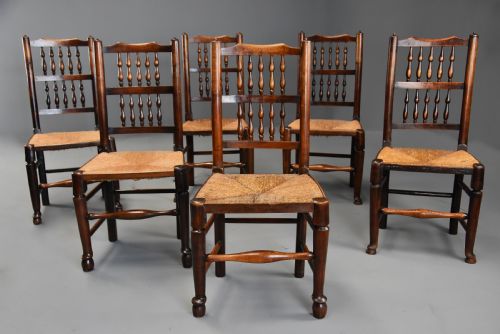
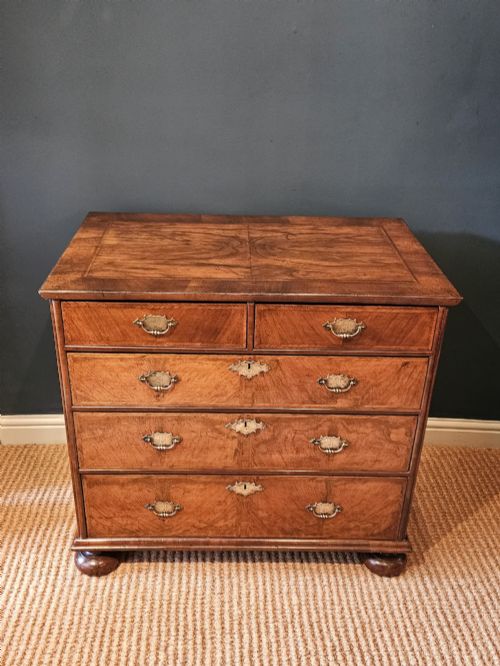
Early georgian furniture covers practical domestic items like chests of drawers, desks, and dining chairs from the eighteenth century and related periods. A buyer searching for early georgian furniture encounters walnut and mahogany chests on stand, kneehole desks, and side chairs spanning the reigns of George I and George II.
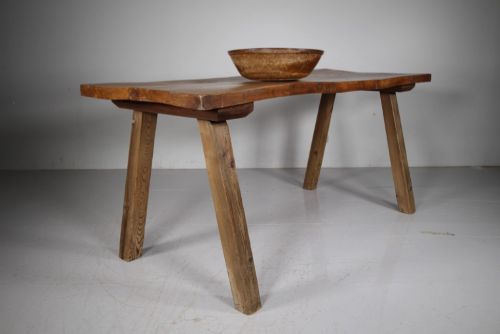
The domestic forms include oak dresser bases, tallboys, and occasional tables designed for specific rooms in country houses and town residences. Walnut predominates in the earlier decades, alongside oak and figured timber, creating sturdy surfaces for daily use.
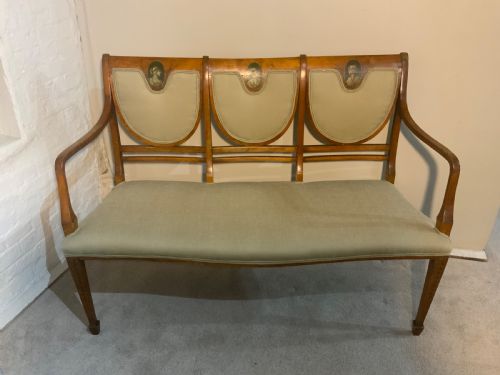
Makers constructed these utilitarian and formal pieces using native and imported woods, finished with brass handles and escutcheons. The selection ranges from compact writing cabinets to large chests of drawers and seating.
How they were made
Cabinet-makers built early georgian furniture using solid walnut, oak, and mahogany, often applying figured veneers and herringbone banding to drawer fronts and tabletops. Carpenters joined structural elements with mortise and tenon joints, securing carcases with dovetails.
Makers incorporated brass hardware, including key escutcheons and drop handles, alongside timber finishes such as wax and polish. Secondary timbers like pine and elm appear in drawer linings and internal framing.
Turned elements, tripod bases, and carved details emerge from solid fruitwood, oak, and mahogany using hand chisels, saws, and lathes.
Early Georgian Furniture Retail Price Guide 2026
Typical asking prices for early georgian furniture among the pieces listed under this phrase on Sellingantiques today, from the lower quarter to the upper quarter. They describe what is for sale here now, not the wider market.
Listings feature walnut, mahogany, oak, elm, ash, and pine across furniture forms including chests of drawers, desks, and dining chairs.
What varies in quality
Quality in early georgian furniture rests on the selection of timber, such as highly figured walnut or flame mahogany, and the preservation of original surfaces. Pieces retain value when patination develops naturally over centuries without heavy modern intervention.
The sophistication of internal joinery, including hand-cut dovetails and original brasses, separates standard utilitarian items from exceptional commissions. Construction details like timber thickness in drawer linings and secondary woods indicate the workshop standard.
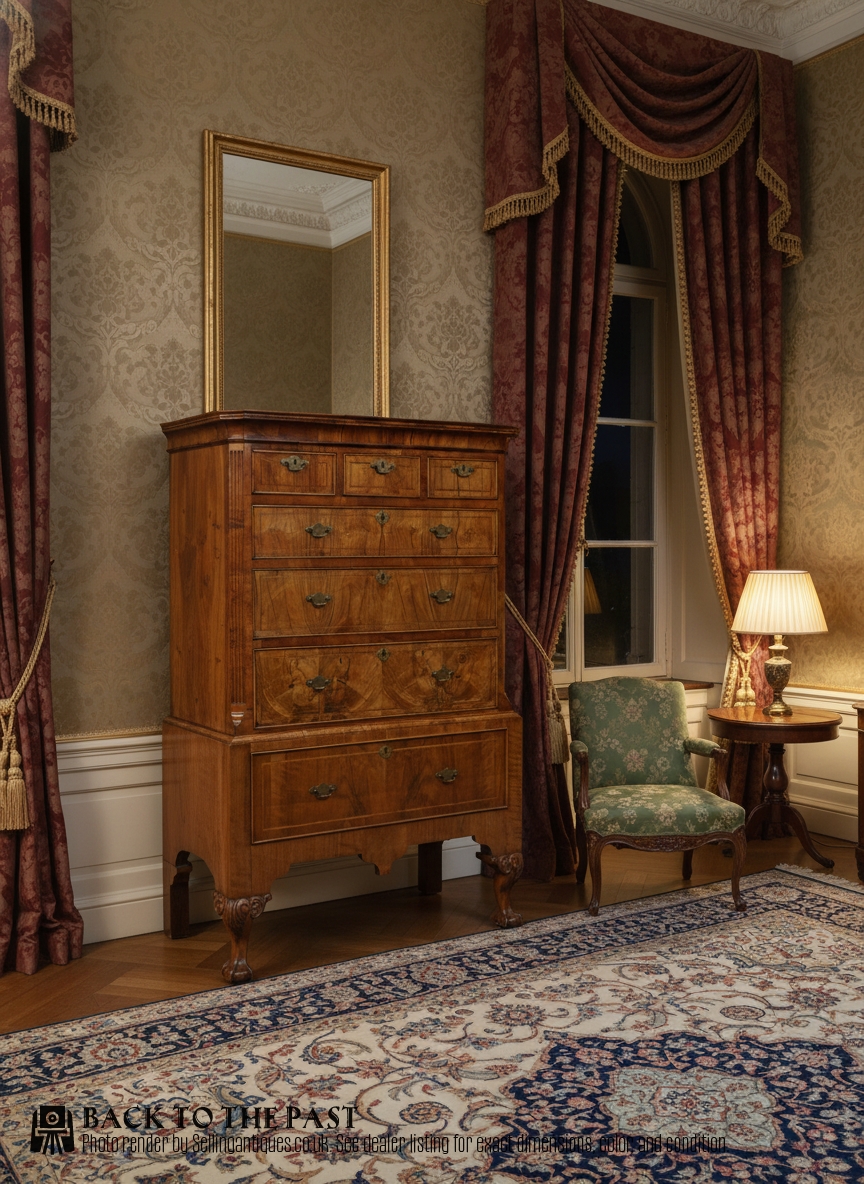
Gillingtons of Dublin
The Early Georgian Furniture Glossary
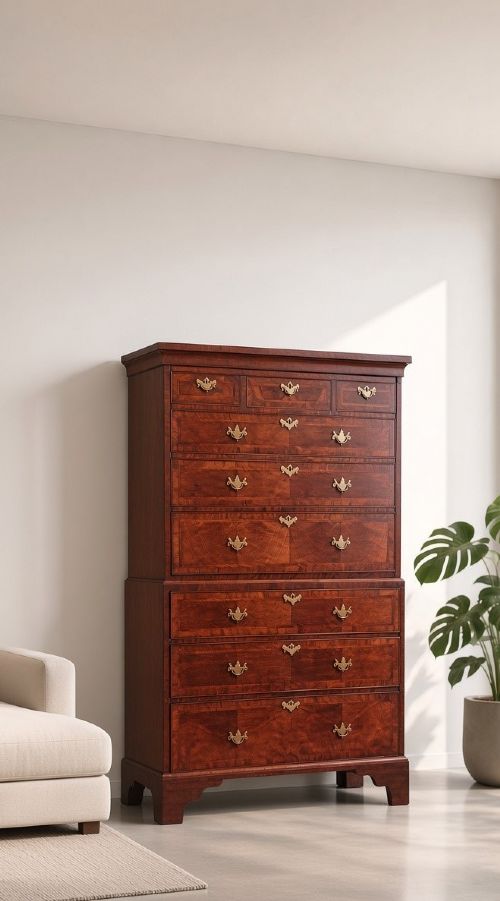
- Tallboy
- A chest on chest, where a taller chest of drawers sits upon a larger base chest to provide extensive vertical storage. This form maximises floor space while offering multiple drawers for linens and garments.
- Herringbone banding
- V-shaped inlay patterns of contrasting wood veneers surrounding drawer edges or tabletops. Craftsmen utilised this technique to frame figured walnut surfaces.
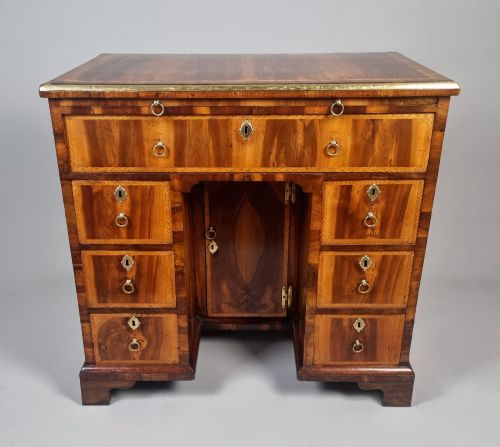
- Kneehole desk
- A compact writing table featuring a central recess for the legs, flanked by pedestals of small drawers. These desks provide storage while fitting into smaller studies and bedchambers.
- Patina
- The surface sheen and colour developed by wood through age, handling, and waxing over many decades. Collectors prize untouched patination for its historical depth.
- Escutcheon
- A protective brass plate fitted around a keyhole to prevent timber wear from the key. Early examples display hand-cut profiles and specific slot configurations.
Early Georgian Furniture: Frequently Asked Questions
How do I care for walnut furniture?
Clean walnut surfaces using a soft cloth and feed the timber periodically with traditional beeswax to maintain the moisture balance. Avoid placing these pieces near direct heat sources or in strong sunlight.
Keep humidity stable in the room to prevent timber shrinkage and veneer lifting. Gentle dusting preserves the historical polish without stripping the patina.
Where should I place a chest on stand?
Position a chest on stand against a flat wall in a hallway, bedroom, or living space where its proportions can be appreciated without obstruction. The raised legs require firm, level flooring.
Ensure heavy items rest inside the main drawers rather than on the smaller base compartments to maintain structural stability. Allow clearance for the doors or drawers to open fully.
Are these pieces suitable for daily use?
Most forms, including dining chairs, desks, and chests of drawers, function well for everyday domestic activities when handled with reasonable care. Solid construction in oak and mahogany supports routine modern handling.
Delicate veneered surfaces require coasters and protection from sharp impacts or liquid spills. Regular use actually benefits the timber by maintaining natural wax distribution.
How do I distinguish walnut from mahogany?
Walnut exhibits a rich brown tone with dark grain figuring, swirling patterns, and occasional gold undertones. It dominates pieces from the early eighteenth century.
Mahogany typically shows a denser, reddish-brown hue that deepens with age and polishing. This timber largely succeeded walnut in British workshops as international trade expanded.