


Early 19th Century China
Early 19th century china brings together delicate porcelain and robust pottery from the Regency and Georgian periods.
Early 19th Century China
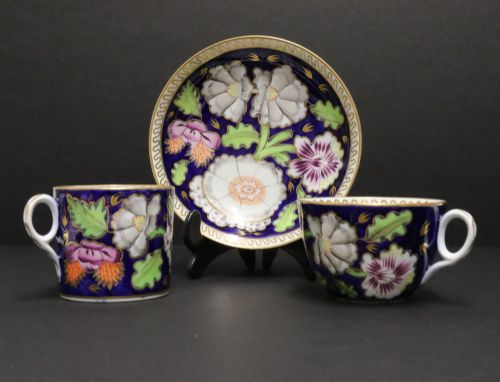
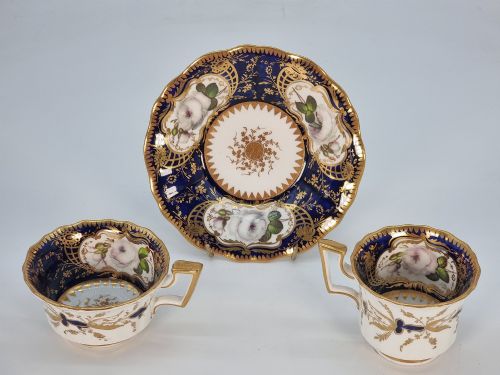
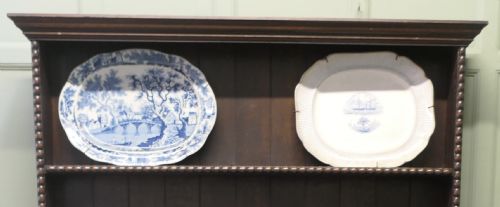
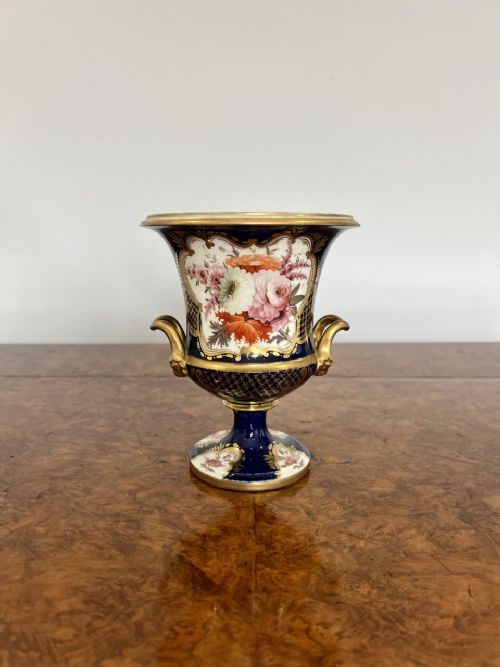
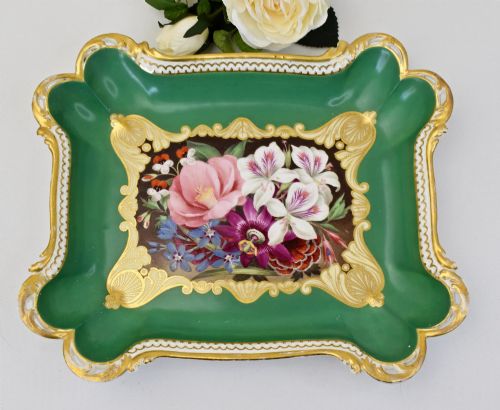
Early 19th century china encompasses a diverse array of utilitarian and decorative ceramics, from cabinet trios to large chargers and serving dishes. These pieces originate from the Georgian and Regency eras, reflecting the aesthetic shifts of the early 1800s.
The selections most commonly encountered on this page include teacups and saucers, cabinet plates, and decorative bowls produced by prominent English potteries. Domestic tablewares share space with porcelain figurines depicting figures such as farmers, gardeners, and gun dogs.
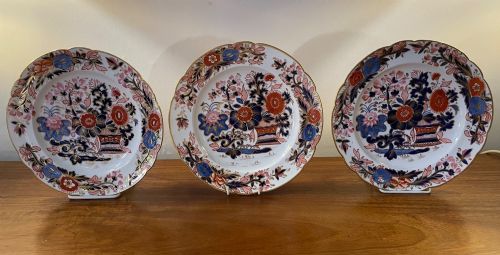
Collector interest centres on surviving domestic wares displaying hand-painted botanical motifs, armorial designs, or Imari palettes. These ceramics represent a period of significant technical development in English porcelain manufacture.
Materials and Technique
Potters of this era utilised hard-paste porcelain, bone china, and ironstone, shaping vessels on the wheel or casting them in moulds. Body compositions varied between factories, influencing the translucency and weight of the finished item.
Decoration relied on underglaze blue painting, enamelling, and gilding with gold leaf applied by hand. Floral patterns, botanical studies, and transfer-printed scenes were fixed through multiple firings in kiln environments.
Early ceramic figures include a gun dog and a court hairdresser.
Assessing Quality
Quality rests upon the crispness of the moulded form and the precision of the hand-painted or transfer-printed decoration. Superior pieces exhibit well-defined enamel colours and carefully applied gilding that remains crisp and bright.
The integrity of the ceramic body and the preservation of the glaze separate ordinary wares from exceptional examples. Potteries with skilled artists achieved finer detail in armorial crests and botanical studies.
New Hall·Coalport·Spode·Doe and Rogers·Mintons·Chamberlain Worcester·Barr Flight and Barr·Masons Ironstone·Derby
The Early 19th Century China Glossary
- Cabinet trio
- A matching set comprising a teacup, coffee cup, and saucer designed for display rather than robust daily use.
- Imari palette
- A decorative scheme employing iron red, cobalt blue, and gold, inspired by Japanese export wares.
- Armorial
- A ceramic decorated with a family coat of arms or crest, typically commissioned by landed gentry.
- Bone china
- A type of soft-paste porcelain incorporating bone ash, developed to increase strength and whiteness.
- Enamel
- Opaque vitreous colours applied over the glazed ceramic surface and fired at a lower temperature.
Early 19th Century China: Frequently Asked Questions
Were these pieces used daily or displayed?
Many items, such as dessert services and cabinet trios, were reserved for formal dining and entertaining guests. Everyday utilitarian domestic wares experienced heavier household use.
Armorial plates and botanical serving dishes often marked social status during Georgian and Regency dinners. Surviving examples reflect both functional dining and parlour display.
How can I identify the factory?
Look for painted or impressed factory marks on the underside of the base. Many early 19th century potteries used script signatures, pattern numbers, or initials.
Stylistic indicators such as specific enamel palettes and paste compositions also help attribute pieces without clear stamps.
What distinguishes bone china from porcelain?
Bone china incorporates calcified animal bone into the clay mixture, creating a durable body with high translucency. Traditional porcelain relies on petuntse and kaolin clays.
Both materials were widely utilised by English manufacturers during the early 1800s to produce refined tableware.