
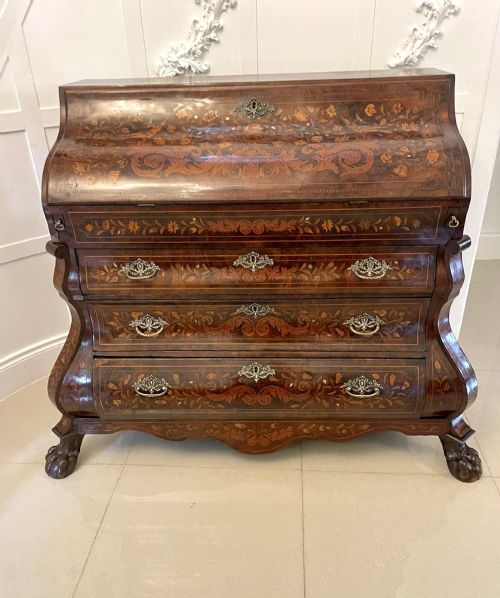
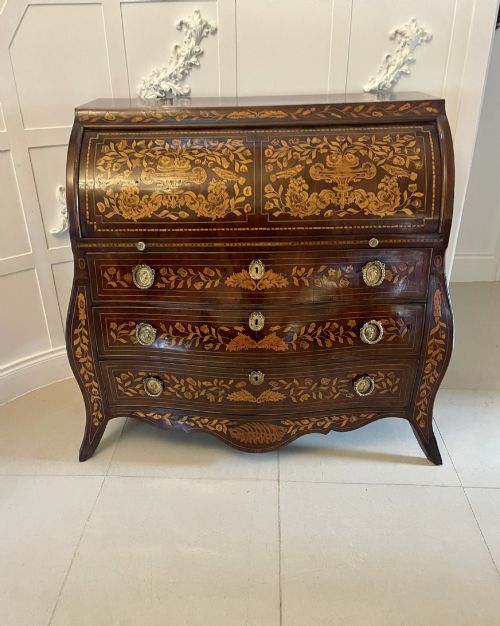

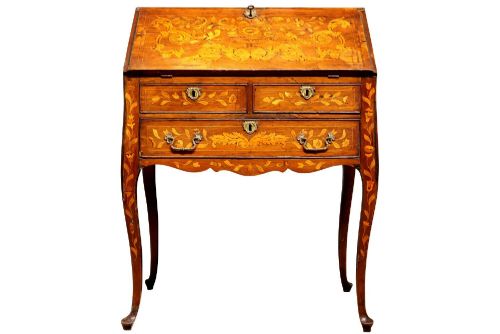
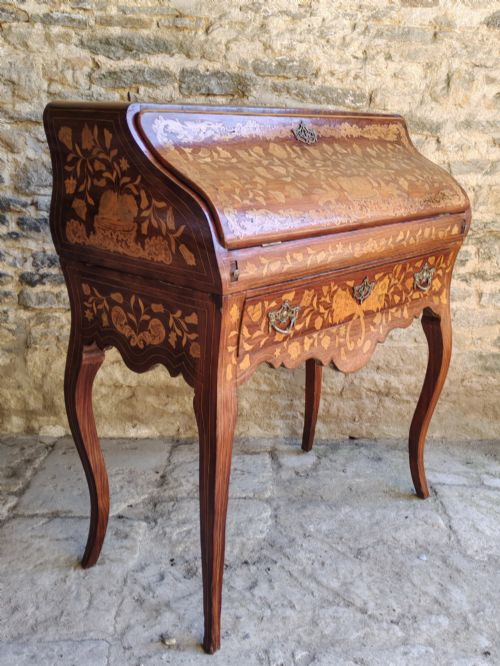


Dutch Inlaid Writing Bureau
A dutch inlaid writing bureau combines dense floral marquetry with practical compartmentalised storage, offering a functional workspace encased in decorative timber.
Dutch Inlaid Writing Bureau
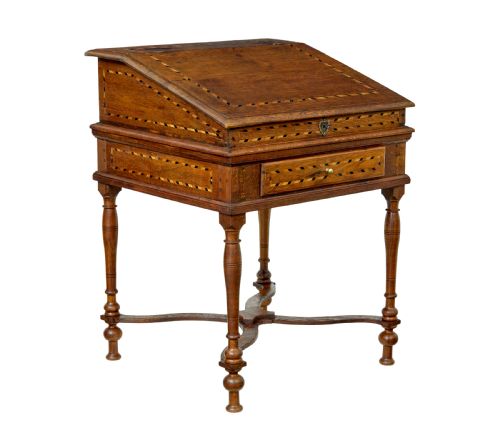
A dutch inlaid writing bureau is a fitted desk featuring a sloping front or fall front that opens to reveal internal drawers and pigeonholes. These pieces appear across the eighteenth century, nineteenth century, and into later revivals, taking the form of standard writing desks, cylinder desks, and tall bureau bookcases.
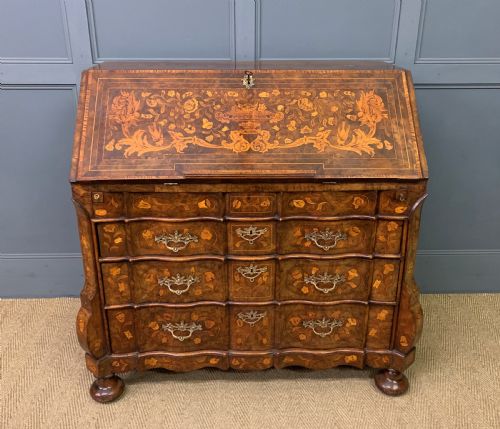
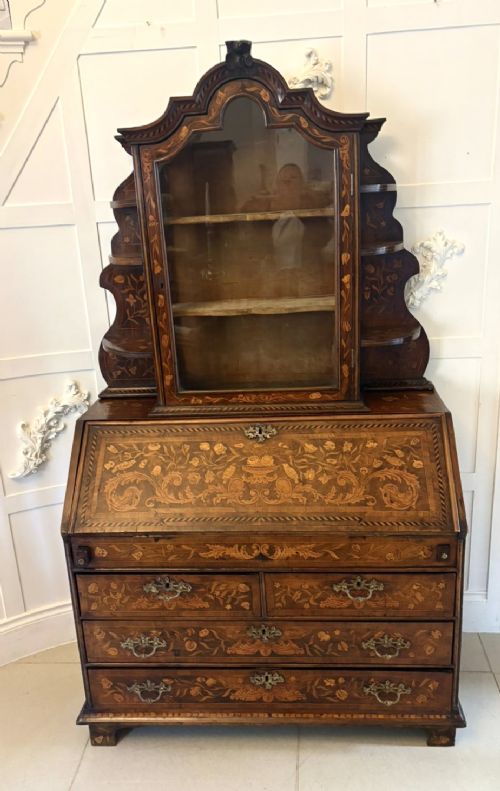
The most recognisable examples employ a bombe profile, where the lower section swells outward in a curved contour. Bureau bookcases also feature prominently, adding a glazed upper cabinet for display above the writing compartment.
Originating largely from eighteenth century and nineteenth century workshops, these items serve as both functional writing furniture and dense decorative focal points for a room.
Materials and Construction
Makers built the carcase using structural timbers such as oak, mahogany, and walnut, often applying burr walnut veneers to create a richly figured background. Brass hardware, including key escutcheons and drop handles, provides functional contrast to the wooden surfaces.
Decoration relies on intricate floral marquetry and fruitwood inlay, utilising woods like fruitwood to achieve varying natural tones and shades within the botanical motifs. Craftsmen meticulously shaped timber to form the characteristic bombe curved fronts and fitted interior compartments.
Current listings feature walnut, mahogany, oak, and fruitwood alongside elaborate floral marquetry across eighteenth-century and nineteenth-century forms.
Judging Quality and Execution
The sophistication of the marquetry dictates the tier of the piece, with superior examples displaying complex, finely shaded floral and urn compositions that cover the entire exterior surface. The integration of the inlay across moving joints and drawer fronts demonstrates the precision of the cabinetmaker.
Structural complexity also separates standard items from finer works, particularly the execution of bombe shaping and the presence of fully fitted interior writing wells with secret compartments. The choice of primary carcase timber, such as heavily figured burr walnut rather than plain oak or mahogany, shifts the character and standing of the desk.
Morison of Edinburgh
The Dutch Inlaid Writing Bureau Glossary
- Bombe
- A bulging or swelling contour found on the front and sides of furniture bases. This curved profile requires advanced woodworking skill to veneer and construct.
- Marquetry
- The art of applying fitted pieces of wood veneer to a structure to form decorative patterns and pictures. Floral designs are particularly prevalent in continental cabinet making.
- Escutcheon
- A flat plate of brass surrounding a keyhole. It protects the surrounding wood from wear caused by the key.
- Cylinder desk
- A writing desk featuring a rolling semi-cylindrical shutter that conceals the writing surface and internal compartments. When closed, it presents a smooth curved cylinder top.
Dutch Inlaid Writing Bureau: Frequently Asked Questions
How do I use a bureau desk?
The fall front or sloping lid lowers to create a horizontal writing surface supported by wooden arms. Inside, small drawers and pigeonholes organise correspondence and writing materials.
When writing is complete, papers stow away behind the closed lid, concealing clutter and protecting the interior compartments.
What is a bureau bookcase?
A bureau bookcase combines a lower writing desk with an upper glazed cabinet designed for displaying books or porcelain. This combination creates a substantial tall furniture piece.
The lower section provides the writing workspace and drawer storage while the upper cabinet utilises glass doors to keep display items dust-free.
How do I date an 18th century bureau?
Dating relies on examining the secondary timbers, construction methods of internal drawers, and the style of the marquetry. Eighteenth-century versions often feature walnut carcases and hand-cut dovetails.
Later nineteenth-century interpretations and subsequent revivals tend to utilise different interior structural woods and alternate veneer thicknesses which distinguish them from earlier Georgian work.
Where should I place a bombe bureau?
Because these desks feature swelling curved fronts and dense floral marquetry, they require adequate floor space to be appreciated fully. Placing them against a primary wall allows the profile to stand out.
Keep them away from direct sunlight and strong heat sources to protect the delicate fruitwood inlay and burr walnut veneers from drying out.