




Bombe Desk and Cabinet
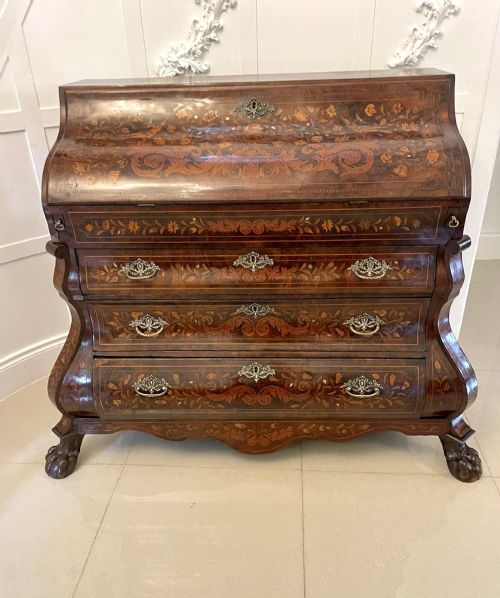
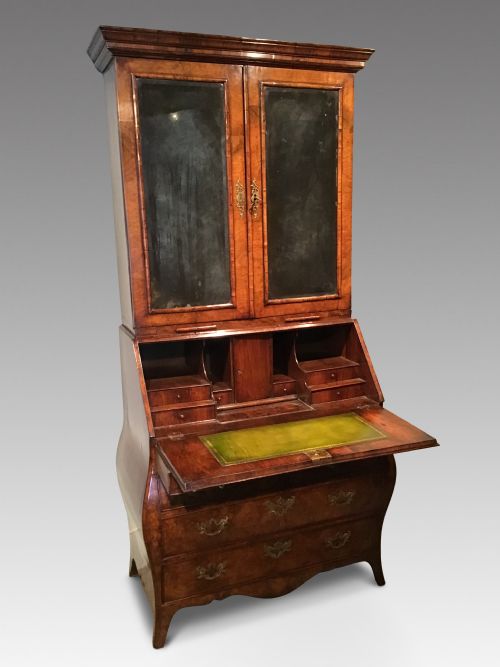
These bombe desk and cabinet pieces combine swelling serpentine fronts with fitted upper bookcases, offering serious presence and hidden workspace.
Bombe Desk and Cabinet
A bombe desk and cabinet brings together a sloping bureau writing flap and a towering upper bookcase section, often shaped with the distinctive bulging profile associated with Dutch Baroque and Dutch Rococo design. Buyers seeking this phrase usually encounter Dutch pieces featuring intricate floral marquetry alongside French Rococo Revival secretaire forms.
The lower section provides a sloped writing desk or cylinder front that conceals small drawers and pigeonholes, sitting above three or four graduated drawers. Above this sits a glazed or panelled cabinet superstructure designed for displaying books and precious objects.
Most items date from the 18th century, though later revivals from around 1800, the nineteenth century, and nineteen-twenty also appear. Walnut and burr walnut dominate the selection, frequently enhanced by fruitwood marquetry and inlay work.
Materials and construction methods
Cabinetmakers built these large carcasses using solid oak and walnut timbers, applying rich burr walnut veneers to create striking grain patterns across the curved surfaces. The distinctive bombé profile required thick timber or clever blocking to achieve the pronounced convex sweep.
Marquetry decoration relied on contrasting fruitwood veneers meticulously cut and fitted into floral and foliage motifs across the fall fronts and cabinet doors. Brass hardware, including key escutcheons and drop handles, completed the construction.
Many bureau interiors hide secret compartments behind miniature drawers for stashing private correspondence.
Evaluating craftsmanship and visual depth
The fineness of the fruitwood marquetry dictates much of the visual appeal, separating simple floral panels from dense, multi-toned botanical compositions that cover the entire facade. The rhythm and symmetry of the floral inlay show the hand of a skilled marqueter.
The execution of the bombé curve itself defines the architectural success of the piece, requiring balanced proportions between the swelling lower drawers and the upper cabinet. Timber selection also matters, particularly the choice of figured burr walnut with rich colour.
The Bombe Desk and Cabinet Glossary
- Bombé
- A swelling or bulging contour found on the front and sides of case furniture. This convex shaping became particularly popular in Dutch and French cabinetmaking.
- Marquetry
- Decorative patterns formed by fitting contrasting veneer slices into a prepared ground. Fruitwood is frequently used for this detailed inlay work.
- Bureau bookcase
- A combination of a sloping writing desk and an upper shelving cabinet with doors. These dual-purpose items served both workspace and display functions.
- Burr walnut
- Timber sliced from walnut tree growths, producing swirling and mottled grain patterns. Cabinetmakers prized this wood for high-status veneering.
Bombe Desk and Cabinet: Frequently Asked Questions
What is a bombe desk and cabinet?
A bombe desk and cabinet is a substantial piece of case furniture featuring a swelling, curved lower bureau base paired with an upper bookcase or display section.
These items combine a sloping writing surface with multi-shelf upper storage behind glass or wooden doors, often decorated with floral marquetry.
Where were these pieces made?
The surviving examples originate predominantly from the Netherlands, reflecting Dutch Baroque and Rococo design traditions.
Some pieces also derive from French workshops, particularly during the nineteenth-century revival periods.
What woods are typically used?
Walnut and burr walnut form the primary structural and decorative timbers for these items, complemented by oak carcass framing.
Fruitwood is extensively utilised for the detailed floral marquetry and inlay work across the exterior surfaces.
How do I care for burr walnut?
Protect burr walnut surfaces by keeping them away from direct sunlight and maintaining stable room humidity to prevent veneer cracking.
Apply gentle wax polishes occasionally to nourish the wood and maintain its natural lustre.