

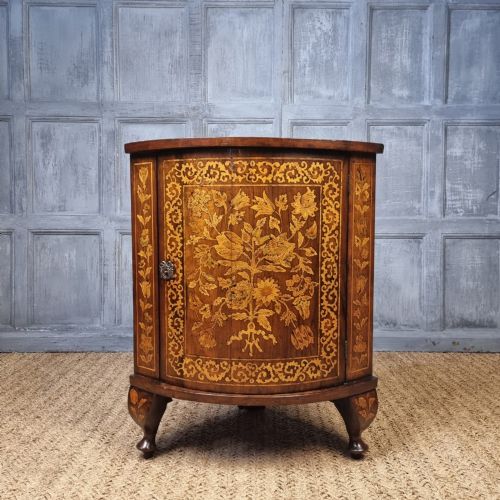


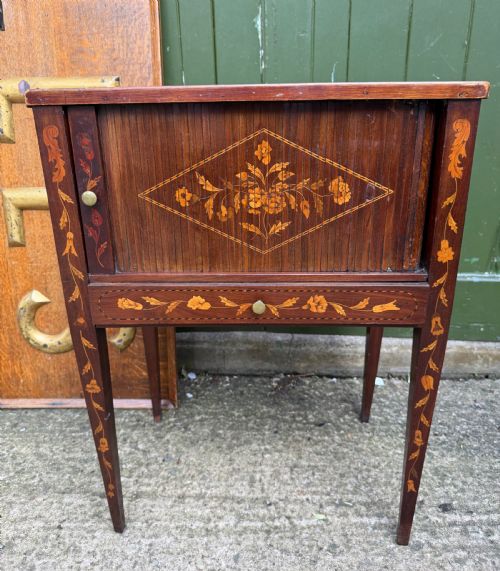


Dutch Floral Marquetry Cupboard
A dutch floral marquetry cupboard brings rich historic craftsmanship into a room with intricate inlaid botanicals.
Dutch Floral Marquetry Cupboard
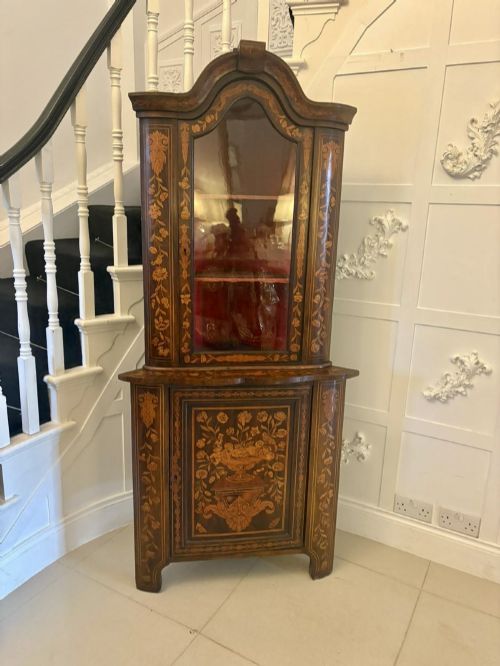
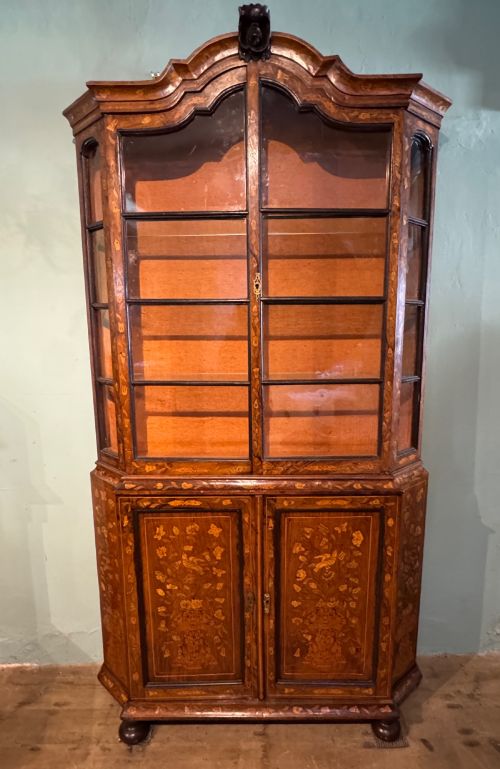
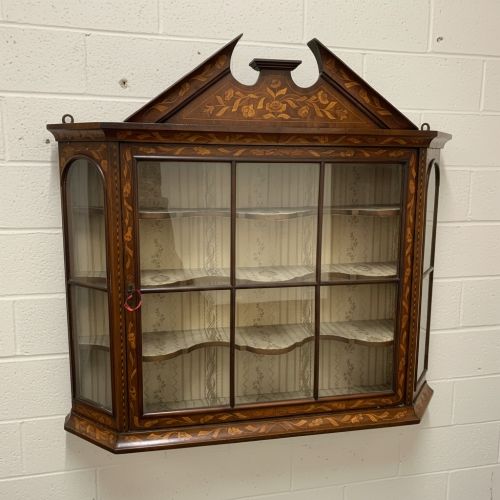
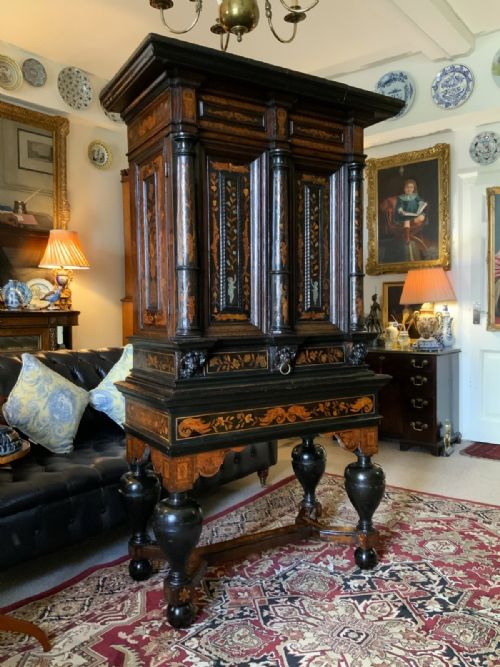
A dutch floral marquetry cupboard encompasses various forms from corner cabinets and display cases to linen presses and larger floor-standing pieces. These items originate across multiple periods, with examples spanning from the seventeenth century through to the nineteenth century, alongside later revivals.
The most common formats encountered on this page include corner cupboards and display cabinets constructed from walnut and mahogany. Makers utilised fruitwood inlay to create detailed floral patterns across the surfaces of these storage pieces.
Materials and construction
Construction relies heavily on timbers such as walnut and oak, often faced with mahogany or burr walnut veneers. Marquetry panels are formed by carefully cutting and fitting contrasting woods and fruitwood inlay to depict floral arrangements.
Details sometimes incorporate pewter inlay alongside brass hardware and glass panels for display doors. The cabinet carcases demonstrate traditional joinery suited to housing linen, books or prized collections.
Listings feature items spanning from the seventeenth century to the twentieth century, incorporating walnut, mahogany, oak and fruitwood inlay.
Assessing the craftsmanship
The sophistication of the floral marquetry dictates the visual success of the piece, with finer examples displaying exceptional shading and botanical detail in the fruitwood inlay. The precision of the cabinetmaker's joinery and the selection of figured walnut veneers further distinguish superior specimens.
Proportion and the preservation of original brass mounts or glass elements also influence the overall character of the cupboard. Earlier seventeenth and eighteenth-century examples exhibit distinct structural traits compared to later nineteenth-century interpretations.
The Dutch Floral Marquetry Cupboard Glossary
- Marquetry
- A technique where small pieces of wood veneer are applied to a structure to form decorative patterns. In these pieces, the focus rests on floral motifs.
- Fruitwood inlay
- The use of lighter or differently coloured fruitwoods inserted into a darker timber background. This method creates contrast within the floral designs.
- Linen press
- A tall storage piece traditionally used for holding textiles and sheets. Many feature upper display sections or lower drawer configurations.
- Baroque period
- An historical stylistic era known for ornate decoration and dramatic forms. Certain cabinets reflect this aesthetic through their bold silhouettes.
Dutch Floral Marquetry Cupboard: Frequently Asked Questions
What is a dutch floral marquetry cupboard?
It is a historic storage piece decorated with detailed wood inlay depicting flowers and foliage.
These cabinets range from small bedside tables to large floor-standing linen presses and display units.
How were these cupboards used historically?
They served primarily for storing household textiles, garments, porcelain or books.
Display variants also allowed owners to showcase valued decorative objects behind glass doors.
How do I date a marquetry cabinet?
Dating relies on examining the underlying cabinet construction, timber choice and specific stylistic traits.
Earlier pieces often show seventeenth or eighteenth-century proportions, whereas nineteenth-century items introduce different veneering techniques.
Where should I place one at home?
Corner cabinets fit neatly into unused room angles while providing practical display or shelving space.
Larger floor-standing cupboards make a strong focal point in a dining room, hallway or study.