


Eighteenth Century Cabinet Bookcase
An eighteenth century cabinet bookcase brings stately presence and working practicality to a room through fitted desks and glazed display shelves.
Eighteenth Century Cabinet Bookcase
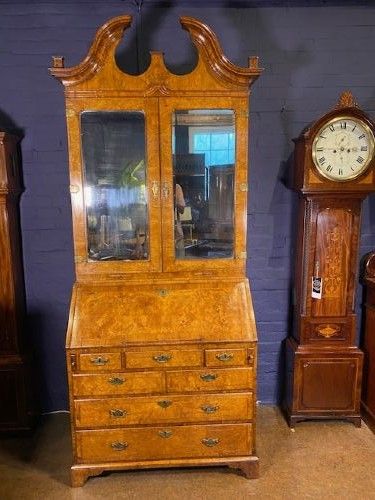
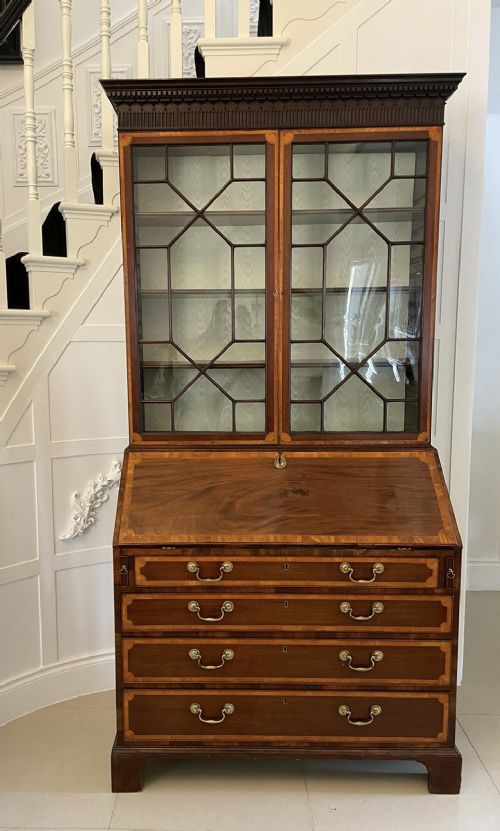
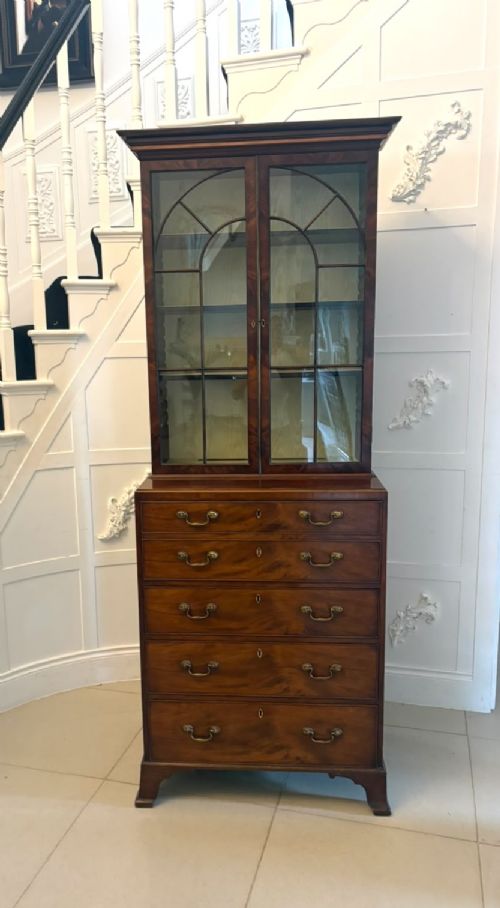
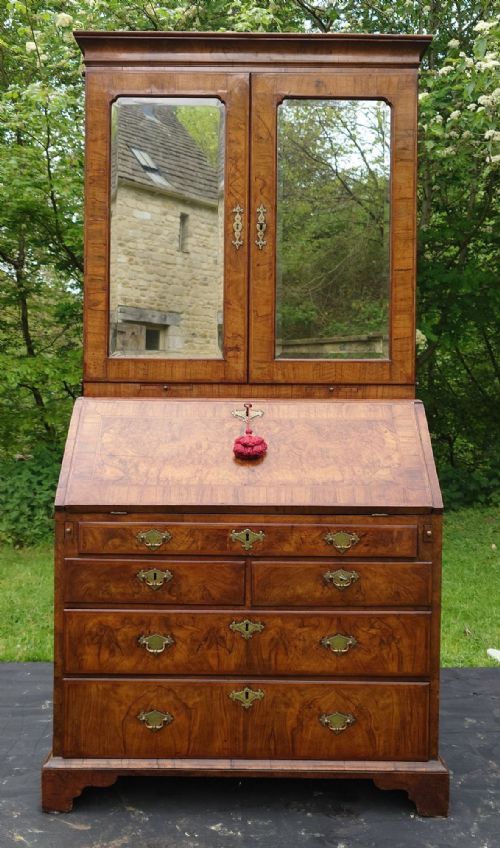
When you search for an eighteenth century cabinet bookcase, you encounter substantial writing cabinets combined with upper shelving units from the Georgian and earlier eras. These pieces typically feature a fall-front desk or secretaire drawer above lower storage cupboards, surmounted by glass-panelled doors.
The versions most commonly met on this page span walnut and mahogany examples from the seventeenth, eighteenth, and nineteenth centuries. Regional variations also appear, including French provincial oak cupboards and Italian double dome bureau bookcases.
Makers such as Gillows and pieces in the manner of Thomas Sheraton represent the formal cabinet-making traditions found here. Buyers find both bureau bookcases and breakfront library cabinets designed to organise papers and display volumes.
How they were made
Makers built these pieces using primary timbers like walnut, mahogany, oak, and rosewood, often enhanced with burr walnut veneers or marquetry. Pine and secondary woods served for internal carcases and drawer linings.
Glazing took the form of astragal bars holding individual panes of glass within cabinet doors. Brass hardware, including escutcheons and handles, secured the doors and drawers.
Many bureau bookcases conceal secret compartments behind pigeonhole pigeon blocks for hiding private letters and coins.
What varies in quality
Figure and grain selection dictate the visual impact, with highly figured walnut and detailed mahogany inlay marking out superior examples. The crispness of carved mouldings and the delicacy of astragal glazing bars also separate standard production from master craftsmanship.
Internal organisation reveals the maker's hand through fitted pigeonholes, secret compartments, and dovetailed drawer construction. The integration of the upper bookcase and lower desk determines the structural harmony of the piece.
Gillows
The Eighteenth Century Cabinet Bookcase Glossary
- Astragal glazed
- A method of dividing glass doors into smaller panes using wooden mouldings. These bars form geometric or curvilinear patterns across the bookcase front.
- Bureau bookcase
- A combination of a sloping-front writing desk and an upper shelving unit. The fall-front desk opens to reveal a fitted interior of small drawers and pigeonholes.
- Secretaire bookcase
- A cabinet featuring a pull-out drawer with a drop-front writing surface rather than a sloping lid. This design conceals the desk mechanism behind a drawer front that mimics regular chest proportions.
- Breakfront
- A cabinet design where the central section projects forward from the flanking wings. This architectural arrangement creates depth and shadow across large library pieces.
- Double dome
- A curved upper cornice shape featuring two distinct arched peaks. This baroque roofline appears on Italian and continental cabinet work.
Eighteenth Century Cabinet Bookcase: Frequently Asked Questions
How do I clean the glass doors?
Use a soft microfibre cloth and a mild glass cleaner applied directly to the cloth rather than the wood. This prevents moisture from damaging historic timber or antique finishes.
Take care around old astragal bars and putty, which can be fragile on eighteenth-century pieces.
Can I store heavy books inside?
Most historic shelves are adjustable on wooden racks or fixed pins designed for standard library volumes. Distribute weight evenly across the timber boards to prevent sagging over time.
Very heavy folios are better kept on lower shelves or dedicated library tables.
How do I maintain the walnut wood?
Apply a quality beeswax polish periodically to nourish the grain and protect the surface from drying out. Avoid silicone-based sprays that build up and attract dust.
Keep the cabinet away from direct heat sources and strong sunlight to prevent veneer cracking.
Where should I place the cabinet?
Position the piece against a stable interior wall away from radiators, fireplaces, and damp exterior corners. Large bureau bookcases require level flooring to ensure doors and fall-front desks close properly.
Allow enough clearance in front of the cabinet to pull out the desk or drop the writing flap.