


Dutch Rococo Writing Bureau
A dutch rococo writing bureau is a sloping-front desk built for correspondence, offering hidden compartments and considerable presence in walnut and marquetry.
Dutch Rococo Writing Bureau
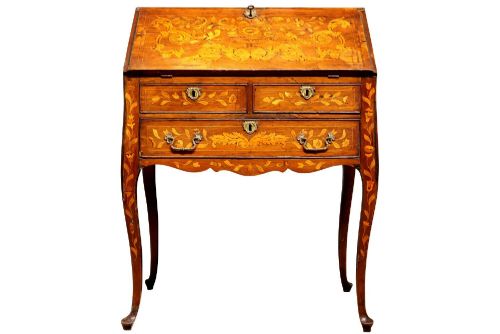
A dutch rococo writing bureau is a substantial piece of furniture designed for private correspondence and the storage of papers. These writing surfaces typically feature a sloping fall-front that opens to reveal a fitted interior of small drawers and pigeonholes.
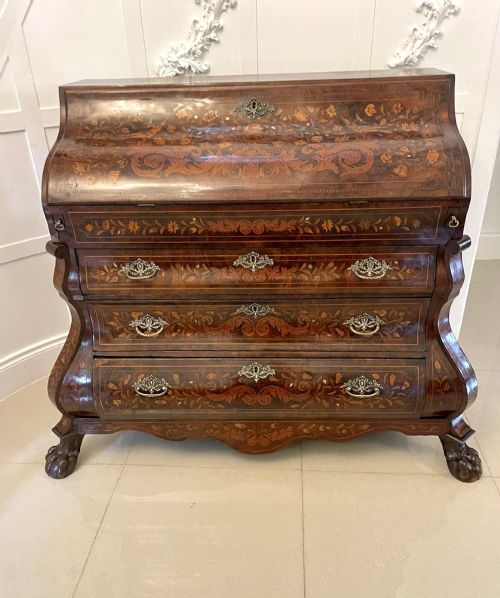
The versions met on this page include both straightforward sloping desks and towering bureau bookcases featuring glazed upper cabinets. Many of these forms display the characteristic bombe profile, swelling outward toward the lower section.
The construction of these pieces spans the eighteenth century into the nineteenth century, drawing on periods such as Georgian alongside the core Dutch Rococo and Rococo Revival styles. They remain heavy, architectural items intended as centrepieces for a room.
How they were made
Cabinetmakers constructed these pieces primarily from walnut and burr walnut, applying fine fruitwood veneers and detailed marquetry to create elaborate floral patterns. The natural grain of the burr walnut provides deep texture across the sloping fronts and drawer facades.
Inlayers utilised contrasting fruitwoods to depict intricate floral marquetry, often covering the entire exterior surface with botanical motifs. Cast brass handles and escutcheons were fitted to the drawers to complete the construction.
Mischievous cabinetmakers occasionally hid secret spring-loaded drawers behind the pigeonholes for storing family currency.
What varies in quality
The ambition of the marquetry sets the standard for these items, distinguishing simple floral arrangements from dense, masterly botanical displays spread across the bombe surfaces. Superior examples integrate the inlaid patterns seamlessly around the curves of the timber.
The handling of the bombe contour dictates the visual weight of the piece, with finer proportions maintaining balance despite the swelling silhouette. The preservation of the original walnut and fruitwood surfaces also governs the standing of an individual bureau.
The Dutch Rococo Writing Bureau Glossary
- Bombe
- A bulging or swelling contour found on the lower front and sides of casework. This sweeping profile defines much of the continental cabinetmaking of the period.
- Marquetry
- Decorative patterns formed by fitting together thin slices of wood veneer on a ground. Fruitwood inlay creates the detailed floral scenes seen across these surfaces.
- Bureau bookcase
- A writing desk combined with an upper shelving or display cabinet. These tall double-height forms provide enclosed storage above the sloping workspace.
- Fall-front
- The hinged sloping panel that drops down to form a writing surface. It conceals the internal compartments when closed.
- Escutcheon
- A protective plate surrounding a keyhole. These metal fittings are frequently cast in brass to complement the dark walnut timber.
Dutch Rococo Writing Bureau: Frequently Asked Questions
How do I use a bureau desk?
The hinged writing flap lowers to create a flat surface for correspondence, supported by automatic wooden slides or brackets. Inside, smaller drawers and compartments house writing materials and documents.
When writing is finished, the flap lifts and locks to conceal the interior and paper clutter. The lower drawers remain accessible for bulk storage at all times.
What is a bombe shape?
A bombe shape refers to furniture with outward-curving sides and fronts that swell toward the base. This sculptural profile requires advanced carpentry to shape the thick timber and fit the veneer.
In these pieces, the swelling contour gives the base a heavy, organic presence. It is a hallmark of continental Rococo design.
How do I clean walnut marquetry?
Dust the surfaces regularly with a soft, dry cloth to prevent dirt from settling into the grain of the veneer. Avoid modern chemical polishes that can damage the old finish and lift the fruitwood inlay.
Feed the dry walnut and fruitwoods occasionally with a traditional beeswax paste to maintain the sheen. Keep the timber away from direct heat sources and strong sunlight.
Where should I place a bureau bookcase?
These tall pieces require a strong wall and adequate floor space to support their considerable height and weight. They function well as study or drawing room focal points where their detailed floral marquetry can be appreciated.
Ensure the room maintains stable humidity levels to protect the walnut timbers and delicate fruitwood veneers from warping. Position them away from radiators and open fires.