





Dutch Inlaid Chest
A dutch inlaid chest brings together rich timber and intricate floral detail, offering both striking presence and practical storage for the home.
Dutch Inlaid Chest
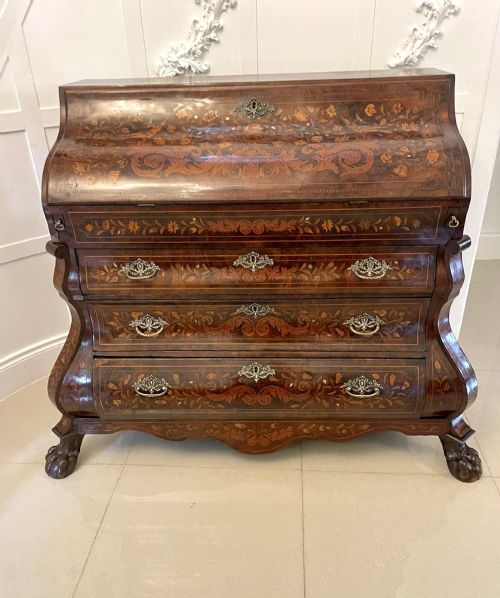
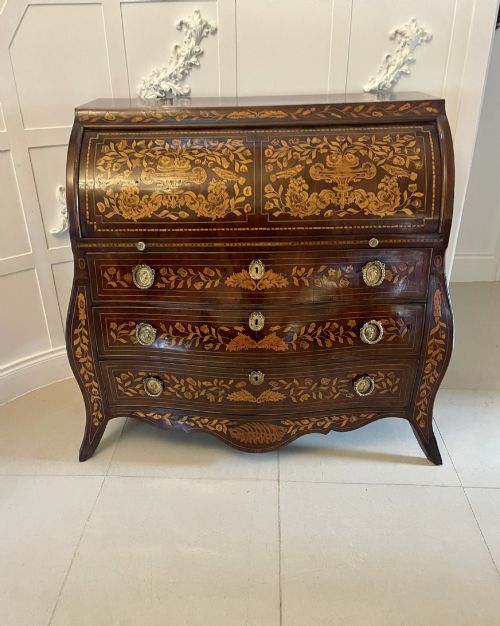
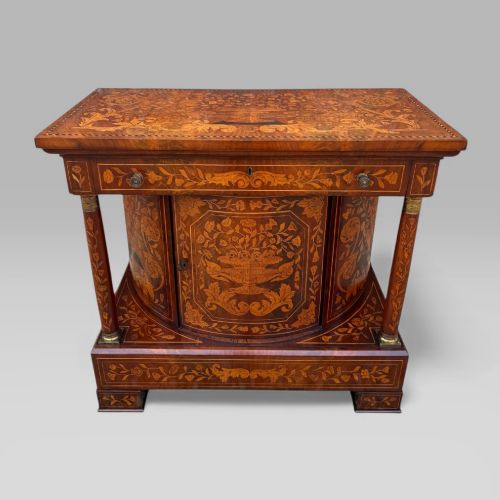
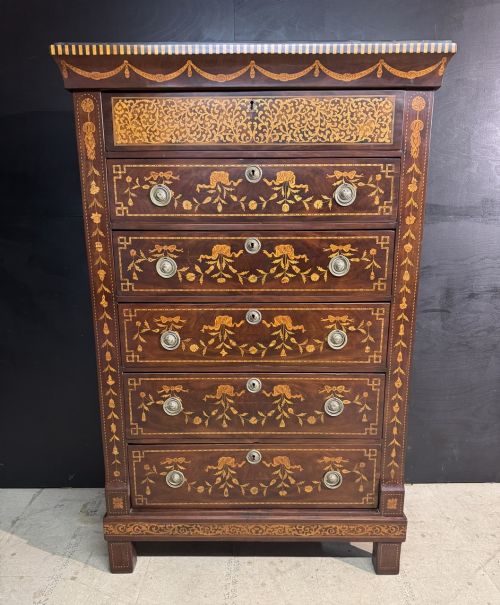
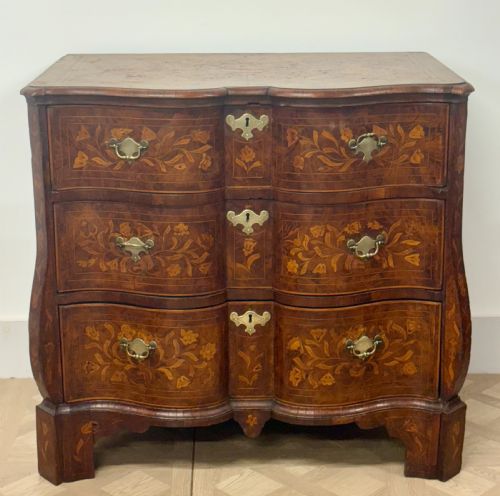
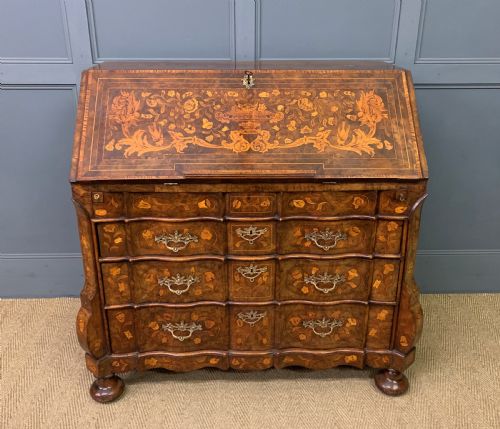
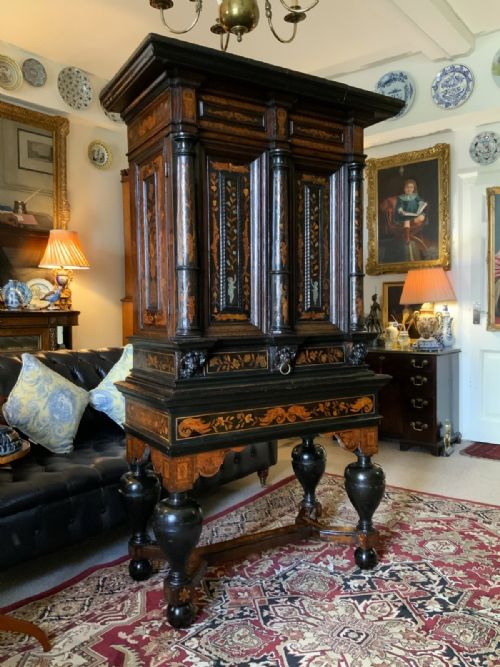
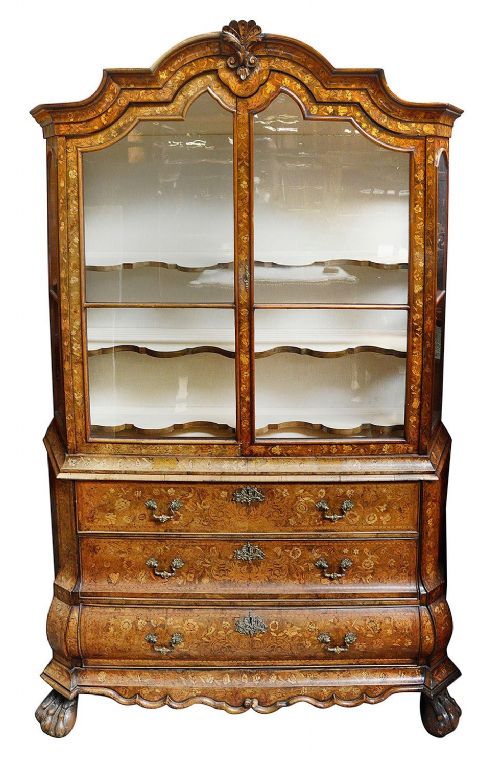
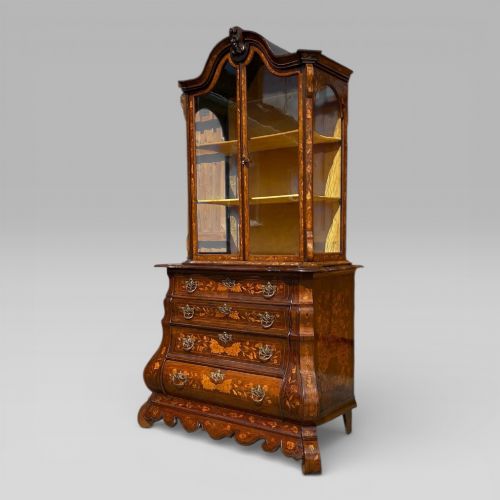
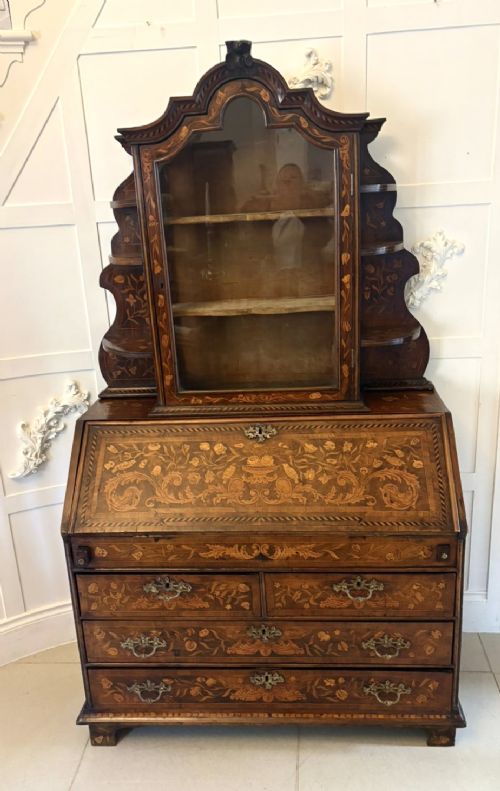
A dutch inlaid chest encompasses various forms such as tall chests of drawers, bombe commodes, marriage chests, and larger cabinet pieces spanning the seventeenth to the nineteenth centuries. These items originate from periods including the Dutch Baroque and Dutch Rococo eras, reflecting skilled cabinet-making traditions.
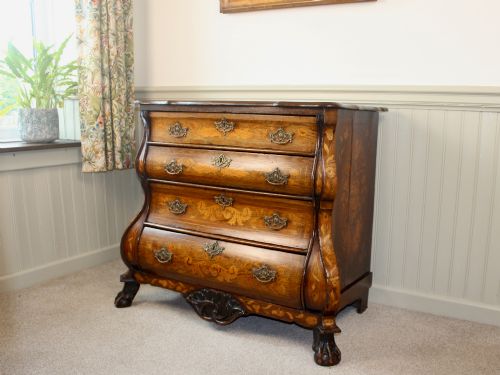
The most common version met on this page is the walnut or mahogany chest of drawers adorned with detailed floral marquetry, often displaying the characteristic bombe curved front shape. Such pieces range from neat-sized nineteenth-century examples to substantial eighteenth-century masterworks.
Materials and Technique
Cabinet-makers constructed these pieces using foundational carcases of oak, walnut, or mahogany, applied with finely figured veneers. Artisans then utilised fruitwood inlay and marquetry to create elaborate floral and scrollwork designs across the drawer fronts and surfaces.
The technique involves precision cutting of contrasting woods, sometimes incorporating pewter or brass details, fitted flush into the primary timber ground. This painstaking method results in the pictorial surface patterns distinctive to the style.
Miniature apprentice pieces allowed young makers to prove their mastery of floral marquetry before tackling full-scale chests.
Judging Quality
The distinction between tiers of quality rests in the crispness of the marquetry cutting and the depth of the timber figuring. Superior examples show seamless integration of fruitwood floral motifs where the grain and colour of the background woods complement the design without warping.
Structural harmony also separates the work, particularly in bombe pieces where the swelling contour of the chest must maintain balance and grace. Finer versions exhibit careful timber selection across all sides and drawers, retaining integrity in the carcass construction.
Edwards & Roberts
The Dutch Inlaid Chest Glossary
- Bombe
- A swelling or outward-curving contour on the front and sides of a chest or cabinet. This profile demands advanced woodworking skill to shape and veneer.
- Marquetry
- The art of applying pieces of veneer to a structural structure to form decorative patterns and pictures. It differs from inlay by covering the entire surface in a mosaic of wood.
- Fruitwood
- Dense, fine-grained timber sourced from fruit-bearing trees such as pear, apple, or cherry. Artisans favoured these woods for their pale tones and smooth texture in marquetry work.
- Carcass
- The main structural body or framework of a piece of furniture before drawers, doors, and decorative veneers are applied. It provides the foundational strength for the chest.
- Commode
- A low chest of drawers, often highly decorative, originating in eighteenth-century France and adopted across European cabinet-making traditions.
Dutch Inlaid Chest: Frequently Asked Questions
What is a bombe front?
A bombe front is a distinct curved profile that swells outward on the drawers and sides of the chest. This sculptural form requires advanced cabinet-making techniques to shape the underlying timber and fit the veneer.
Such shapes are frequently found on eighteenth-century and nineteenth-century examples, adding considerable visual weight and drama to the furniture piece.
How do I care for inlaid wood?
Inlaid and marquetry furniture requires a stable indoor environment away from direct sunlight and dramatic temperature fluctuations. Applying a suitable wax polish helps maintain the moisture and lustre of the timber.
Avoid placing these chests near heat sources or damp areas, as the varying woods used in the floral designs can react differently to environmental shifts.
Are these chests practical for storage?
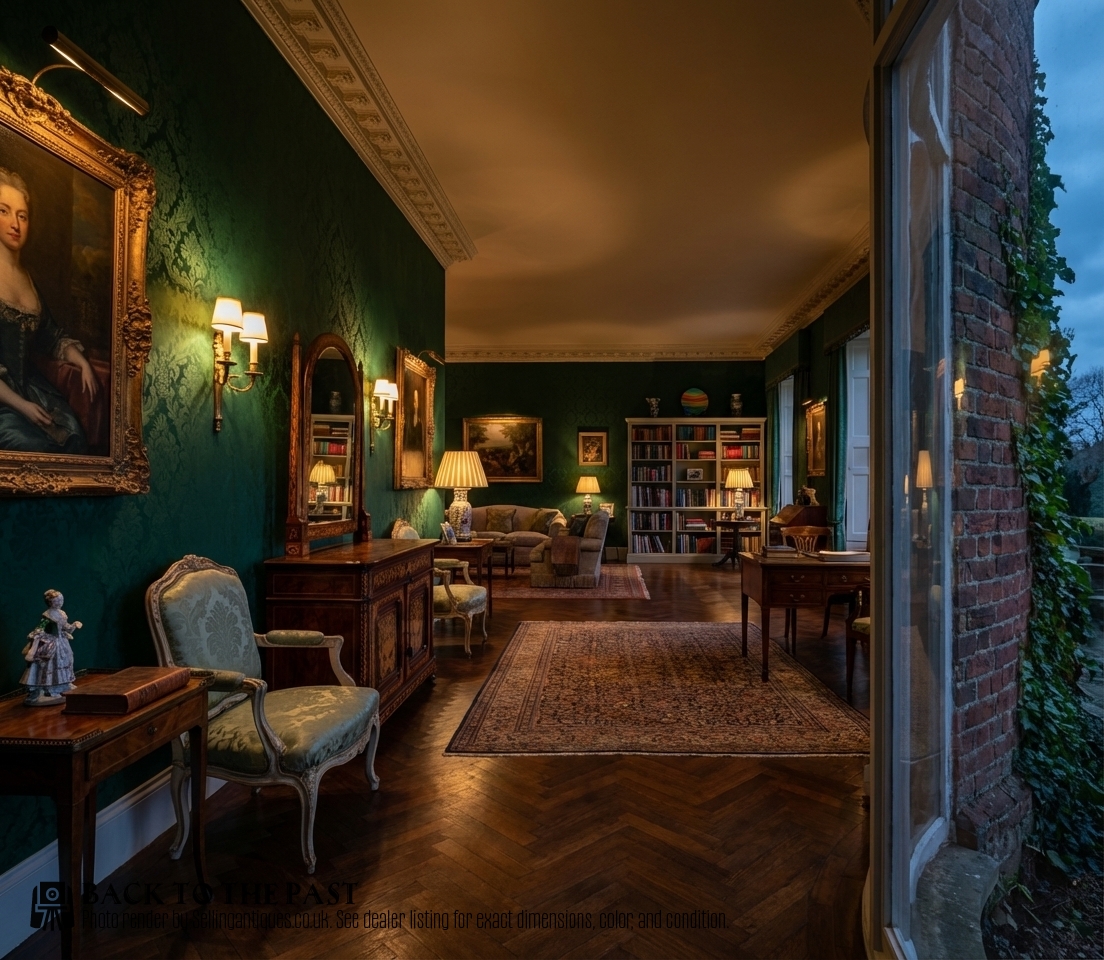
These chests offer deep drawers and substantial internal space, making them well-suited for everyday storage needs in modern rooms. The robust construction of oak or walnut carcases ensures lasting durability.
Buyers often place them in hallways, bedrooms, or living spaces where their decorative surfaces and storage capacity function together effectively.
How do I distinguish eighteenth-century pieces?
Eighteenth-century examples often feature dense walnut or mahogany foundations paired with hand-cut fruitwood marquetry displaying naturalistic floral designs. The construction details, such as hand-cut dovetails on the drawers, point to this earlier period of production.
Examining the interior timbers and the style of the hardware helps confirm the age and regional origin of the cabinet work.