

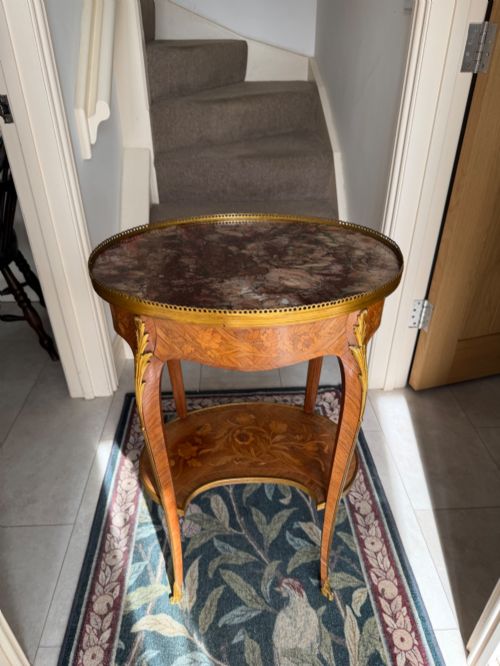
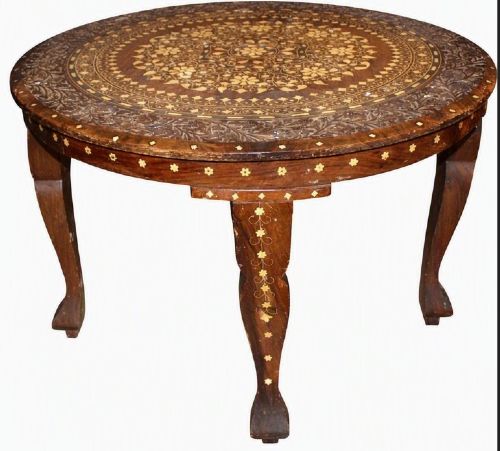
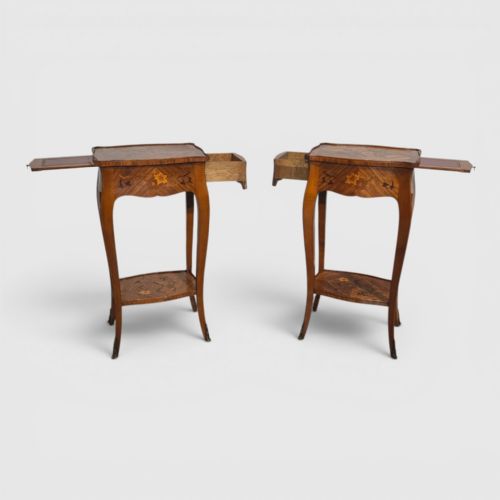
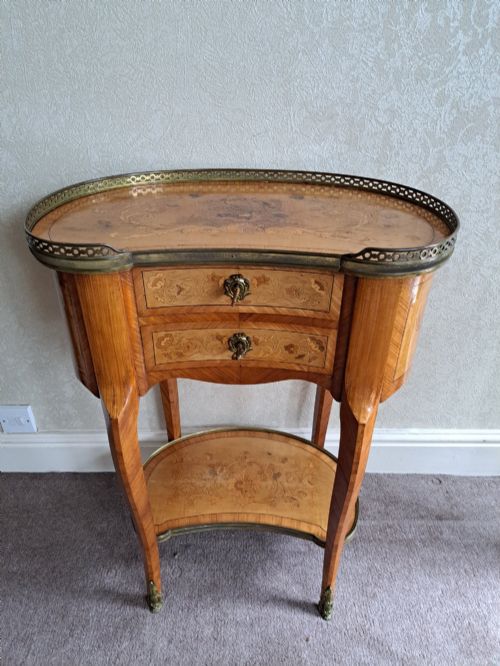
Vintage Floral Inlay Table
A vintage floral inlay table brings botanical marquetry and cabinetwork into domestic rooms, offering useful surfaces enriched by figured timbers and detailed plant motifs.
Vintage Floral Inlay Table
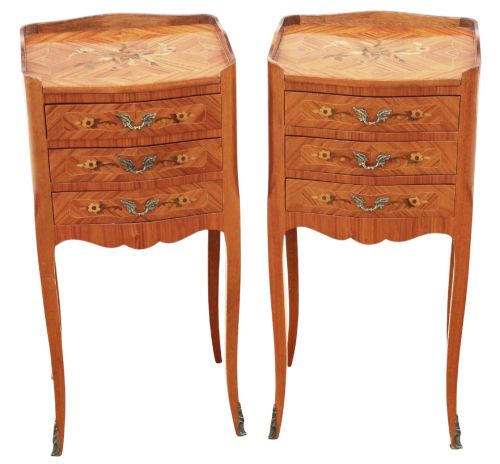
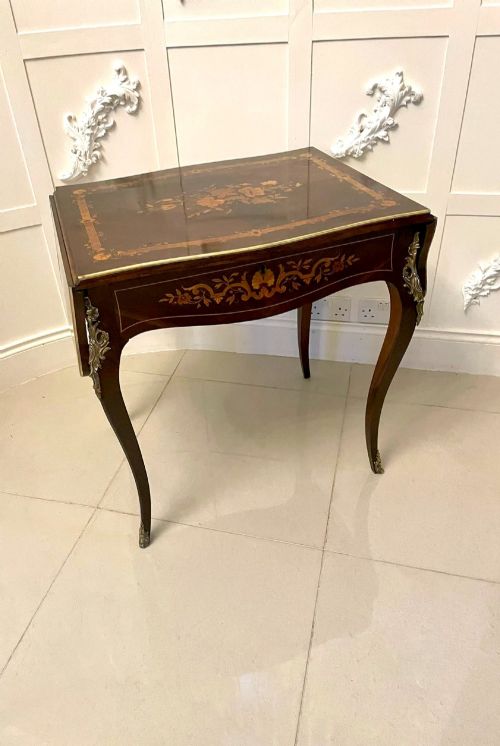
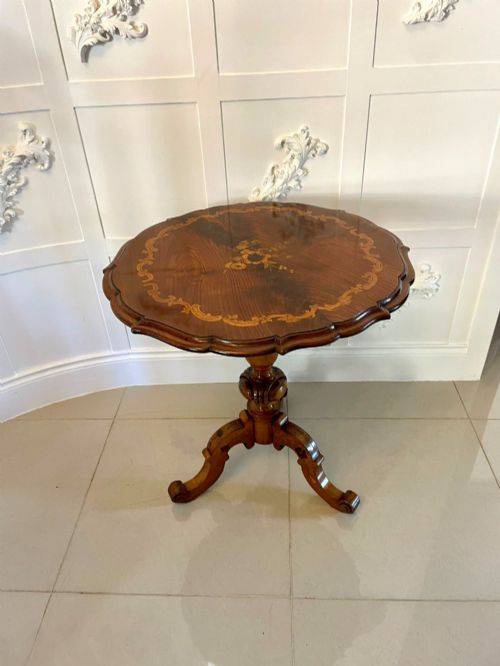
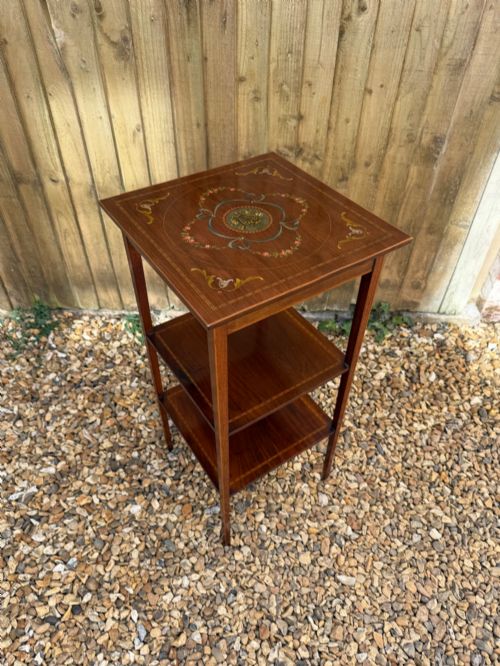
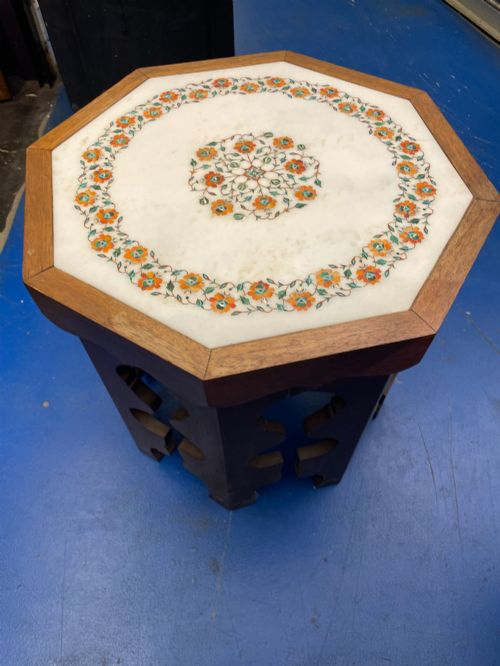
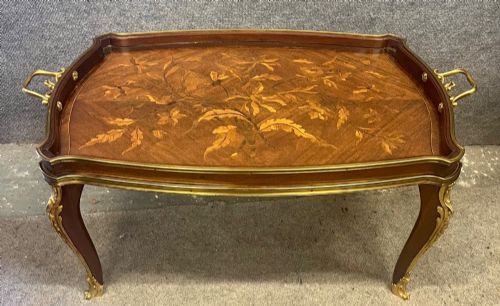
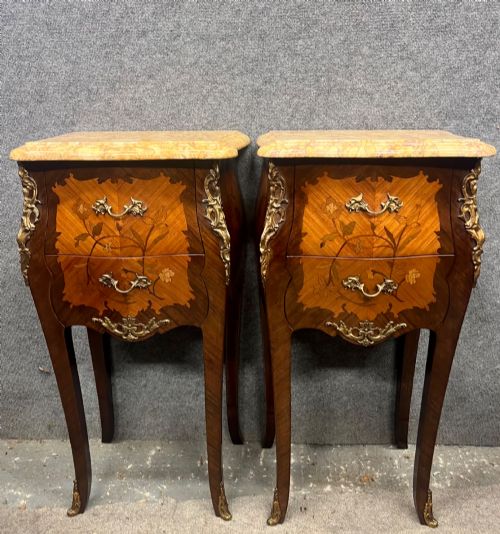
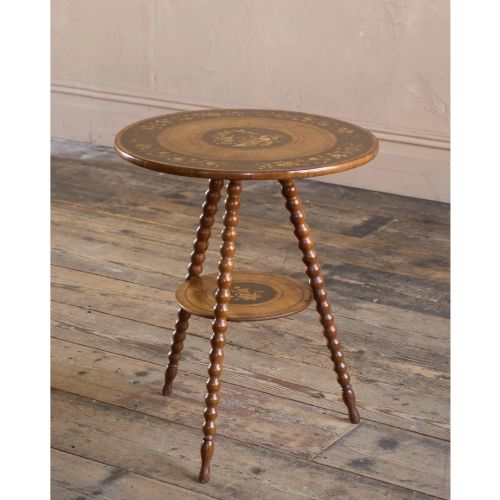
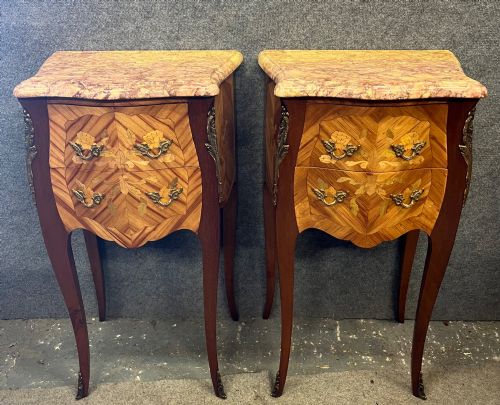
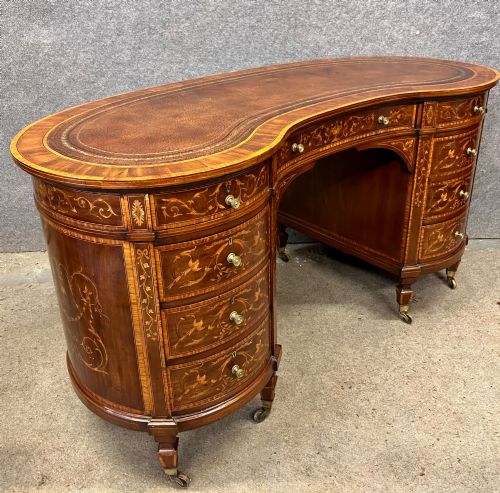
When you search for a vintage floral inlay table, you encounter a range of forms spanning bedside cabinets, occasional tables, centre pieces, and coffee tables produced from the nineteenth century into the twentieth century. These domestic items utilise patterned wood veneers and delicate botanical motifs to transform simple furniture into decorative focal points.
The most common examples on this page are French and English designs from the Victorian, Edwardian, and later twentieth-century periods. Side tables and bedside chests dominate the selection, frequently combining shaped timber surfaces with floral marquetry panels.
The pieces reflect various revival movements, particularly Louis XV styles alongside Edwardian interpretations. Makers utilised contrasting timbers to render floral sprays, urns, and leaf scrolls across tabletops, drawer fronts, and friezes.
Materials and construction
Cabinetmakers constructed these tables using a carcase of solid timber, such as mahogany or walnut, overlaid with fine decorative veneers. Woods like rosewood, kingwood, satinwood, and walnut provided contrasting natural tones for the detailed floral marquetry.
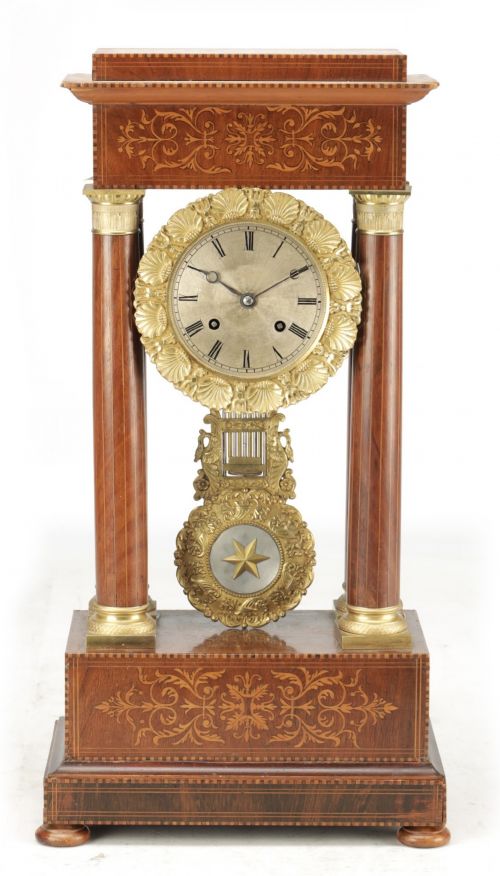
Craftspeople cut thin slices of tinted and naturally coloured woods to form intricate flower and foliage patterns, often embedding them into a contrasting ground veneer. Brass mounts, ormolu details, and occasional bone inlays completed the ornamentation on select tables.
Materials appearing across these tables include walnut, rosewood, mahogany, kingwood, satinwood, and brass.
Assessing craftsmanship
Quality rests primarily on the precision of the marquetry cutter and the selection of the underlying timbers. Superior pieces display tight, seamless joins in the veneer work, where different wood species meet without visible gaps or excessive filler.
The choice of secondary woods and the crispness of any applied bronze, brass, or ormolu mounts also signal higher standards of workshop production. Finer examples maintain structural integrity in their legs and joints while preserving the subtle grain variations of the original rosewood, kingwood, or walnut.
Liberty & Co·Henry Marc
The Vintage Floral Inlay Table Glossary
- Marquetry
- The art of creating decorative patterns on furniture by fitting together small pieces of veneer, often depicting flowers or landscapes. This technique requires steady patience and precise hand-cutting skills.
- Veneer
- A thin layer of choice wood applied over a coarser base timber to give the appearance of solid luxury material. It allows makers to utilise highly figured grain patterns economically.
- Ormolu
- Gilded bronze ornamentation applied to furniture mounts and clock cases during the eighteenth and nineteenth centuries. The technique involves coating cast bronze with a mercury-gold amalgam.
- Satinwood
- A durable, lustrous yellowish timber native to India and Sri Lanka, utilised for light-coloured inlay work and fine cabinetmaking. Its natural sheen catches light effectively.
- Kingwood
- A dense, heavy Brazilian timber featuring rich dark brown and violet-brown stripes, favoured for high-end French and English veneering. Cabinetmakers prize it for contrast.
Vintage Floral Inlay Table: Frequently Asked Questions
How do I clean a marquetry surface?
Dust gently with a dry, soft cloth to prevent abrasive particles from scratching the delicate wood veneers. Avoid chemical polishes and excessive moisture, which can loosen old glue beneath the inlay.
Apply a microcrystalline wax periodically to nourish the timber and protect the surface from humidity. Buff lightly with a clean cloth after application to maintain a natural, soft sheen.
Where should I place an occasional table?
Position these smaller tables beside seating areas or against hallways where foot traffic remains moderate. Keep them away from direct sunlight and heat sources to prevent the wood veneers from drying and cracking.
Because many examples feature delicate floral inlay on the top surface, avoid placing unshielded hot drinks or wet items directly on the timber. Use coasters or mats to protect the antique finish.
How do I date an inlaid table?
Examine the secondary woods used inside drawer linings and beneath tabletops, as nineteenth-century workshops differed significantly from later twentieth-century manufacturing. Construction methods, such as hand-cut dovetails or machine-cut joints, offer reliable clues to the era of production.
Consider the prevailing style of the piece, noting whether it follows Victorian proportions, Edwardian lightness, or Louis XV revival curves. Comparing the hardware, such as brass pulls or locks, helps narrow down the decade.
Are these tables sturdy enough for daily use?
Most occasional and bedside tables serve light domestic functions, such as holding lamps or small decorative items. They are generally not built to withstand heavy weight or rough handling.
Lift the table rather than dragging it across the floor to protect the joints in the legs and frame. Regular gentle use preserves the structural stability of older frames.