



Marquetry Vanity Table
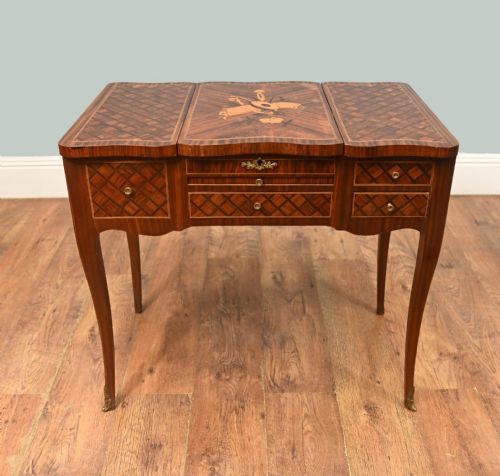
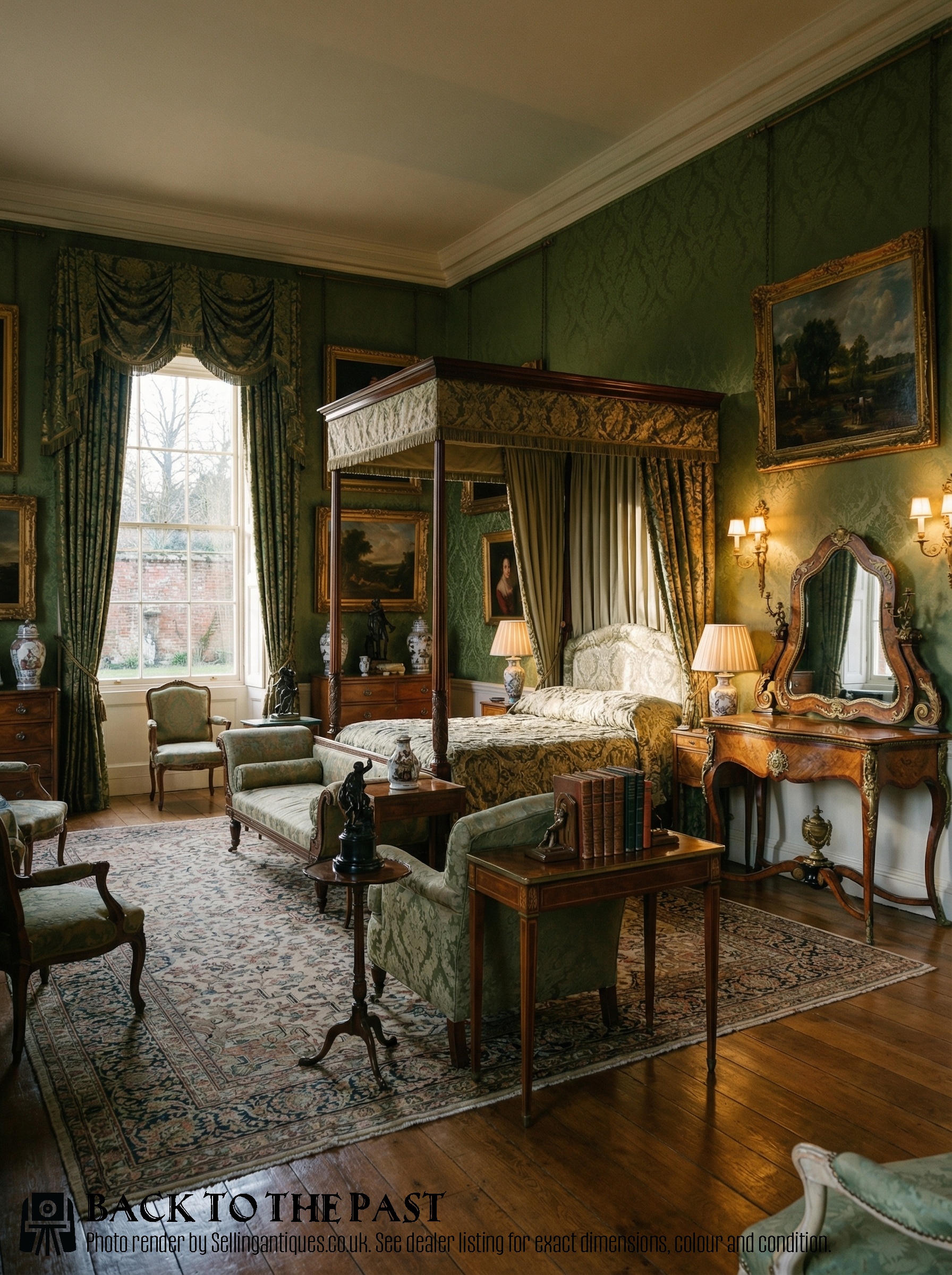
A marquetry vanity table is an inlaid wooden dressing piece that brings intricate floral and geometric surfaces into a bedroom.
Marquetry Vanity Table
A marquetry vanity table provides a surface for personal grooming and writing, often incorporating mirrors and compartments.
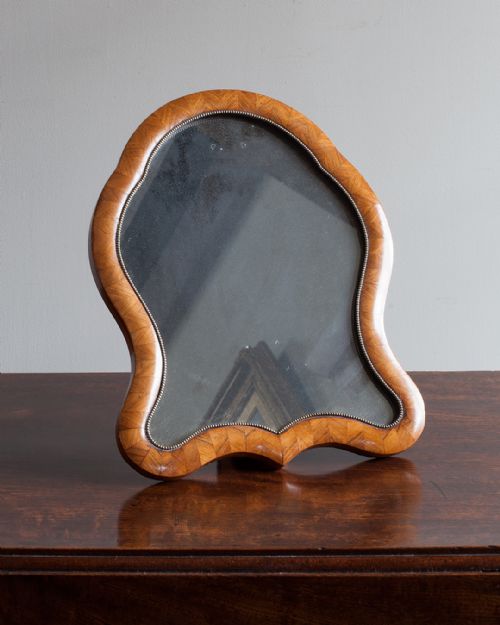
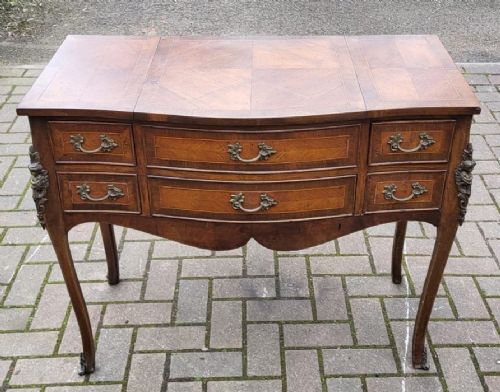
These pieces appear in various forms on this page, including dressing tables, poudreuses, work tables, and tabletop swing mirrors.
Origins span Georgian, Victorian, Edwardian, and continental periods, reflecting English and French cabinet-making traditions.
What Varies in Quality
The precision and complexity of the wood inlay determine the visual depth of the decorative panels.
The choice of foundational timber and the integration of secondary woods dictate the structural integrity of the frame.
The crispness of ormolu mounts and the smoothness of drawer and compartment mechanisms distinguish finer examples.
Listings feature woods including satinwood, kingwood, rosewood, tulipwood, and walnut across Georgian, Victorian, and Edwardian eras.
Edwards and Roberts·Maison Pretot Paris·Gillows·B Cohen and Sons
The Marquetry Vanity Table Glossary
- Marquetry
- A decorative technique applying pieces of veneer to a structure to form intricate pictorial patterns. This defines the primary aesthetic appeal of these tables.
- Poudreuse
- A French dressing table equipped with folding lids and internal compartments for cosmetics and mirrors. It serves as a dual-purpose vanity and writing desk.
- Bonheur du jour
- A small ladies writing desk featuring a superstructure of shelves and drawers above the main work surface. These compact pieces often combine vanity and writing functions.
- Ormolu
- Gilded bronze applied as decorative mounts and feet on furniture frames. It provides metallic contrast against dark exotic veneers.
Marquetry Vanity Table: Frequently Asked Questions
What is a poudreuse?
A poudreuse is a specialised French dressing table with hinged lids that lift to reveal a mirror and hidden compartments.
These compartments originally held cosmetics, powders, and grooming tools for daily toilette routines.
How do I date these tables?
Dating relies on identifying stylistic markers, timber choices, and construction methods characteristic of Georgian, Victorian, or Edwardian periods.
Makers' marks and regional inlay motifs also help narrow down the exact decade of manufacture.
Where were they used?
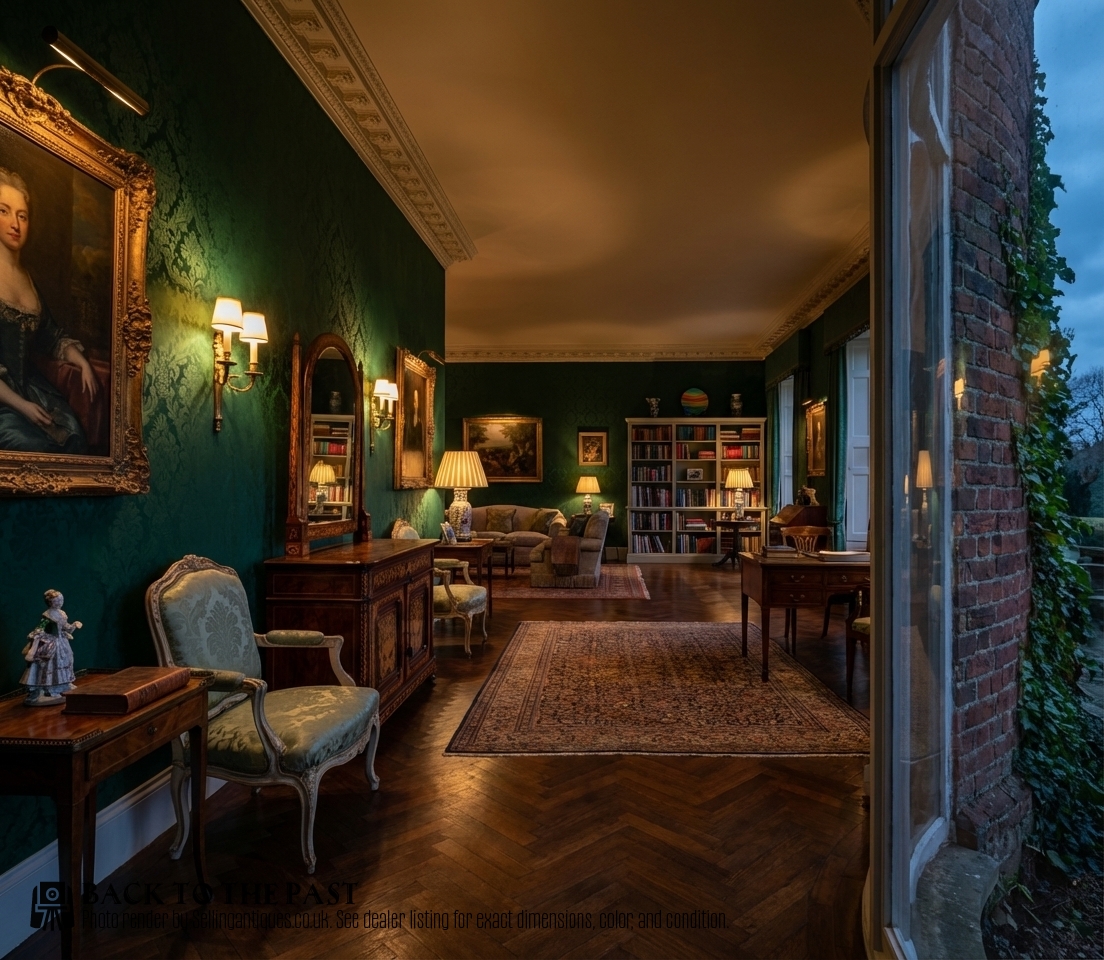
These pieces sat primarily in private bedrooms, dressing rooms, or boudoirs as personal grooming stations.
Many versatile variants also doubled as light writing desks or needlework tables for daily leisure.
How do I care for marquetry?
Protect the veneered surfaces by avoiding direct sunlight and maintaining stable indoor humidity levels.
Apply high-quality beeswax occasionally to nourish the timber and preserve the natural sheen of the inlay.