



Dutch Earthenware Charger
These dutch earthenware charger examples are large tin-glazed wall or display dishes that bring rich seventeenth and eighteenth century maritime trade history into a room.
Dutch Earthenware Charger
A dutch earthenware charger is a wide decorative wall plate or serving dish created during the seventeenth and eighteenth centuries. These pieces reflect the tastes of the Dutch Golden Age through generous proportions and vibrant tin-glazed surfaces designed to catch the light.
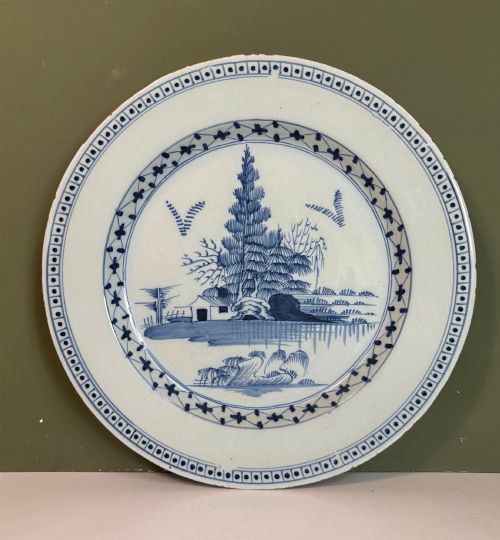
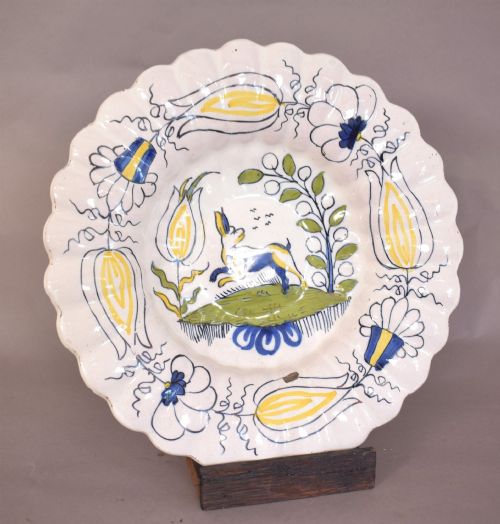
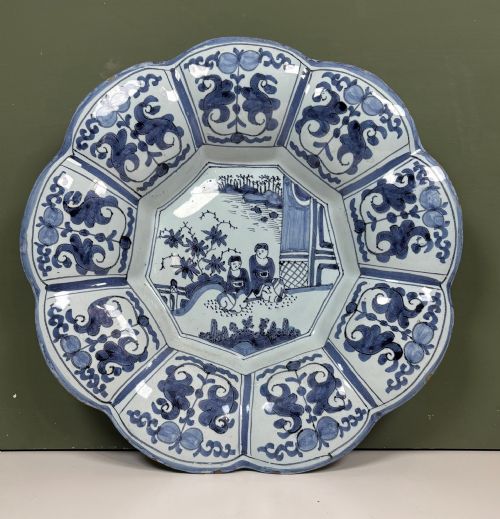
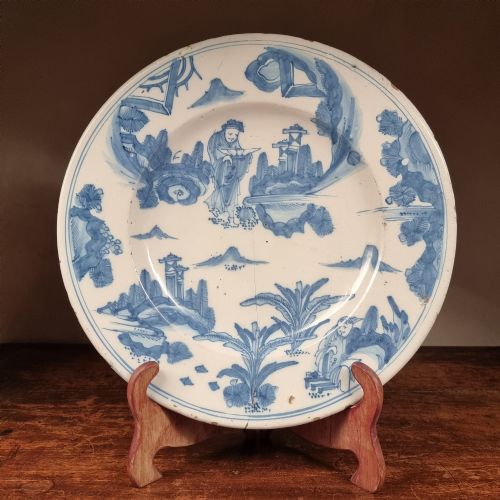
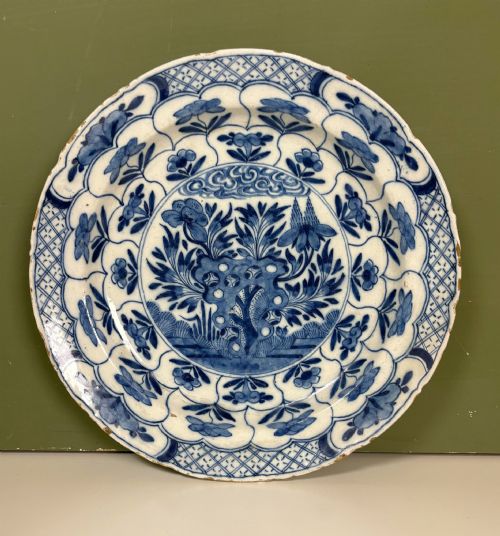
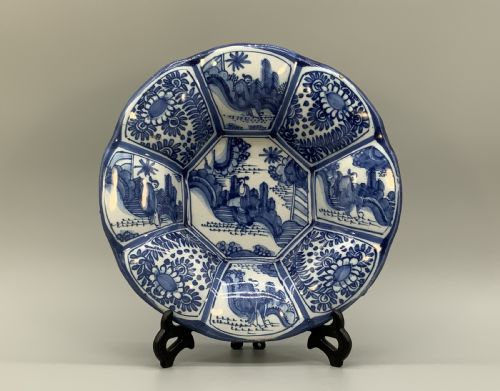
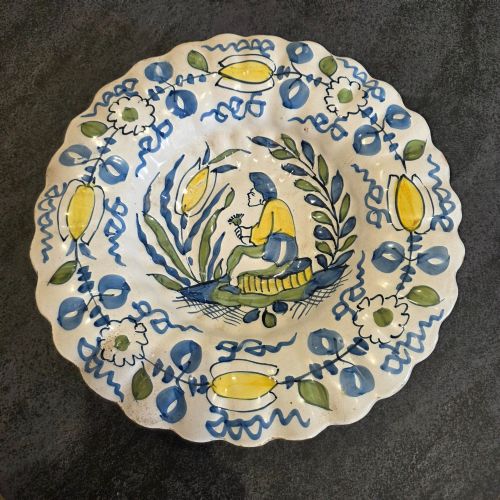
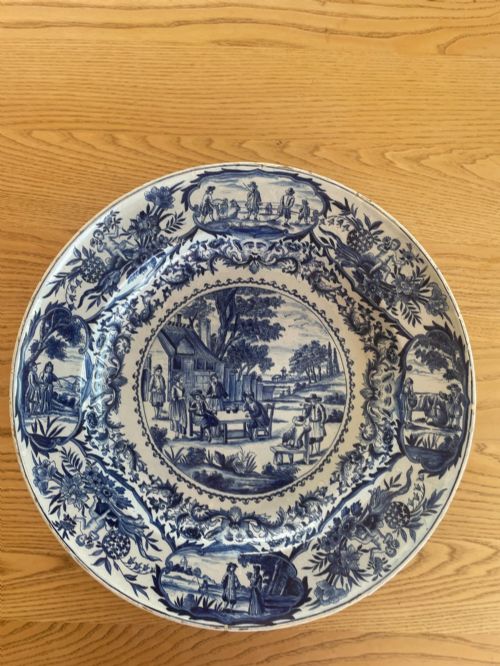
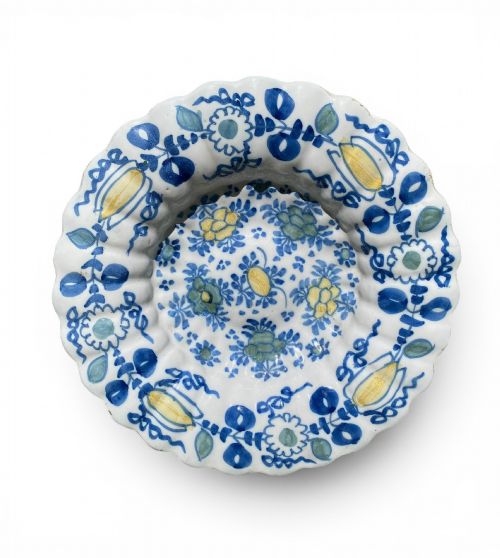
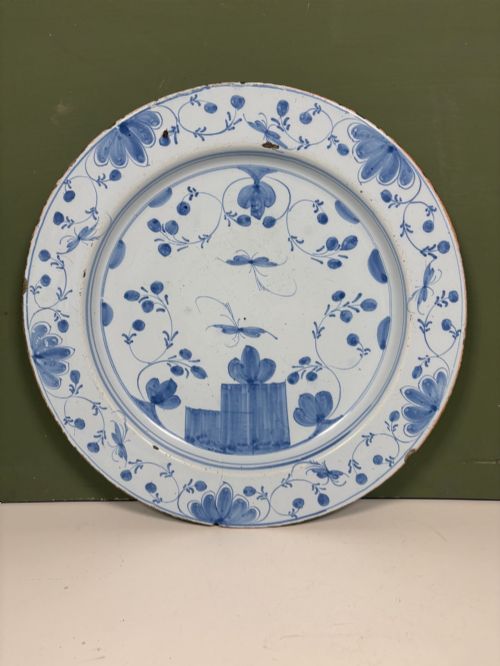
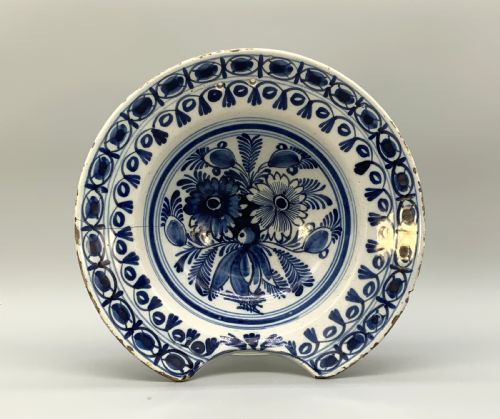
The selections available here lean heavily into classic Delftware traditions, appearing as chargers, shallow bowls, and lobed dishes. Collectors encounter both blue and white chinoiserie patterns and multi-coloured polychrome geometric florals.
Originating primarily from Dutch workshops, these substantial ceramic plates include specialist forms such as barber's bowls and marriage plates alongside traditional broad chargers. They serve equally well mounted on walls or displayed flat on dresser tops.
How they were made
Makers shaped earthenware clay into broad circular dishes before applying an opaque white tin glaze that provided a smooth canvas for painting. Painters then brushed cobalt pigment and manganese oxides directly onto the raw glaze.
Firing these large ceramic bodies required careful placement inside kilns to manage high temperatures. Grand feu techniques allowed pigments to fuse permanently with the liquid tin glaze, yielding deep blues and rich manganese tones.
Listings span the seventeenth, eighteenth, and nineteenth centuries, featuring tin-glazed earthenware shaped into chargers, lobed dishes, and shallow bowls.
What varies in quality
Quality rests upon the crispness of the hand-painted brushwork and the depth of the tin glaze. Early pieces with complex Kraak style motifs or detailed polychrome palettes demonstrate greater artisan skill than simpler subsequent production.
The visual impact of a charger depends on the harmony of the cobalt pigment against the white background and the stability of the large earthenware body during firing. Strong pictorial composition elevates a standard domestic plate into a striking display object.
The Dutch Earthenware Charger Glossary
- Delftware
- Tin-glazed earthenware made in Dutch potteries, principally associated with blue and white designs. This ceramic tradition mimics imported Chinese porcelain styles.
- Charger
- A large decorative plate intended for display on walls or sideboards rather than heavy dining use. These broad pieces measure significantly wider than standard dinner plates.
- Polychrome
- Decoration employing multiple colours beyond standard blue, often incorporating reds, greens, and yellows on tin-glazed surfaces. These bright palettes frequently depict floral or geometric themes.
- Kraak style
- A distinct panelled decorative scheme inspired by late Ming dynasty Chinese porcelain. Dutch makers adapted these motifs with alternating borders and central landscape or bird subjects.
- Manganese
- A dark metallic oxide used by potters to produce purple, brown, or plum tones in grand feu painting. This pigment creates a warm contrast alongside traditional cobalt blue.
Dutch Earthenware Charger: Frequently Asked Questions
How were dutch earthenware charger pieces displayed?
These large plates were typically hung on walls or stood upright on plate racks and dressers in prosperous seventeenth and eighteenth-century homes. Their generous size made them ideal decorative centrepieces for main living spaces.
Today, owners often continue this tradition by using specialised wall hangers or sturdy display stands to showcase the painted surfaces safely.
Can I use an antique charger for dining?
These historical ceramics are intended strictly for display and decorative purposes rather than everyday food service. The historic tin glaze and earthenware body are unsuited to modern cutlery and regular washing.
Treating them as wall art or cabinet pieces preserves the fragile glaze and painted decoration for the future.
How do I distinguish seventeenth century pieces from eighteenth century ones?
Early pieces from the seventeenth century often feature Kraak style panel designs and deep cobalt painting influenced by maritime trade imports. Eighteenth-century examples frequently display broader floral motifs, geometric borders, or richer polychrome palettes.
Examining the weight of the earthenware and the brushwork density helps clarify the production era.
What is the difference between blue and white and polychrome chargers?
Blue and white chargers rely exclusively on cobalt pigment applied beneath the tin glaze to create monochromatic scenes inspired by Chinese porcelain. Polychrome chargers introduce additional pigments such as yellow, green, and orange to produce multicoloured floral or figural compositions.
Both styles were produced in Dutch workshops during the golden age of Delft pottery.