



Dutch Bombe Chest
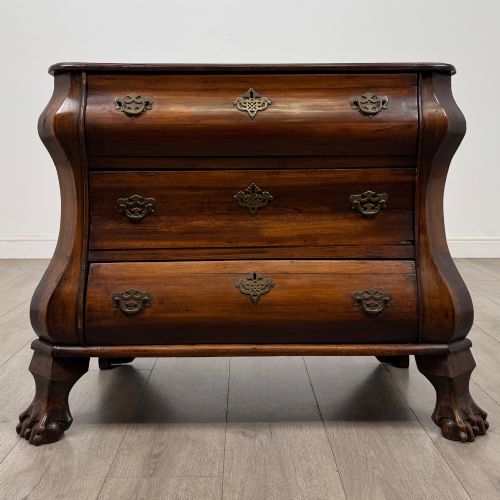
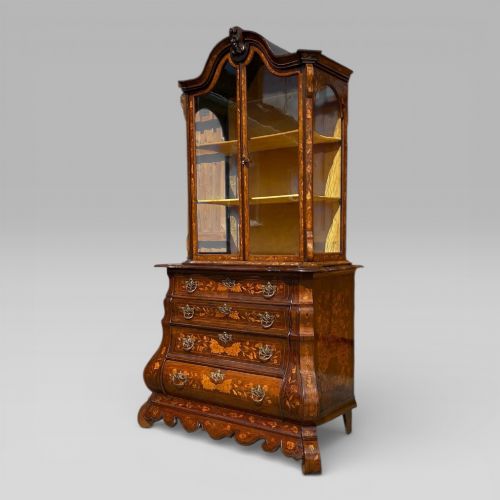
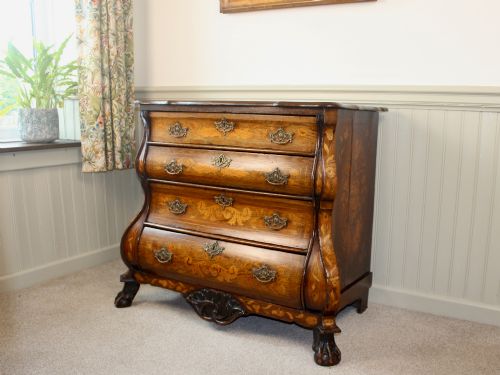
A dutch bombe chest brings sweeping, swelling proportions and rich timber grain to a room.
Dutch Bombe Chest
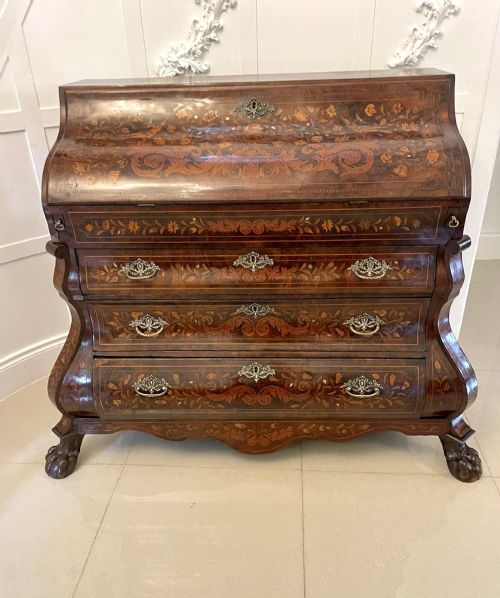
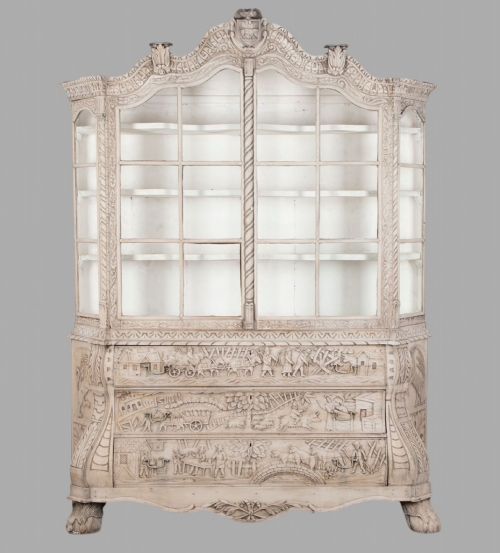
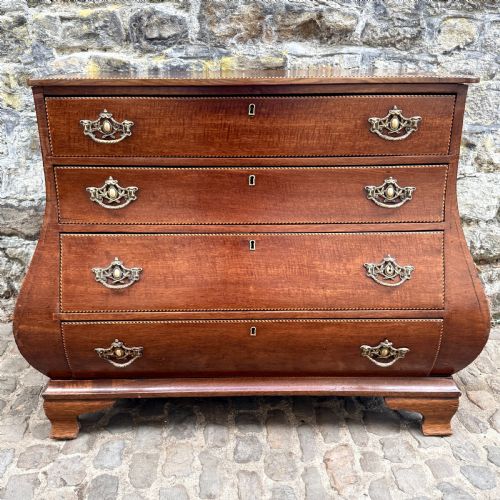
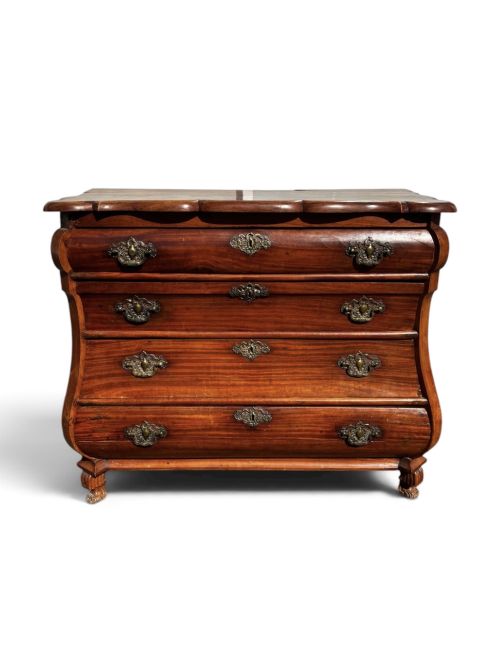
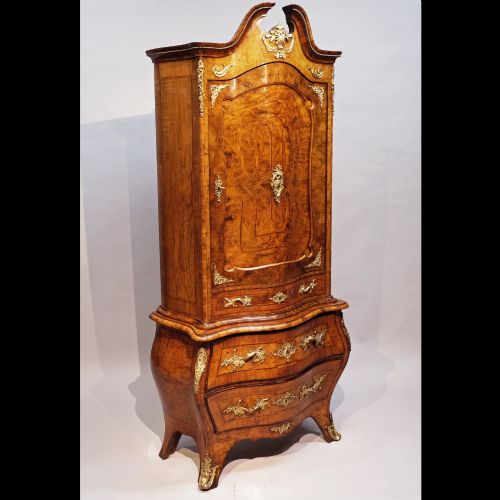
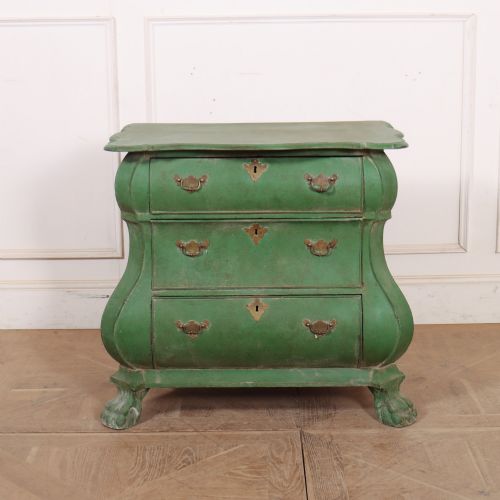
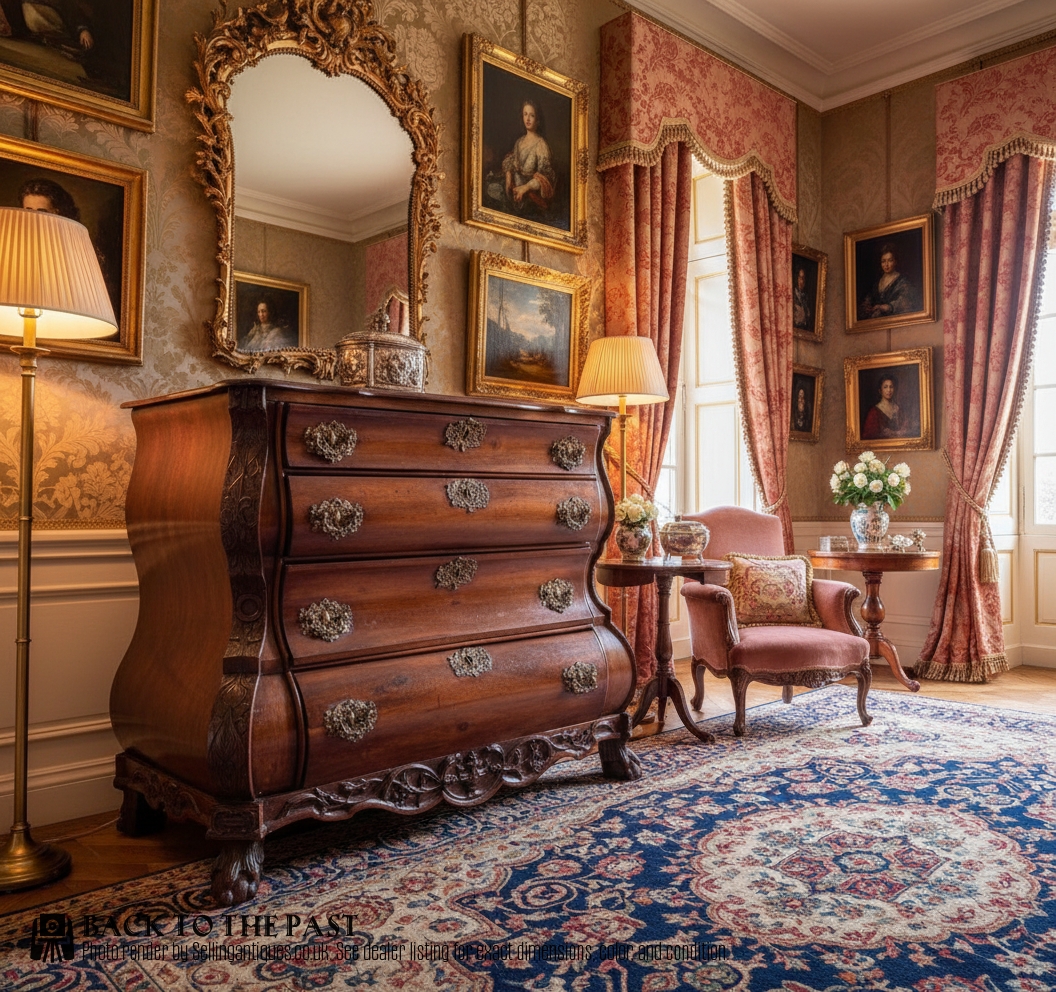
A dutch bombe chest is a prominent item of furniture defined by its convex, swelling front and sides, moving outward from top to bottom. When searching this phrase, a buyer encounters forms ranging from simple drawer chests and commodes to elaborate bureau bookcases and display cabinets.
The pieces appearing most frequently originate from the eighteenth and nineteenth centuries, spanning periods like the Georgian era and later revivals. Walnut and burr walnut dominate the selection, often accompanied by intricate floral marquetry or solid mahogany, oak, and fruitwood.
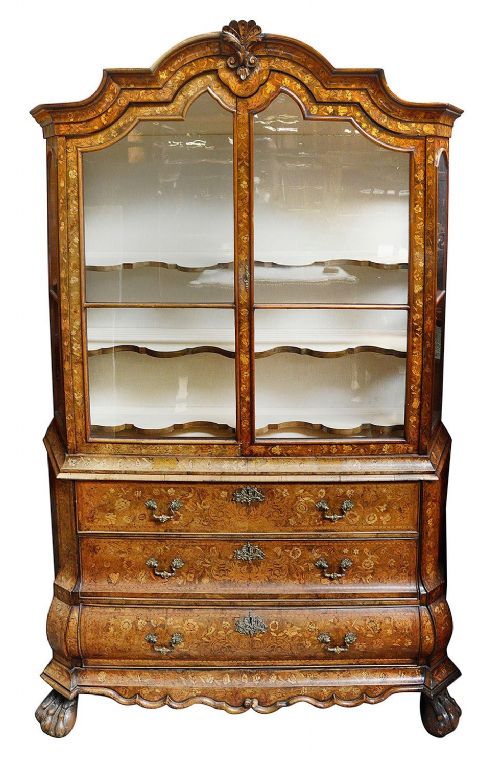
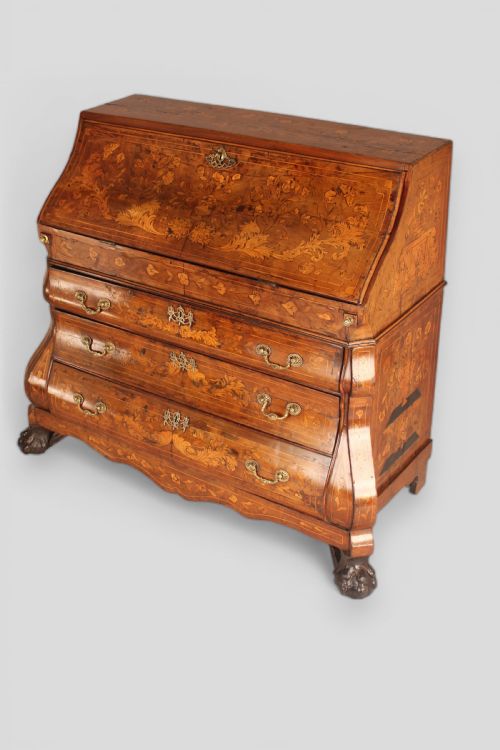
Beyond standard drawer chests, variations include cylinder bureaux and vitrines featuring glass panels and brass hardware. These items served historically to display wealth and store precious items in grand domestic interiors.
How they were made
Cabinet makers constructed these pieces using solid foundational timbers such as oak or mahogany, onto which highly figured veneers like burr walnut and fruitwood were applied. The characteristic curved shape requires complex framing and shaped drawer fronts to achieve the swelling contour without compromising structural integrity.
Marquetry decoration involves meticulous hand-cutting of contrasting woods - such as light fruitwoods and darker walnut - to form elaborate floral and botanical motifs across the drawer faces and surfaces. Brass handles, escutcheons, and glass doors complete the construction, combining joinery skill with decorative artistry.
Dutch Bombe Chest Retail Price Guide 2026
Typical asking prices for dutch bombe chest among the pieces listed under this phrase on Sellingantiques today, from the lower quarter to the upper quarter. They describe what is for sale here now, not the wider market.
Floral marquetry inlay recurs across many bureau bookcases and commodes, paired with traditional brass hardware.
What varies in quality
The quality of a piece rests heavily on the selection and matching of the timber veneers, with dense, highly figured burr walnut commanding greater visual depth than plain or uniformly grained surfaces. Superior examples display seamless grain continuity across moving drawer fronts and crisp execution in the floral marquetry inlay.
The execution of the bombe curve itself dictates the standard of craftsmanship, requiring a harmonious swell that maintains balance from every angle. Cabinet makers who successfully contoured the difficult undulating shapes without warping or awkward joins produced work that stands apart from stiffer, less fluid interpretations.
Edwards and Roberts
The Dutch Bombe Chest Glossary
- Bombe
- A swelling, outward-curving profile characteristic of continental furniture from the eighteenth century. This rounded form demands advanced woodworking techniques to shape both the drawer fronts and the carcass.
- Marquetry
- A decorative technique of applying thin veneers of different coloured woods to form pictorial patterns and floral designs. Artisans cut these pieces precisely to fit flush within a prepared surface.
- Commode
- A low chest of drawers or cabinet originating in France but widely adopted in Dutch furniture design. These pieces often feature prominent hardware and decorative marquetry.
- Vitrine
- A glass-fronted display cabinet used for showing porcelain, glassware, and small valuables. These items incorporate glazed doors and internal shelving.
- Escutcheon
- A decorative plate surrounding a keyhole that protects the surrounding wood from wear. They are typically cast from brass and styled to match the period of the piece.
Dutch Bombe Chest: Frequently Asked Questions
What is a bombe chest?
A bombe chest is a storage piece defined by its convex, outward-curving sides and front. This swelling form requires specialist cabinet making to construct the curved carcass and matching drawers.
Originating on the continent, these chests gained popularity for their striking silhouette and generous internal capacity. They serve as focal points in traditional and eclectic interiors alike.
How do I date a Dutch bombe chest?
Dating relies on examining the secondary timbers used inside the drawers, the style of the marquetry, and the overall construction methods. Eighteenth-century examples often feature hand-cut dovetails and native walnut or oak.
Later nineteenth-century and revival pieces display machine-cut elements or different secondary woods beneath the veneer. Comparing hardware styles and decorative motifs provides further chronological clues.
Where were bombe chests used?
These chests were designed for principal reception rooms, parlours, and grand bedchambers in prosperous homes. Their decorative presence made them suitable for public display rather than hidden storage.
Bureau variants functioned as writing desks, while display cabinet versions held collections of ceramics and curiosities. They occupied prominent wall spaces where their curved profiles could be fully appreciated.
How should I care for burr walnut veneer?
Burr walnut veneer requires protection from direct sunlight and extreme humidity changes to prevent fading and cracking. Keeping the timber away from heat sources preserves the natural oils in the wood.
Applying a traditional beeswax polish occasionally maintains the lustre of the surface without building up residue. Gentle dusting with a dry, soft cloth is sufficient for routine maintenance.