

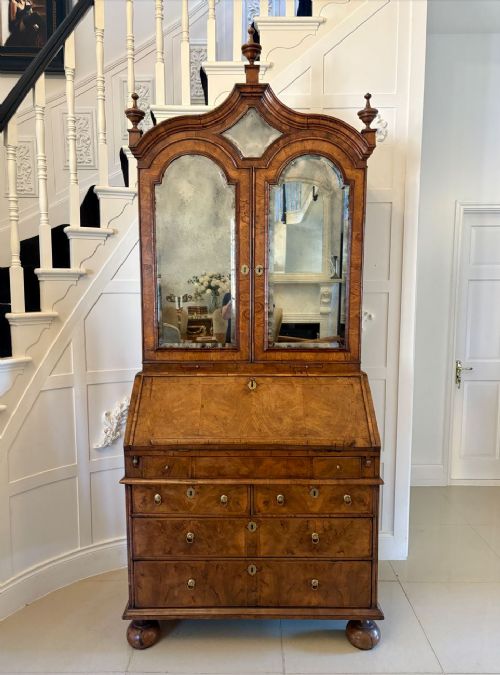
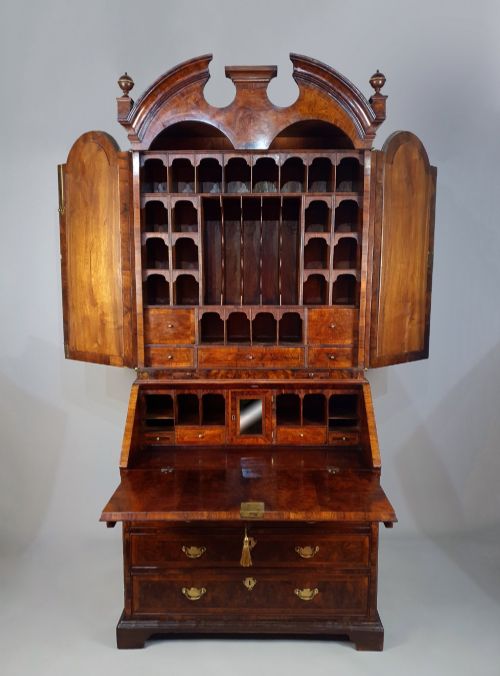
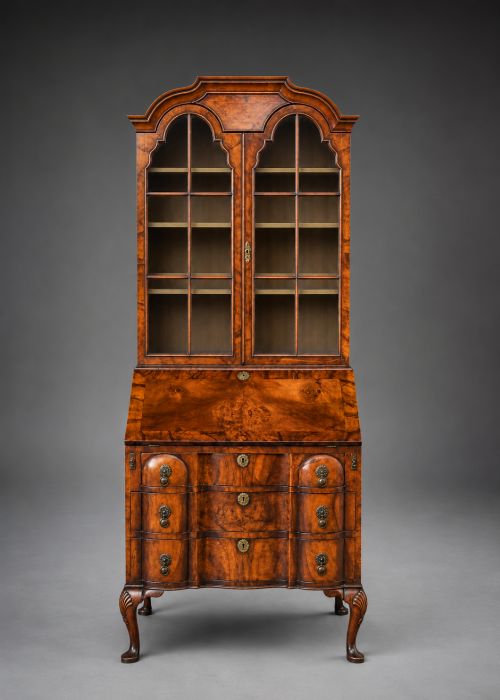


Double Dome Bureau Bookcase
A double dome bureau bookcase is a commanding statement piece that brings architectural presence and concealed workspace into a room.

Double Dome Bureau Bookcase
When you search for a double dome bureau bookcase, you encounter impressive dual-register storage furniture combining a fitted desk with an upper glazed or panelled library. These grand case pieces span periods from the late seventeenth century through the Georgian era, alongside later revivals from the Edwardian years and the nineteen-twenties.
The walnut versions dominate the selection, appearing with burr walnut veneers, featherbanding, and dramatic marquetry decoration. Alongside English walnut and oak examples, Italian and Dutch interpretations bring elaborate fruitwood marquetry and baroque styling to the form.
Evaluating Quality and Craftsmanship
The distinction between tiers rests upon the choice of veneer and the sophistication of the internal fitting. Master craftsmen selected highly figured burr walnut and laid out symmetrical grain patterns across the double dome crests and fall fronts.
Structural integrity and the retention of original brassware, glass, and surface patination elevate examples significantly. Finer iterations exhibit meticulous marquetry work and complex interior configurations with secret compartments, separating them from simpler or later revival pieces.
Double Dome Bureau Bookcase Retail Price Guide 2026
Typical asking prices for double dome bureau bookcase among the pieces listed under this phrase on Sellingantiques today, from the lower quarter to the upper quarter. They describe what is for sale here now, not the wider market.
Listings feature walnut, oak, fruitwood marquetry, and glass materials across eighteenth-century Georgian, seventeenth-century, and Edwardian periods.
The Double Dome Bureau Bookcase Glossary
- Burr walnut
- A prized timber harvested from the irregular growth knots of the walnut tree, yielding rich, swirling grain patterns. Cabinetmakers sliced this wood into thin veneers for decorative effect on cabinet doors and drawer fronts.
- Featherbanding
- A delicate form of inlay consisting of small veneer strips arranged in a herringbone pattern to create a contrasting border. This technique frames panels and drawer edges on high-grade case furniture.
- Marquetry
- The art of applying pieces of veneer to a structure to form decorative patterns and pictures. Craftsmen used various fruitwoods and tinted veneers to depict floral and geometric motifs.
- Fall-front
- A hinged writing flap that drops down to form a horizontal desk surface. It conceals a fitted interior containing pigeonholes, small drawers, and hidden compartments.
- Double dome
- An upper cabinet pediment featuring two adjacent arched or vaulted sections. This architectural roofline defines the most dramatic and sought-after seventeenth and eighteenth-century bookcase forms.
Double Dome Bureau Bookcase: Frequently Asked Questions
What is a double dome bureau bookcase?
It is a tall, two-part piece of furniture combining a shelved upper cabinet with a twin-arched roof and a lower sloping desk. The upper doors conceal adjustable shelves for books, while the drop-front desk opens to reveal a fitted interior.
These pieces served as private secretary desks and libraries for wealthy households during the seventeenth and eighteenth centuries.
How do I date a walnut bureau bookcase?
Dating relies on examining the construction methods, timber choices, and hardware styles across the piece. Early eighteenth-century examples display specific walnut veneer grains, hand-cut dovetails, and period brass drawer pulls.
Later Edwardian and twentieth-century revivals utilise machine-cut elements and different internal woods, helping distinguish them from authentic Georgian and seventeenth-century origins.
Where should I place a bureau bookcase?
These large case pieces require a substantial wall with adequate clearance for the drop-front desk to open fully. Placing them away from direct sunlight and heat sources protects the fragile walnut veneers and polished finishes.
They function well in studies, libraries, or spacious reception rooms where their height and architectural presence anchor the interior.
Are marquetry and plain walnut from the same period?
Both styles appear across the late seventeenth and eighteenth centuries, though they reflect different regional tastes and decorative preferences. Plain and burr walnut highlight natural grain patterns favoured in English design.
Marquetry pieces incorporate elaborate floral or pictorial wood inlay, often pointing towards Dutch or Italian craftsmanship from the same eras.