

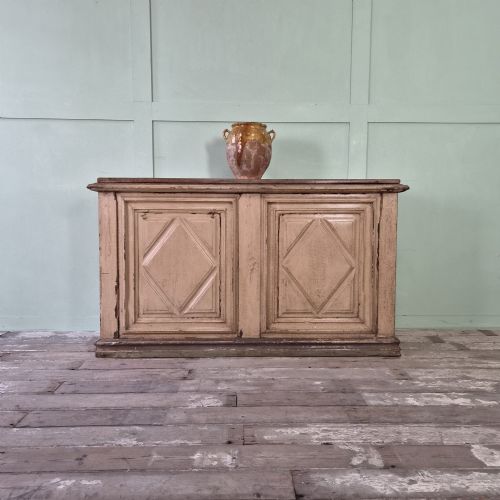

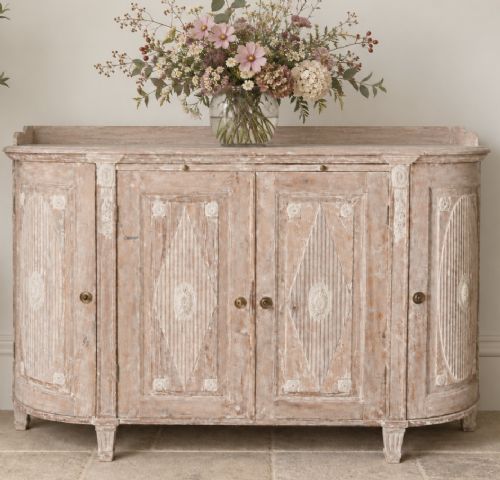
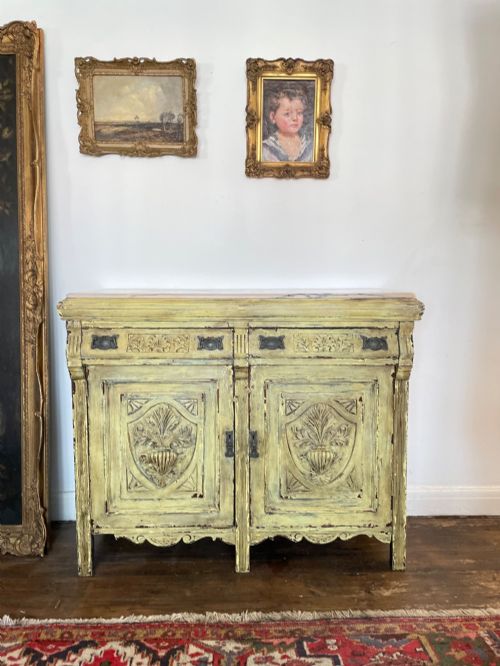
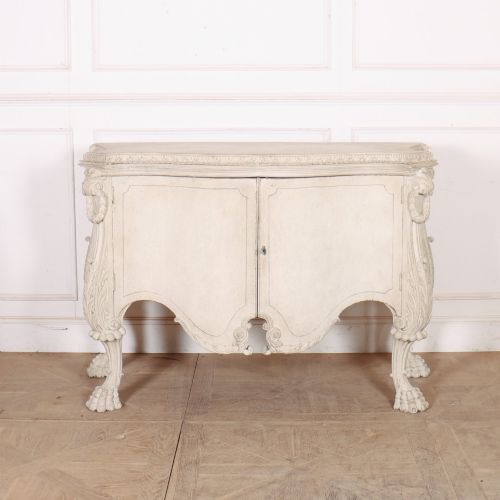
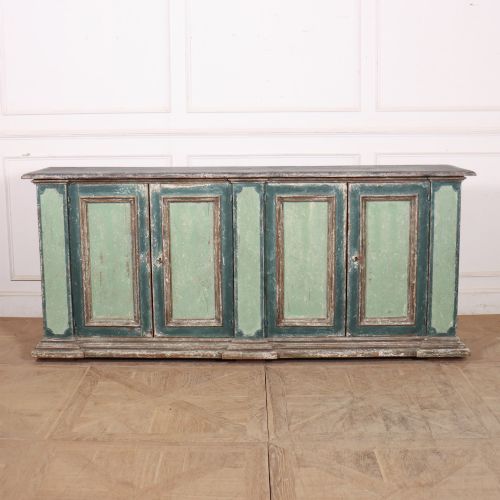
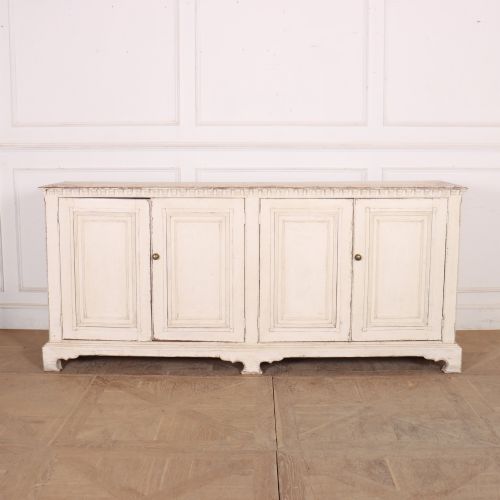


Distressed Painted Credenza
These distressed painted credenza examples bring practical storage and weathered surface character to an interior.

Distressed Painted Credenza
A distressed painted credenza encompasses substantial storage furniture finished with applied pigment and surface wear, drawing from categories like sideboards, dressers, commodes, and cupboards. The selection spans the eighteenth and nineteenth centuries, taking in periods such as the Georgian era and the Victorian age.
Origin points range widely across European traditions, including English country workshops, Swedish farmhouses, French provincial homes, and Italian workshops. Forms vary from kitchen dresser bases and linen cupboards to enfilades and side cabinets, frequently constructed in pine, oak, or general wood.
Surface treatments feature original paint alongside aged patinas, sometimes incorporating marble tops or iron and brass hardware details. Buyers encounter everything from robust country house pieces to refined continental commodes and cabinets.
Assessing quality and character
Quality rests upon the integrity of the original timber structure and the authenticity of the surface finish. Pieces retaining their original paint layers carry greater historical interest than later overpainted iterations.
Proportion and scale distinguish finer vernacular workshops from standard utilitarian production. Regional variations in regional decorative styles, from Scandinavian country lines to Italian neoclassical touches, influence desirability.
Distressed Painted Credenza Retail Price Guide 2026
Typical asking prices for distressed painted credenza among the pieces listed under this phrase on Sellingantiques today, from the lower quarter to the upper quarter. They describe what is for sale here now, not the wider market.
Several pieces escaped formal dining rooms entirely to spend centuries holding heavy pots in busy country kitchens.
The Distressed Painted Credenza Glossary
- Enfilade
- A long sideboard or cabinet featuring a succession of doors along the front, typically designed for dining rooms.
- Dresser Base
- The lower section of a kitchen or dining room dresser, often fitted with drawers and cupboards beneath a sturdy top surface.
- Commode
- A low chest of drawers or cabinet originating in France, frequently standing on visible legs.
- Potboard
- An open slatted lower shelf incorporated into traditional dresser bases for storing heavy kitchen pottery.
- Chinoiserie
- European decorative style imitating Chinese artistic motifs and lacquerwork, applied to cabinets and furniture.
Distressed Painted Credenza: Frequently Asked Questions
What is a painted credenza?
A painted credenza functions as a storage cabinet or sideboard featuring a pigmented surface finish. These items range from nineteenth century side cabinets to eighteenth century commodes.
Such furniture provides surface display space alongside enclosed shelving or drawers. Their painted finishes often show natural distress accumulated over decades of domestic use.
How old are these cupboards?
The pieces span the eighteenth and nineteenth centuries, including Georgian and Victorian eras. Exact dates often connect to specific decades like eighteen fifty or eighteen ninety.
Construction methods and regional styles help indicate the approximate period of origin. Pine and oak remain common materials across these decades.
Where were these pieces made?
Origins stretch across multiple European regions including England, Sweden, France, and Italy. Country workshops and provincial makers produced forms suited to local domestic needs.
Styles reflect these origins, moving from English country and Scottish vernacular to Scandinavian painted pine and Italian neoclassical designs.
How do I care for original paint?
Original painted surfaces require gentle treatment using dry cloths to remove dust. Avoid harsh chemical cleaners that might strip the aged patina.
Keeping furniture away from direct heat sources prevents timber movement and paint flaking. Wax polishes should be applied sparingly only where appropriate for the wood type.