




Distressed Painted Console
A distressed painted console brings surface character and historic form to an interior, shaped by decades or centuries of wear.
Distressed Painted Console
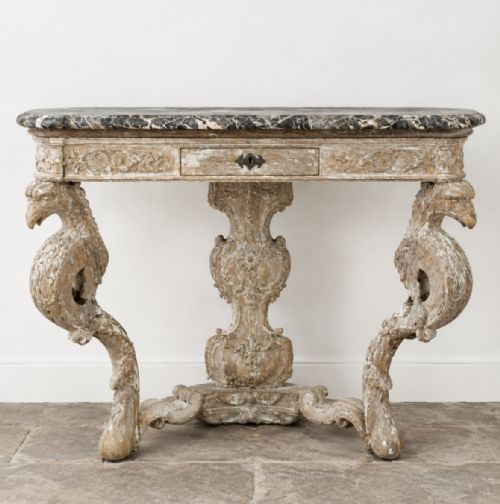
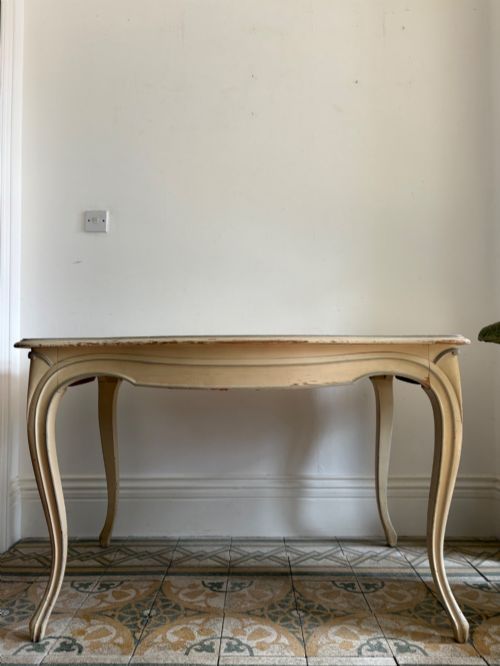
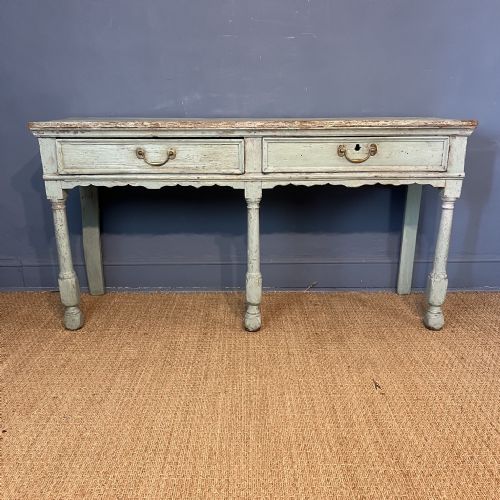
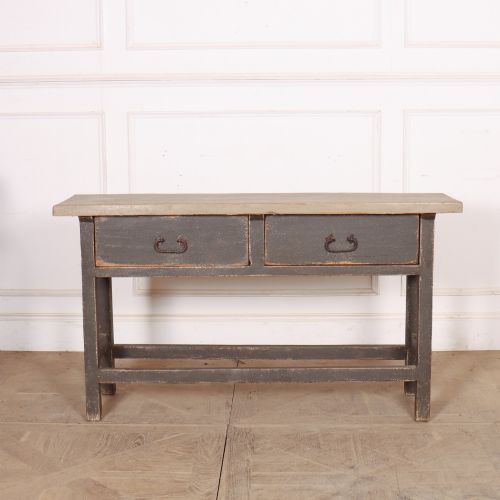
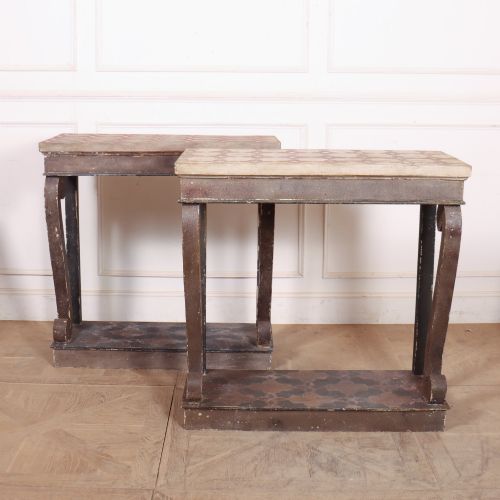
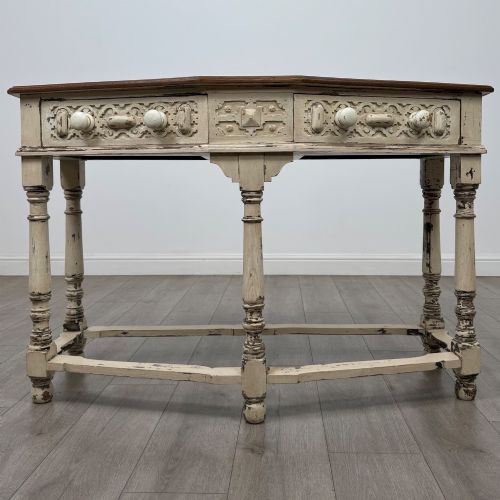
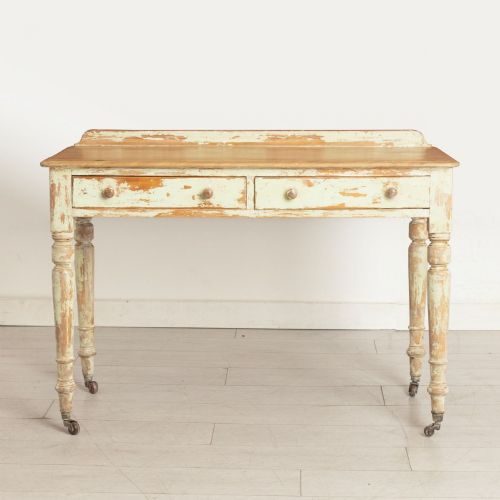
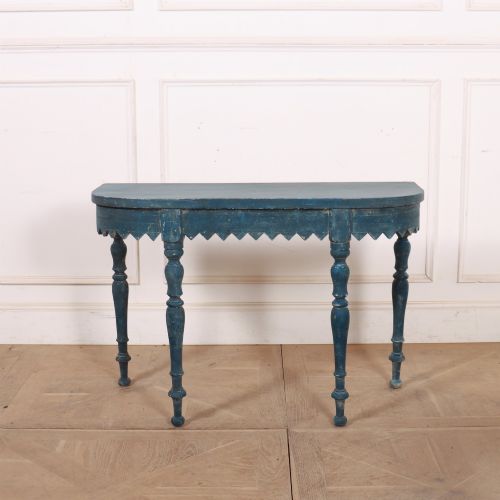
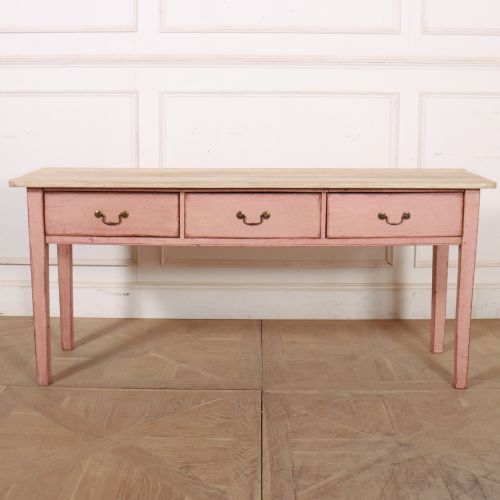
A distressed painted console is a narrow table designed to stand against a wall, frequently seen in forms such as console tables, side tables, dresser bases, and serving tables. These pieces draw from periods including the 18th century, 19th century, Edwardian era, Victorian period, and the 1920s.
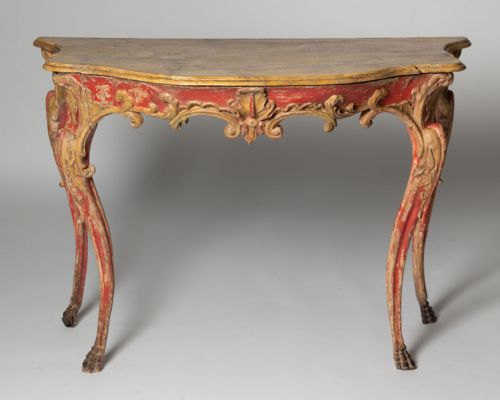
The aesthetic embraces regional domestic traditions, spanning English country, French provincial, Gustavian, French and Italian rococo, Scandinavian country, rustic farmhouse, and neoclassical styles. Buyers encounter demilune shapes, bow fronts, and rectangular formats originating from England, France, Italy, Spain, and Sweden.
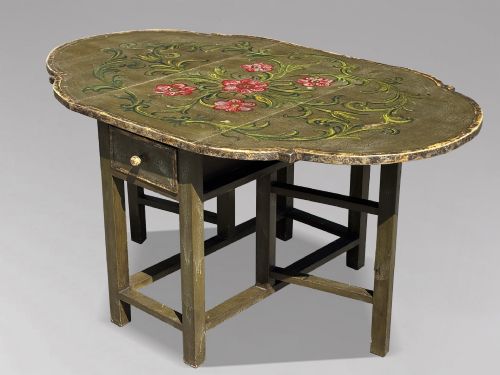
Surfaces bear the marks of age through layered and weathered pigment, reflecting centuries of domestic use in country houses, provincial homes, and grander interiors.
How they were made
Construction relies primarily on timber frames of pine, oak, and birch, shaped through traditional joinery and hand carving. Structural members support decorative additions such as gesso mouldings and inset materials.
Surfaces receive multiple coats of paint, sometimes over earlier schemes, which subsequently wear down through use to expose the underlying wood or gesso. Tops occasionally incorporate contrasting materials like marble, stone, verdigris copper, or inset suede.
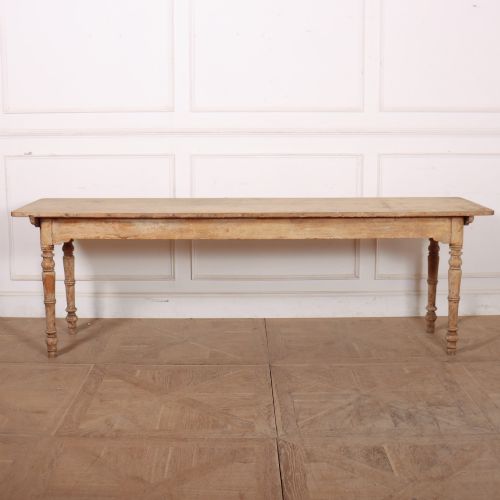
Several pieces originate from utilitarian environments like potting sheds and orangery spaces, retaining earthy patinas.
What varies in quality
Quality rests in the integrity of the original surface and the harmony of the proportions. An untouched historic painted finish holds greater character than a later applied simulation of wear.
The refinement of the carved wood details, the weight and selection of timber such as pine or oak, and the presence of original tops in marble or stone separate standard utilitarian pieces from finer regional examples.
The Distressed Painted Console Glossary
- Demilune
- A half-moon shape used for console tables designed to sit flush against a wall. This format is common in Swedish and English examples.
- Gesso
- A plaster-like mixture applied to wood surfaces to create a smooth base for painting or relief decoration. It often reveals age through fine craquelure.
- Dresser base
- A low utilitarian table fitted with drawers and occasionally a potboard shelf below. These pieces form a significant category of country furniture.
- Gustavian
- The Swedish interpretation of neoclassical style, characterised by light paint colours and restrained, elegant carving. Pieces from this tradition often feature distressed pale finishes.
Distressed Painted Console: Frequently Asked Questions
Where should a console table go?
These narrow tables suit entrance halls, living rooms, and corridors where floor space is limited. Their shallow depth allows them to sit comfortably against a wall without obstructing movement.
They also function effectively beneath mirrors or large paintings, serving as a display surface for lamps and decorative objects.
How do I care for a painted surface?
Aged painted finishes require gentle treatment to preserve the historic layers of pigment. Dusting with a dry soft cloth is generally sufficient for regular maintenance.
Avoid liquid cleaners and moisture, which can penetrate worn areas and lift fragile paint or gesso from the timber substrate.
What is the difference between a console and a side table?
Console tables are specifically designed to stand flat against a wall, frequently anchored for stability if they feature slender cabriole legs. Side tables are often freestanding items finished on all sides.
In practice, historical cataloguing sometimes overlaps these terms depending on the proportions and intended placement of the furniture.
How do I identify a Swedish painted piece?
Swedish pieces from the 18th and 19th centuries typically display pale grey, cream, or soft green paint schemes reflecting the Gustavian and Scandinavian country styles. They often take the demilune form with restrained neoclassical detailing.
The timber used is commonly pine, finished to brighten darker Northern European interiors.