

Painted Rococo Table
A painted rococo table brings exuberant curves and decorative finishes into a room, offering a functional surface rooted in centuries of European design.
Painted Rococo Table
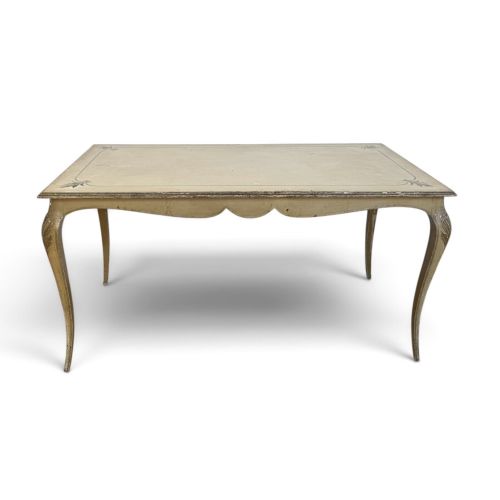
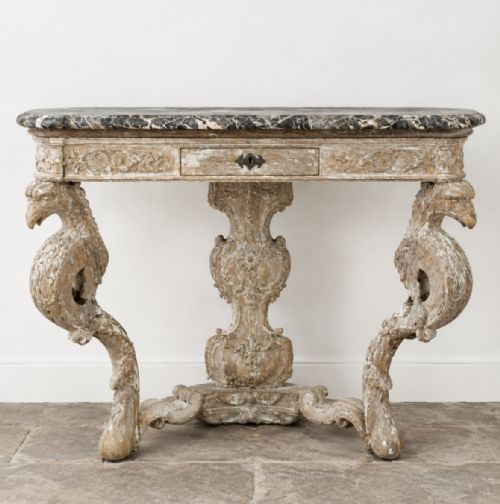
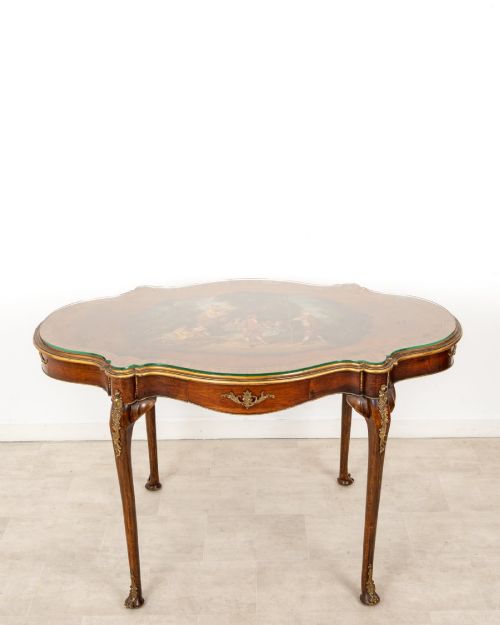
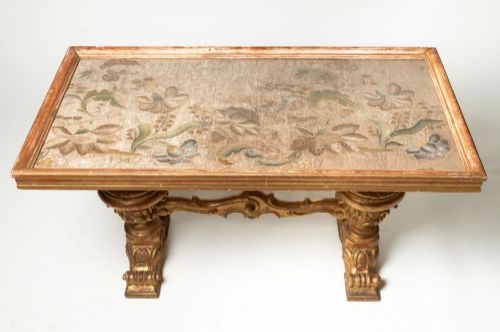
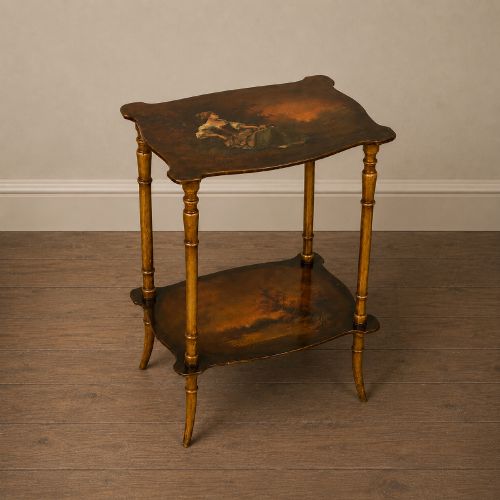
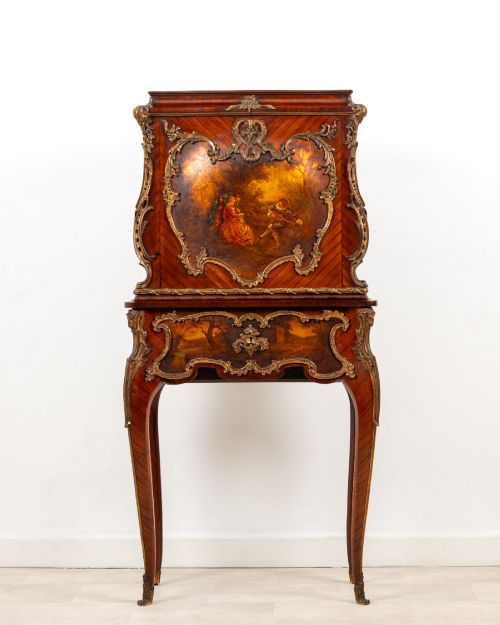
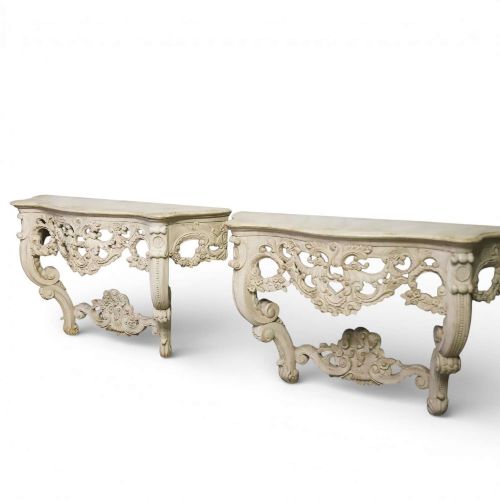
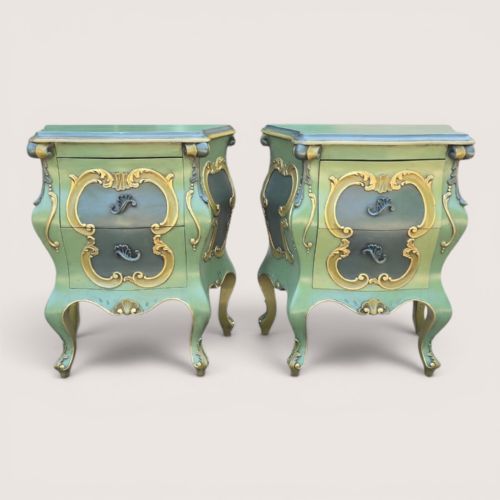
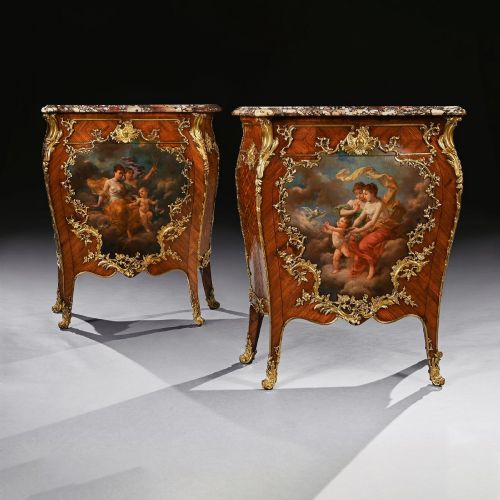
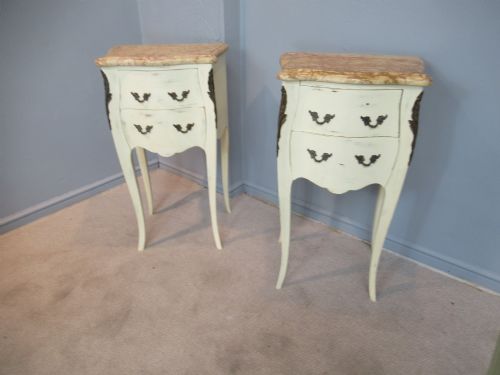
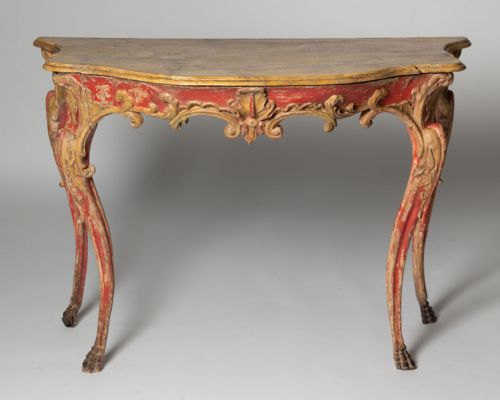
A painted rococo table embodies the ornate flourishes and asymmetric scrollwork characteristic of French and Italian revivals spanning the eighteenth, nineteenth, and early twentieth centuries. When searching for a painted rococo table, a buyer encounters forms ranging from grand marble-topped console tables designed for wall placement to occasional side tables and two-tier étagères. These pieces often feature distressed antique white finishes, gilt accents, and painted panels that reflect the enduring popularity of Louis XV aesthetics.
The material palette of these tables typically combines painted wood surfaces with gesso, gold leaf, and occasionally inset marble or porcelain elements. Originating primarily from French and Italian workshops, the surviving examples demonstrate a lineage stretching from authentic eighteenth-century craftsmanship through later nineteenth-century revivals and interwar interpretations.
Materials and construction
Makers constructed these tables using carved wood frameworks, frequently applying layers of gesso to create smooth surfaces for detailed paintwork and gold leaf gilding. The decorative schemes often incorporate painted motifs, hand-applied pigments, and protective varnishes to achieve the characteristic sheen.
Structural elements such as marble tops are fitted directly into the wooden frames of console tables, while gilt bronze mounts and brass hardware are secured to enhance the fluid, organic contours typical of the style.
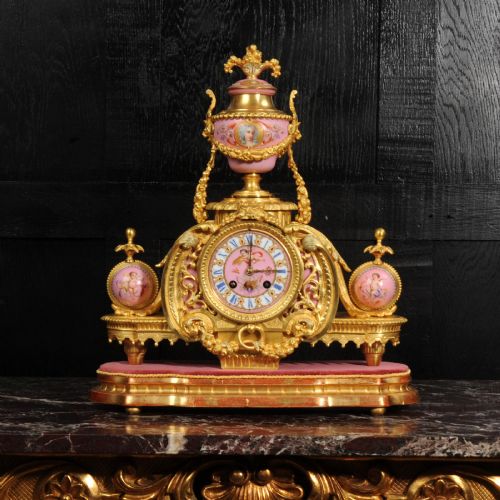
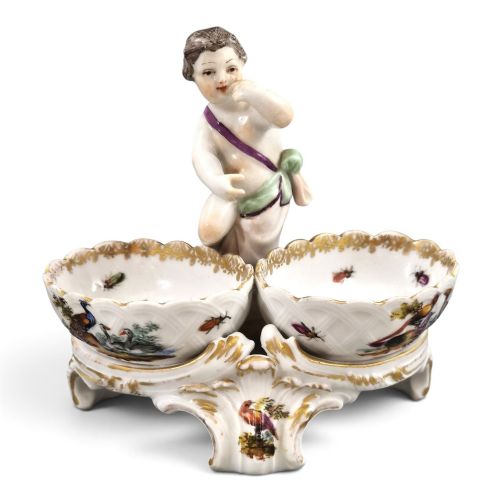
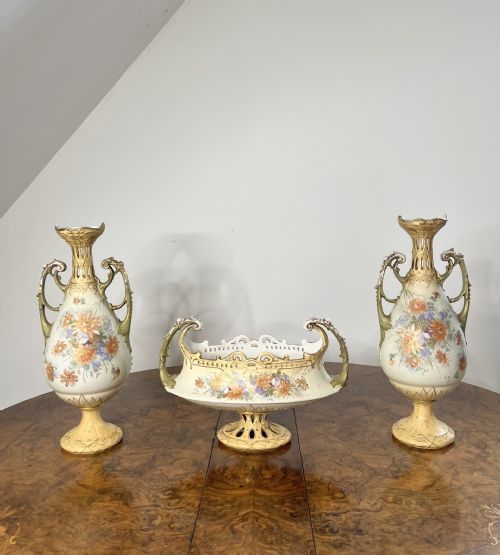
Several tables on this page share space with porcelain cherubs, recumbent stags, and ticking mantel clocks.
Assessing craftsmanship and finish
The distinction between tiers of quality rests upon the depth of hand-carving in the wood and the precision of the painted and gilt finish. Finer examples display crisply defined scrollwork and subtle tonal layering in the paint, whereas lesser pieces rely on heavy, uniform applications that obscure the underlying detail.
Material selection further defines the piece, with genuine marble slabs and finely chased bronze mounts marking out superior tables from those utilising simpler timber construction and painted brass details.
The Painted Rococo Table Glossary
- Gesso
- A plaster-like mixture applied to wood to create a smooth surface for painting or gilding. This foundational layer allows for crisp relief carving.
- Ormolu
- Gilded bronze used for decorative mounts and hardware on furniture and clocks. It provides a bright metallic contrast against painted wooden surfaces.
- Vernis Martin
- A type of simulated Japanese lacquer developed in France, featuring polished painted panels. It adds a lustrous, decorative depth to cabinetwork.
- Console table
- A table designed to be fixed against a wall, frequently supported by ornamental brackets or legs. These tables often feature decorative marble tops.
- Étagère
- An open piece of furniture with multiple shelves for displaying small objects. They appear in side table formats with painted and gilt finishes.
Painted Rococo Table: Frequently Asked Questions
Where should I place a console table?
Console tables fit well in hallways, living rooms, or dining spaces where floor space is limited against a wall.
They provide a practical surface for lamps or decorative objects while adding a distinct decorative focal point to the room.
How do I care for painted wooden surfaces?
Dust the surface regularly with a soft, dry cloth to prevent the accumulation of dirt on the delicate paintwork.
Avoid using harsh chemical cleaners or excessive moisture, which can damage the antique gesso and painted finishes over time.
What is the difference between French and Italian styles?
French rococo designs often emphasise refined asymmetry, delicate floral motifs, and sophisticated gilt bronze mounts.
Italian variants tend to feature bolder painted colour palettes, rustic finishes, and substantial carved wooden structures.
Are marble tops original to these tables?
Many nineteenth-century console tables were constructed specifically to support heavy marble slabs as functional and decorative tops.
When evaluating a piece, check that the marble sits flush within the wooden frame and matches the period of the base.