

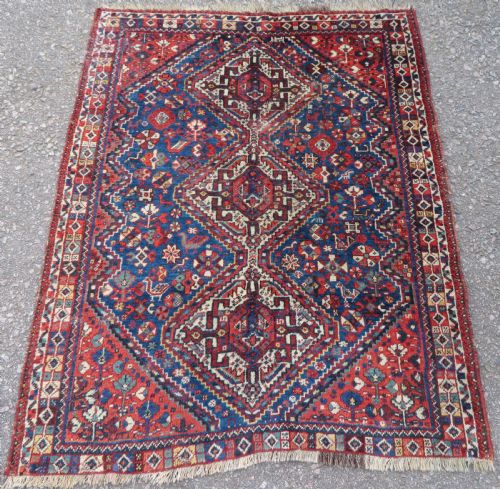
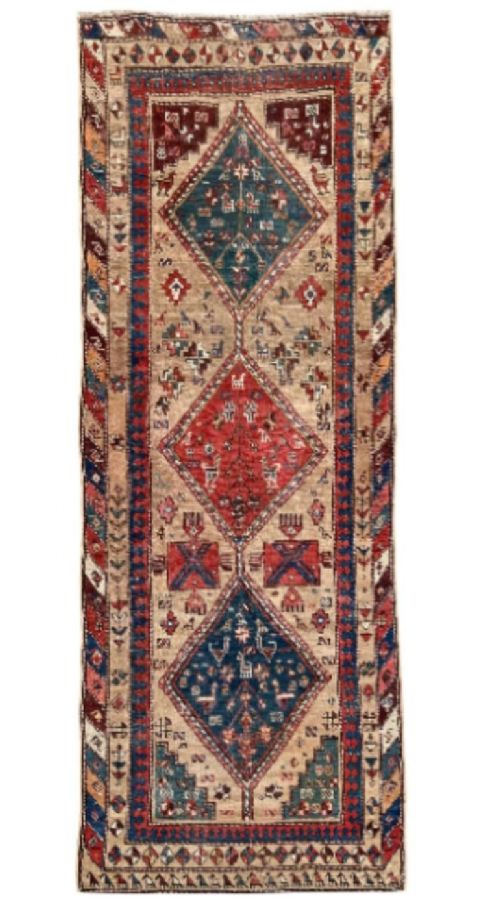
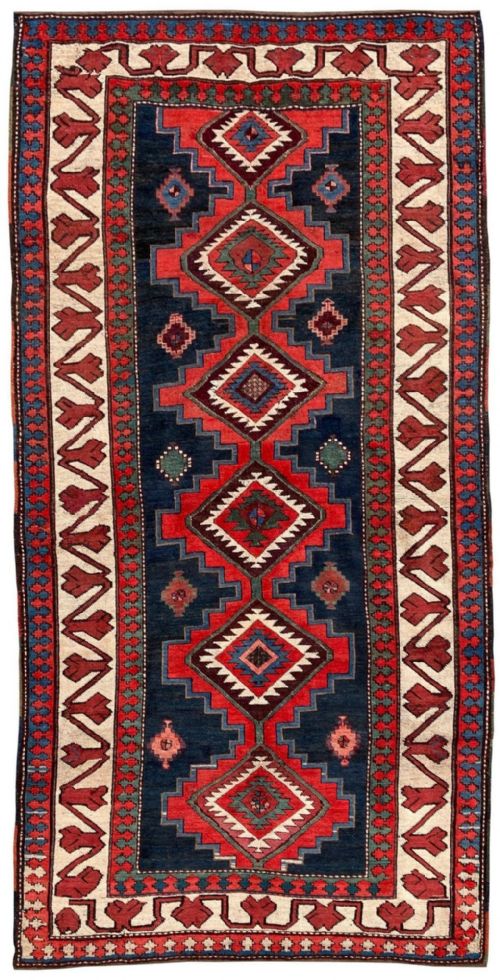
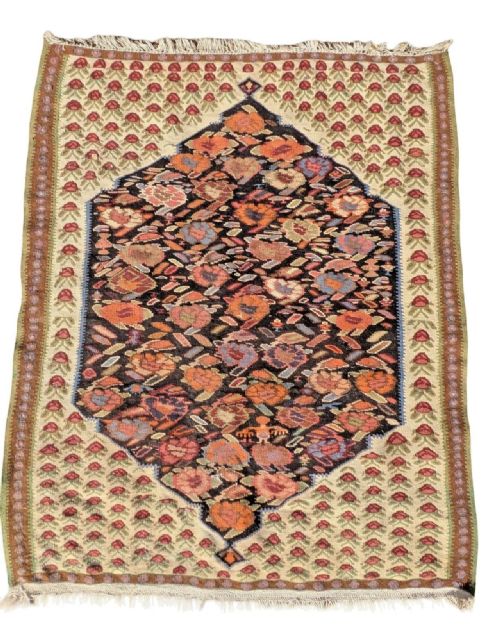




Diamond Medallion Runner Rug
A diamond medallion runner rug brings structured geometry and rich texture to a long hallway, offering warmth underfoot and enduring artisanal heritage.
Diamond Medallion Runner Rug
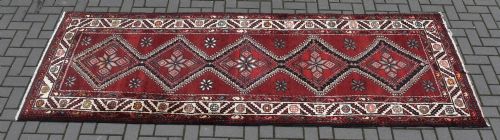
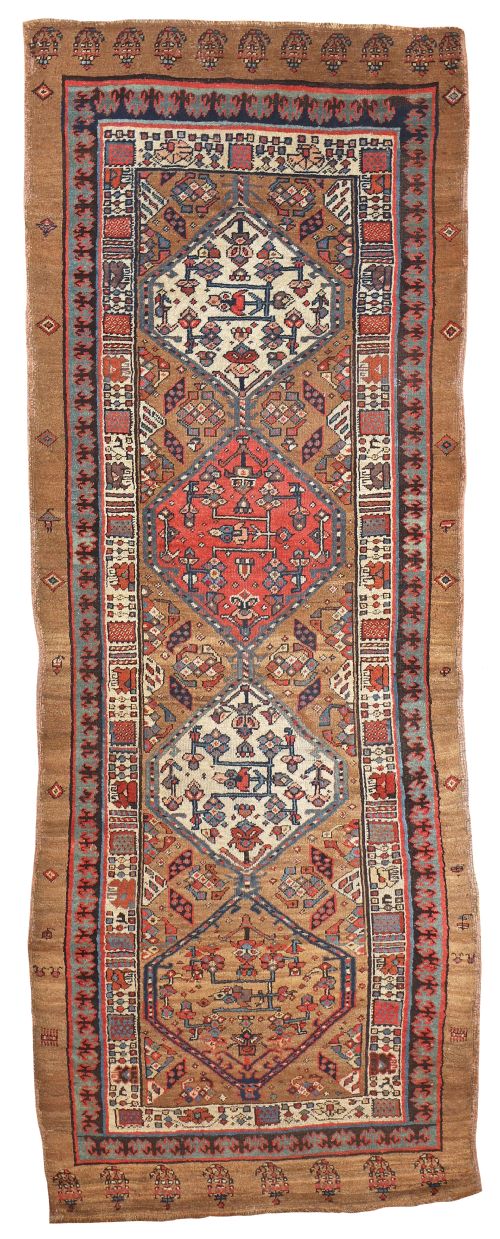
A diamond medallion runner rug is a long, narrow floor covering defined by repeating geometric central motifs, appearing here across various origins including Persia and Anatolia. These pieces function primarily as hallway runners and narrow village-made rugs designed to fit transitional spaces.
The selection encompasses works from the nineteenth century through to the early twentieth century, spanning periods such as 1870, 1890, 1900, 1910, 1920, and 1930. Buyers encounter traditional styles like Persian Tribal, Caucasian, Kurdish, and Traditional Anatolian weaves.
Village and tribal workshops produced these runners to withstand daily domestic use while displaying distinct regional iconography. The format suits corridors and narrow rooms where a linear arrangement of central medallions draws the eye along the length of the floor.
How they were made
Weavers constructed these runners using wool and hand-spun wool for the pile and surface, supported by cotton foundations in many examples. Artisans relied on natural dyes to colour the wool, producing deep, enduring hues that soften gracefully over decades.
The construction involves traditional handwoven techniques practiced by tribal and village weavers across Persia, the Caucasus, and Anatolia. These methods ensure a dense, durable pile capable of enduring heavy foot traffic in domestic hallways.
Diamond Medallion Runner Rug Retail Price Guide 2026
Typical asking prices for diamond medallion runner rug among the pieces listed under this phrase on Sellingantiques today, from the lower quarter to the upper quarter. They describe what is for sale here now, not the wider market.
Listings feature pieces spanning the nineteenth and twentieth centuries, predominantly utilising hand-spun wool and natural dyes.
What varies in quality
Quality rests upon the fineness of the knotting and the precision with which the wool was spun and dyed by hand. Finer examples display intricate rendering of the central geometric motifs and well-balanced border proportions.
The integrity of the natural dyes and the resilience of the wool foundation determine how well a runner ages under foot. Superior pieces maintain crisp linear definition in their tribal designs alongside an even, supple handle.
Kazak·Bidjar·Kashgai·Tabriz·Ushak·Khamseh·Senneh·Heriz·Sarab·Baktiari·Malatya
The Diamond Medallion Runner Rug Glossary
- Runner
- A long, narrow carpet format specifically proportioned for corridors, hallways, and staircases. These pieces measure significantly longer than they are wide to guide movement through a space.
- Medallion
- A central ornamental motif, often diamond-shaped, set into the field of a rug. This focal design element anchors the surrounding geometric patterns.
- Pile
- The upright yarn surface of a rug formed by the cut ends of knots. Hand-spun wool pile provides both cushioning and durability.
- Natural dye
- Colouring matter derived from plant, insect, or mineral sources rather than synthetic chemistry. These dyes yield rich, complex tones that mellow harmoniously over time.
- Kilim
- A flat-woven carpet or rug made without a raised pile. These pieces rely on interlocking weft threads to create sharp geometric patterns.
Diamond Medallion Runner Rug: Frequently Asked Questions
Where should I place a runner rug?
These narrow formats suit hallways, corridors, and long entryways where floor space is restricted. They protect high-traffic wooden flooring while adding warmth and visual interest to transitional areas.
Position the runner centrally to allow equal borders of exposed floor on either side, enhancing the linear perspective of the room.
How do I care for antique wool runners?
Regular gentle vacuuming without a rotating brush roll prevents dust accumulation within the wool pile. Professional cleaning by specialists in antique textiles ensures the natural dyes remain protected.
Rotate the runner periodically to distribute foot traffic evenly across the surface and prevent uneven wear patterns.
What is the difference between a rug and a kilim?
Rugs possess a raised pile formed by knotted yarn, giving them a plush texture and substantial weight. Kilims are flat-woven without a pile, resulting in a lighter, thinner textile with a smooth surface.
Both styles utilise traditional geometric designs, but their construction methods create distinct tactile qualities.
How can I tell the age of these pieces?
Age is indicated by structural characteristics, the character of the hand-spun wool, and the subtlety of the natural dyes. Nineteenth-century and early twentieth-century pieces often show organic variations in colour and weave that reflect manual production.
Specific regional motifs and weaving structures also provide clues to the approximate period of origin.