
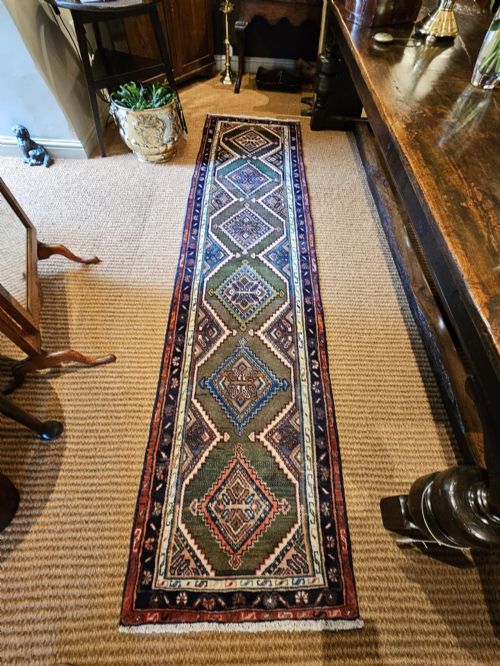

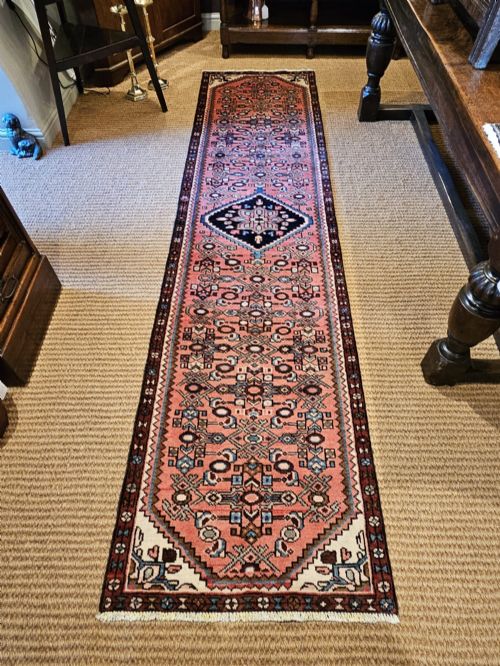
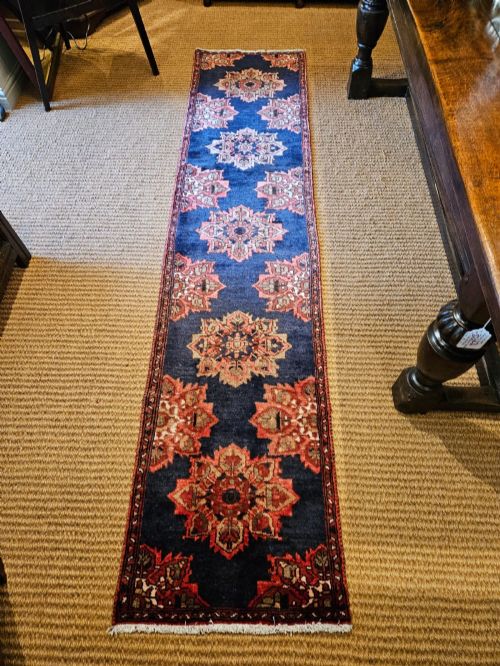
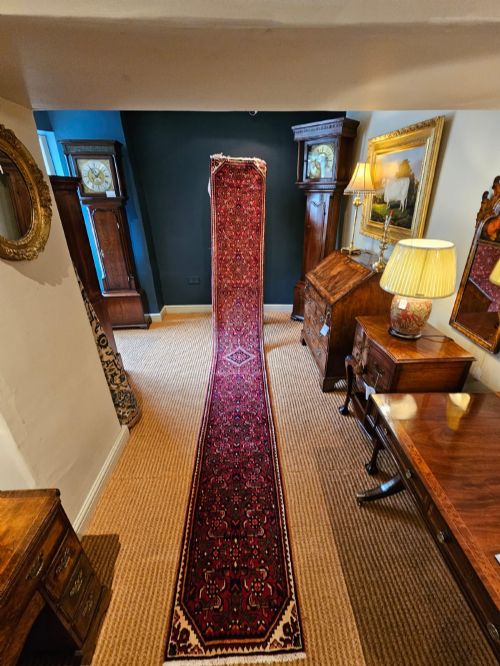


Narrow Persian Carpet Runner
A narrow persian carpet runner brings long hallways and landings to life with centuries of tribal skill and dense regional patterns.
Narrow Persian Carpet Runner
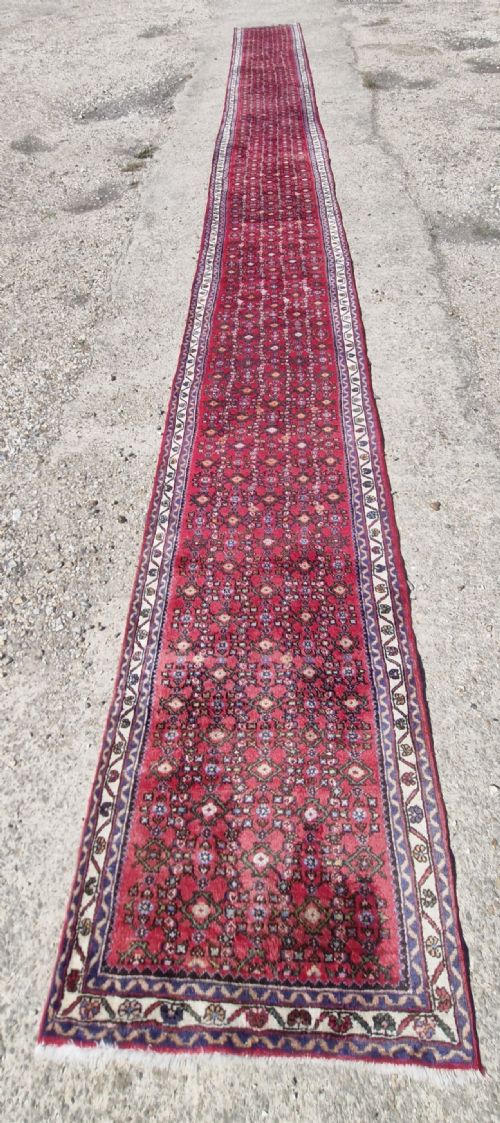
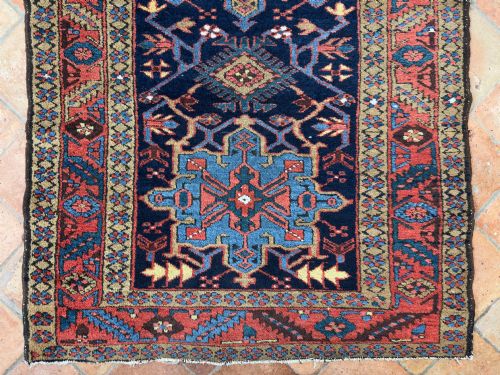
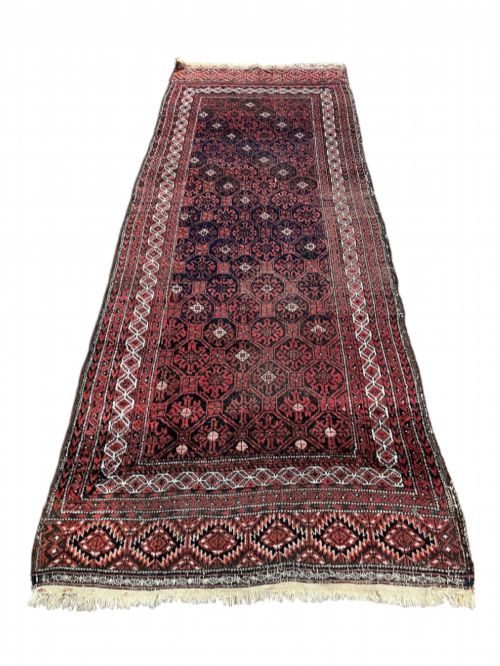
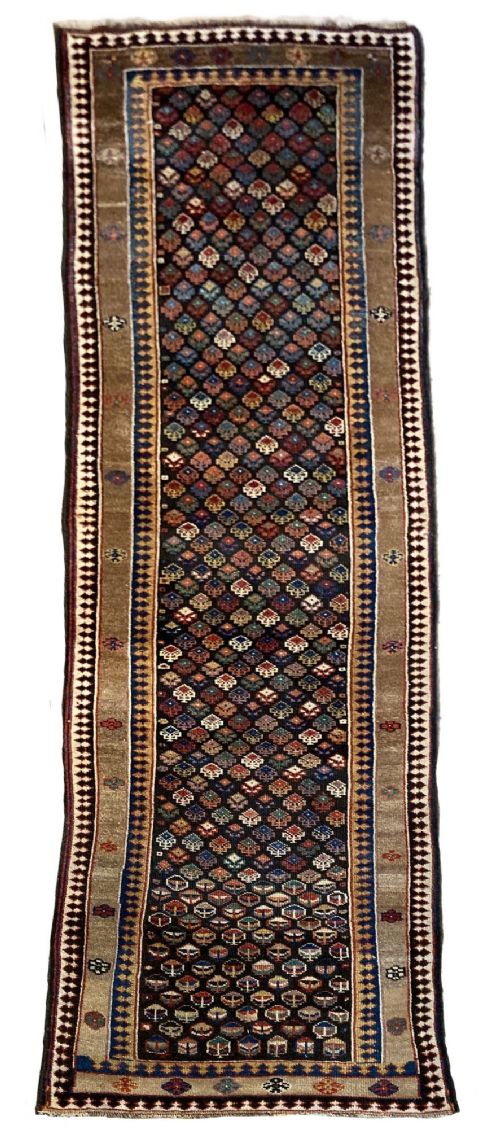
A narrow persian carpet runner is a long, linear floor covering designed specifically for corridors, staircases and hallways. These pieces span production dates from the late nineteenth century through to the early decades of the twentieth century. They originate from various weaving traditions including Heriz, Hamadan, Kurdish and Baluch workshops.
The format prioritises extended length alongside a restricted width to fit narrow architectural spaces. Traditional village and tribal weavers constructed these runners using distinctive geometric or medallion layouts suited to linear formats. Most examples encountered here date from the period between eighteen eighty and nineteen thirty.
What varies in quality
The fineness of the knot count and the precision of the geometric drawing distinguish superior examples from simpler village work. Finer knotting allows for sharper delineation of tribal motifs and intricate floral or bird depictions. Hand-spun wool quality and the consistency of the pile height across a long span also determine the overall standard.
The complexity of the regional design, such as Heriz or Ferahan medallion systems, influences the character of the piece. Uniformity in the width along extended dimensions reflects greater skill in the original village or tribal loom setup.
Look closely to spot tiny birds perched among the traditional tree motifs woven by Kurdish artisans.
Heriz·Hamadan·Sarouk·Bidjar
The Narrow Persian Carpet Runner Glossary
- Runner
- A long, narrow carpet format intended for corridors, hallways and stairs. This shape dictates the geometric composition of tribal designs.
- Warp
- The vertical foundation threads stretched tightly on the loom before knotting begins. Cotton is the standard material for these supporting lines.
- Pile
- The surface of the rug formed by the cut ends of knotted wool or camel hair. Tighter knotting creates a denser and more resilient surface.
- Kilim
- A flat-woven textile produced without a raised pile. Several regional pieces utilise this technique alongside knotted sections.
Narrow Persian Carpet Runner: Frequently Asked Questions
Where should I place a narrow runner?
These long carpets suit hallways, landings, corridors and narrow gallery spaces where traditional square rugs fail to fit.
Their elongated proportions bridge open rooms while protecting high-traffic wooden floors.
How do I identify a village runner?
Village rugs display geometric motifs, stylized animals and repeating medallions rather than formal court designs.
Weavers worked from memory rather than strict graph paper templates, creating charming irregularities.
What materials make up these carpets?
Most examples combine hand-spun wool pile with sturdy cotton foundations for structural stability.
Some older tribal pieces incorporate natural camel hair within the un-dyed brown areas.
How do I care for an old runner?
Regular gentle vacuuming without a beater bar removes trapped dirt from the wool pile safely.
Professional specialist cleaning preserves the natural lanolin and historic dyes.